
Project Spotlight: It Started With a Cat Window — A Year Later, The Whole Front of the House Is Done
It started with one oversized picture window — and a couple of cats who refused to leave that sunny spot.
We installed it last spring, featured it in a blog, and moved on to the next job. Good project. Happy homeowners. Done.
Except it wasn't done.
Fast forward almost exactly one year. The homeowners came back. Turns out that one window changed how the whole front of the house looked — and now the other seven were impossible to ignore.
That's how one good project turns into a relationship. And honestly? It's one of our favorite things about this work.
Seven Custom Windows — Inside and Out
These weren't stock windows pulled off a shelf. Custom ordered, built to fit, and finished to match the character of the home on both sides of the wall.
Exterior work included installing all seven units and painting the trim clean and sharp. Simple in description. Not always simple in execution — especially when the homes here in North Idaho have weathered a few seasons and the trim tells that story.
Inside was where it got more detailed. The existing trim was wood that needed staining — not painting. Stain is unforgiving. It shows every flaw, every rushed moment, every shortcut. You don't fake your way through a good stain job.
We took our time. The finished product shows it.
One Window Came In Defective. Here's What We Did.
This is the part of the job that didn't go according to plan.
One of the seven windows arrived defective. It wasn't visible at pickup — those things rarely are until you're mid-install and the light catches it just right. The moment we identified it, we got a warranty claim moving and a replacement shipped.
The other six were completed in mid-March.
The seventh — the right one — went in this past Saturday.
This is where timelines slip and shortcuts happen for some crews. We don't do either. The homeowner deserved a complete, correct job. So we communicated, we waited, and we finished it right.
Every window. Done correctly. That's not extra — that's just the standard.
The Guest Room: Four Colors, Chair Rail, Wainscoting, and Oil-Based Paint
While the windows were underway the homeowners had one more ask — the guest room needed painting.
This room had a chair rail and wainscoting, which meant four distinct colors had to work together across different surfaces without looking like a mistake.
Then we found out the paint was oil-based.
Oil-based means longer dry times, more coats, and a slower process overall — but the finish is worth it when it's done right. You don't rush it. You don't cut corners on dry time. You just do the work.
The result is a guest room with clean transitions at every line, the wainscoting and chair rail landing exactly where they should, and four colors that feel intentional instead of chaotic.
The homeowners were thrilled. That's the part that makes the extra hours worth it every time.
One Year. Two Projects. One Home That's Finally Done Right.
A single picture window last spring. Seven more this spring. A guest room that finally got the attention it deserved. A defective window handled without drama and finished without shortcuts.
That's what a real contractor relationship looks like over time.
We don't show up, do a job, and disappear. We come back. We finish things right. And we're still here when the next project is ready.
If you're looking at your front windows right now thinking "it's probably time" — you're probably right. We're happy to walk it with you.
Because when it's done right the first time, it's never the last project.
The Kitchen Triangle Is Dead. Here's What Actually Matters Now.
Kitchen Reality Check — Part 1 of 3
This is Part 1 of our Kitchen Reality Check series — three blogs breaking down what actually makes a kitchen work, from a contractor who's seen the good, the bad, and the "why did anyone think that was a good idea."
For decades, kitchen design lived and died by one rule.
The kitchen triangle — the invisible line connecting your sink, stove, and refrigerator — was supposed to be the golden formula for a functional kitchen. Keep those three points close, keep traffic out, boom. Efficient kitchen.
It made sense. In 1948.
The problem? Nobody told your kitchen it was living in 2026.
At Mr. Clean Fix, we've remodeled a lot of kitchens across North Idaho. And we can tell you firsthand — the triangle isn't what's making people's kitchens fail. It's that nobody designed them around how the family actually lives in them.
That's the real conversation. So let's have it.
Why the Triangle Stopped Working
The triangle was built for one cook, one task, one small closed-off room. That was the kitchen of mid-century America.
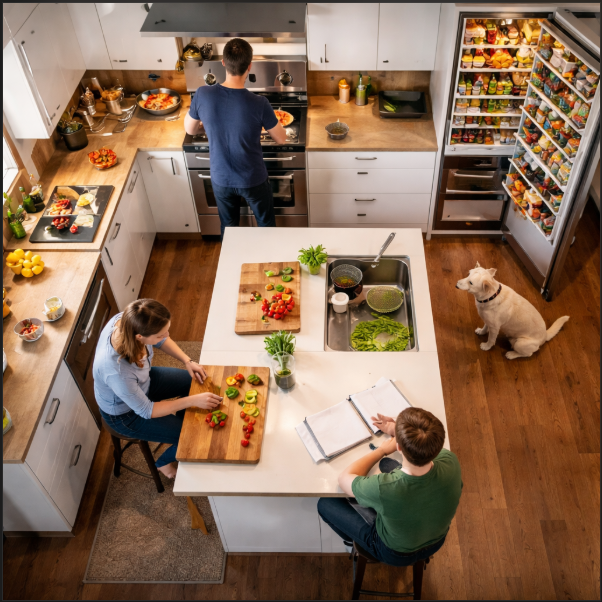
Today's kitchens are open. They're loud. They've got two people cooking, a kid doing homework, someone digging through the fridge, and a dog parked right where you need to stand — all at the same time.
A three-point triangle doesn't solve any of that. Not even close.
What Actually Works: Zones
Around here in North Idaho, most kitchens we walk into were built for a different era and a different family. When zones are laid out right, everything just works. When they're not — you feel it every single night.
A zone is a dedicated area for a specific task. Here's what a well-designed kitchen actually looks like:
The Prep Zone — Where the real work happens. Counter space, cutting board, easy access to tools, close to the sink. If you're walking across the kitchen every time you need to rinse something, this zone is broken.
The Cooking Zone — Your range and everything that belongs with it. Spices, oils, pots and pans within arm's reach. Not across the room. Not in a lower cabinet you have to dig through while something's boiling over.
The Cleanup Zone — Sink and dishwasher. These two should always be next to each other. Always. We still walk into kitchens where they're separated and wonder what the original designer was thinking.
The Consumables Zone — Fridge and pantry. Ideally accessible from the edge of the kitchen so someone can grab a snack without walking through the middle of everything and derailing whoever's cooking.
The Non-Cook Zone — This one's underrated and most kitchens don't have it. A spot where people can hang out, help with homework, pour a drink — without being in the way. A well-placed island with seating usually handles this. A poorly placed one makes it worse.
Let's Talk Islands — Honestly
Almost every kitchen remodel conversation gets to the island eventually. And we love islands. But only when they actually make sense.
We've also seen plenty that had no business being where they were — crammed into spaces too small, blocking traffic, creating a pinch point that makes the kitchen harder to use than before. That's not an upgrade. That's an obstacle with a countertop.
Before committing to an island, answer these honestly:
Is there at least 42 inches of clearance on every side? 48 is better.
Does it add real counter space and storage — or just eat up floor space?
Does it create that non-cook zone, or does it just push everyone into the same tight path?
If it doesn't improve how you actually move through the kitchen on a busy Tuesday night, it's not worth it.
Most "Storage Problems" Aren't Storage Problems
This comes up constantly. Homeowners feel like they don't have enough storage — so they want more cabinets, more drawers, more pull-outs.
Sometimes that's true. But more often? It's a layout problem wearing a storage costume.
Your pots live across the kitchen from your stove. Your spices are in a cabinet behind you while you're cooking. Your prep area is nowhere near your most-used tools. That's not a storage issue — that's everything living in the wrong place.
Fix the layout first. Then see how much storage you actually still need.
The Honest Contractor Take
No formula replaces a real conversation about how you actually cook and live.
Before we ever talk cabinets or countertops or finishes, we want to know: what drives you crazy about your kitchen right now? Where does it break down? What works?
Those answers tell us more about the right design than any rule ever will.
Because a kitchen that looks incredible in photos but fights you every night isn't a win. A kitchen that just works — for your family, your routine, your real life — that's the goal.
If it doesn't work on a busy Tuesday night, it's not a good kitchen. Period.
That's what we design for. Every time.
Next up in the Kitchen Reality Check series: the 5 kitchen layout mistakes we see over and over in North Idaho homes — and how to avoid every single one of them. Publishing next Friday.
Flooring Trends for Modern Homes: Choosing Style and Durability
Your floors set the tone for everything above them.
Before the furniture, the lighting, the paint colors — the floor is what your eye lands on first. It's what your feet feel every single morning. And yet, flooring is one of those decisions homeowners often rush — or get talked into — without fully understanding their options.
At Mr. Clean Fix, we've installed, repaired, and replaced a lot of flooring in North Idaho homes. And we've seen what holds up, what doesn't, and what homeowners wish they'd chosen differently.
Here's what's trending in 2026 — and more importantly, what's actually worth it.
Wide Plank Everything
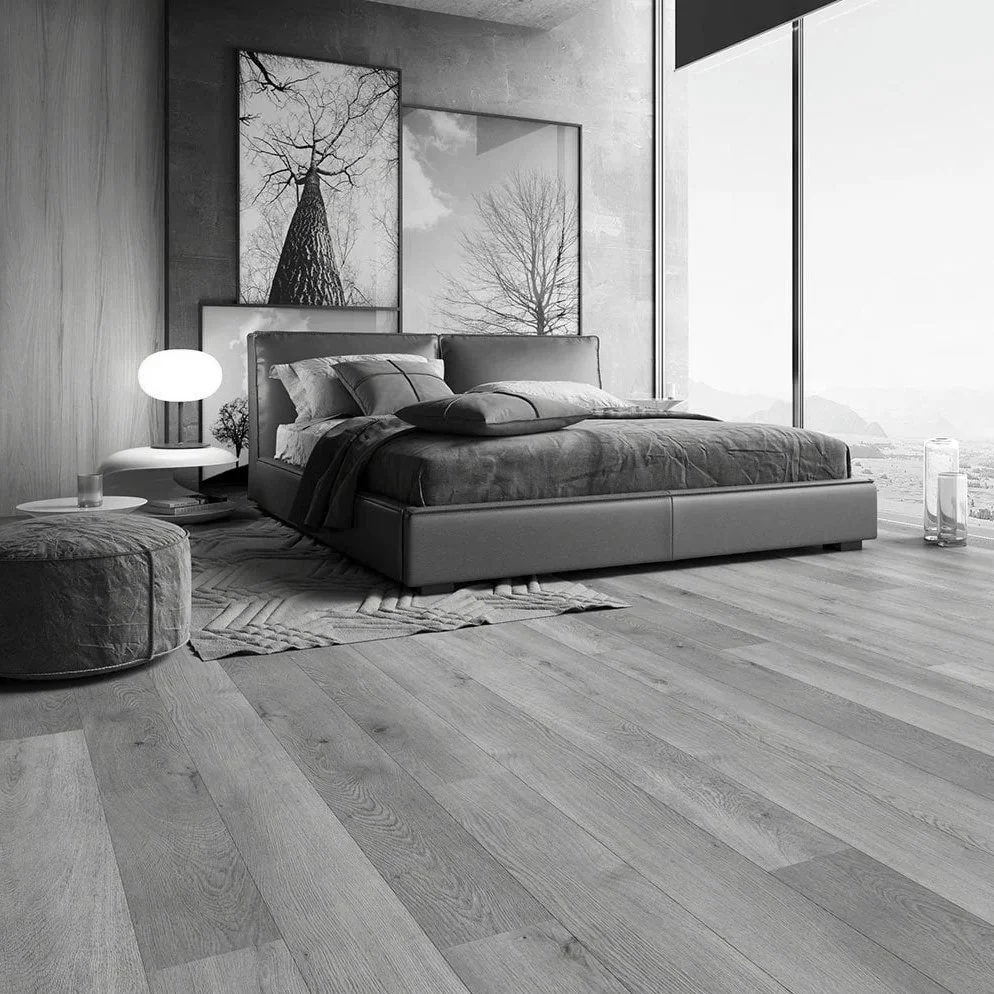
If you've been scrolling design feeds lately, you've noticed it: planks are getting wider. The narrow strip hardwood of decades past is giving way to wide plank formats — in hardwood, LVP, and engineered options — that make rooms feel more open and modern.
Why it works: Fewer seams mean a cleaner visual flow. Wide planks also showcase the natural grain and character of the material better than narrow strips ever could.
Why it lasts: This isn't a trend that's going anywhere. Wide plank has deep roots in traditional European design and it translates beautifully into both modern and farmhouse aesthetics.
Luxury Vinyl Plank (LVP) — Still the Reigning Champion
LVP has dominated the flooring market for years now, and for good reason. It looks like hardwood, performs like tile, and costs a fraction of either.
Modern LVP has evolved significantly. Today's options feature:
Deeper embossing that mimics real wood grain
Wider and longer plank formats
Improved wear layers for high-traffic durability
Waterproof cores that make it ideal for kitchens, bathrooms, and basements
For North Idaho homes — where winter means wet boots, muddy dogs, and temperature swings — LVP is often the smartest choice we recommend.
Warm, Natural Tones Are Back
The gray-everything trend had a long run. But design is shifting back toward warmer, more organic tones: honey oak, warm walnut, creamy beige, and natural wood expressions that feel alive instead of cold.
This shift mirrors a broader movement in interior design toward materials that feel grounded and natural. Think less "showroom" and more "lived-in warmth."
If you're choosing flooring you plan to keep for the next decade, leaning into warm neutral tones is a safer bet than committing to a trend color that may feel dated in five years.
Matte Finishes Over High Gloss
Glossy floors had their moment — and then homeowners discovered exactly how unforgiving they are. Every footprint, every scratch, every dust particle shows up under a high-gloss finish.
Matte and satin finishes are the current standard for good reason. They're more forgiving on everyday wear, they photograph better, and they tend to feel more intentional and modern than their shiny counterparts.
Whether you're going hardwood, LVP, or tile, the finish you choose matters as much as the material itself.
Large Format Tile in Kitchens and Bathrooms
In wet areas, tile is still king. And like plank flooring, tile is going bigger.
Large format tiles — think 24x24 or even larger — create a seamless, sophisticated look with fewer grout lines. That means less maintenance and a cleaner aesthetic that works in both modern and transitional spaces.
Porcelain continues to be the go-to material for its durability and low maintenance, especially in high-use bathrooms and kitchens.
Mixing Materials Intentionally
One of the more interesting design moves we're seeing is the intentional mix of materials between spaces.
Instead of running the same flooring throughout an entire home, homeowners are defining zones with different materials — tile in the kitchen that transitions into LVP in the living room, or hardwood in the main area that gives way to a patterned tile in an entryway.
Done well, this approach adds visual interest and allows each space to have its own personality while still feeling cohesive. Done poorly, it feels choppy.
The key word is intentional. The transition needs to make sense — visually and functionally.
What to Ask Before You Choose
Before picking a floor based on what looks good in a showroom, ask yourself:
Who lives in this home? Kids, pets, and heavy foot traffic change the equation entirely.
What's the subfloor situation? The best flooring fails on a bad subfloor. This is something we assess before recommending any material.
Are you staying or selling? If resale is the goal, neutral and durable wins every time.
What's the long-term plan for the space? Flooring a basement differently than a master bedroom isn't just acceptable — it's smart.
The Mr. Clean Fix Take
Flooring trends come and go, but the homes that hold up best — and feel best to live in — are the ones where decisions were made thoughtfully.
Beautiful flooring isn't just about choosing the right material. It's about proper prep, professional installation, and choosing something that fits how you actually live — not just how a room looks in a magazine.
If you're considering new flooring and want honest guidance before you commit, we're always happy to walk through the options with you.
Because the right floor is one you'll still love five years from now.

Lighting Matters: How the Right Light Can Change the Entire Home
Lighting is one of the most underestimated elements in a home—and one of the most powerful. You can have beautiful flooring, perfectly painted walls, and high-end finishes, but if the lighting is off, the entire space can feel… wrong. On the flip side, the right lighting can elevate even the simplest room into something warm, inviting, and intentional.
At its core, lighting isn’t just functional—it’s emotional. It shapes how a space feels, how it’s used, and even how you experience your home day to day.
The Mood Maker You Didn’t Know You Needed
Lighting directly impacts mood. Bright, cool-toned lighting can make a space feel energetic and productive—great for kitchens, bathrooms, and workspaces. Warmer, softer lighting creates a relaxed, cozy atmosphere, perfect for living rooms and bedrooms.
Ever walked into a room and instantly felt at ease? Or the opposite—harsh lighting that makes everything feel sterile? That’s not an accident. That’s lighting doing its job (or failing to).
Layers Are Everything
One overhead light in the center of a room just doesn’t cut it anymore. Thoughtful lighting design uses layers:
Ambient lighting: The main source of light (ceiling fixtures, recessed lighting)
Task lighting: Focused lighting for specific activities (under-cabinet lights, desk lamps)
Accent lighting: Highlights architectural features or decor (wall sconces, LED strips)
When these layers work together, the room feels dynamic and balanced instead of flat and one-dimensional.
Lighting Can Change Perception of Space
Want a room to feel bigger? Brighter lighting and strategically placed fixtures can open it up.
Need to make a large space feel more intimate? Lower, warmer lighting brings everything back down to a human scale.
Even ceiling height can feel different depending on how light is directed. Uplighting can make ceilings feel higher, while downward lighting creates a more grounded, cozy feel.
Color Temperature Matters More Than You Think
Not all light is created equal. The “temperature” of a bulb—measured in Kelvins—affects how colors appear and how a room feels:
2700K–3000K: Warm, soft, inviting (ideal for living spaces)
3500K–4000K: Neutral, balanced (great for kitchens and bathrooms)
5000K+: Cool, bright daylight (best for garages or work areas)
Choosing the wrong temperature can make your beautiful finishes look dull, washed out, or overly harsh.
Highlighting What Matters
Good lighting doesn’t just illuminate a space—it tells you where to look.
A well-placed pendant light draws attention to a kitchen island.
Under-cabinet lighting showcases a backsplash.
Accent lighting can turn a simple wall into a feature.
It’s about guiding the eye and creating subtle focal points throughout the home.
Energy Efficiency Meets Style
Modern lighting solutions don’t just look better—they perform better too. LED technology offers longer lifespan, lower energy use, and more flexibility in color and brightness.
That means you can have beautiful, customized lighting without sacrificing efficiency.
The Takeaway
Lighting isn’t just a finishing touch—it’s a foundation. It has the power to completely transform how your home looks, feels, and functions.
If your space feels off and you can’t quite figure out why, take a look up. The answer might not be in your walls or floors—it might be in the light above them.
Because when lighting is done right, everything else falls into place.

Think Spring: Outdoor Living Upgrades Worth Investing In
Motivation Monday
There’s something about the shift from winter to spring that sparks a different kind of energy. The days get a little longer, the air softens, and suddenly you’re looking at your outdoor space thinking… this could be so much more.
Motivation Monday isn’t just about mindset—it’s about movement. And today, that movement starts right outside your door.
Why Outdoor Living Matters More Than Ever
Homeowners are no longer treating outdoor areas as an afterthought. Decks, patios, and porches have become true extensions of the home—spaces for relaxing, entertaining, and even working.
Investing in your outdoor space isn’t just about aesthetics (though that’s a big bonus). It’s about:
Increasing your home’s usable square footage
Boosting property value
Creating a space that actually supports your lifestyle
And let’s be honest—there’s nothing like that first cup of coffee on a finished deck in the spring sun.
Decks: The Heart of Outdoor Living
A well-built deck is one of the most versatile upgrades you can make. Whether you’re envisioning weekend BBQs, quiet evenings, or a full outdoor dining setup, a deck creates a foundation for it all.
Worth-it upgrades include:
Composite decking for low maintenance
Built-in seating or planters
Multi-level designs for added dimension
Railings that elevate the overall look
A deck isn’t just wood and fasteners—it’s where memories happen.
Patios: Low Maintenance, High Impact
If you’re looking for durability and style, patios are a powerhouse option. With materials like stamped concrete, pavers, or natural stone, patios can be customized to match any aesthetic—from rustic to modern.
Why patios are a smart investment:
Long lifespan with minimal upkeep
Endless design possibilities
Seamless integration with landscaping
Perfect base for fire pits or outdoor kitchens
Patios create a grounded, intentional space that feels permanent and polished.
Porches: The Underrated Upgrade
Porches bring character, charm, and function all in one. Whether it’s a front porch that boosts curb appeal or a covered back porch for year-round use, this upgrade adds both beauty and practicality.
Consider adding:
Covered or screened-in features
Ceiling fans or lighting for comfort
Custom railings or columns for style
Durable flooring options for longevity
A porch invites you to slow down—and sometimes, that’s exactly what your home needs.
Where to Start
The best outdoor upgrade is the one that fits your space, your budget, and your vision. That’s where having the right team makes all the difference.
At Mr. Clean Fix, we don’t just build structures—we help you create spaces that work for your life. Whether you’re starting from scratch or upgrading an existing area, we’ll walk you through design, materials, and execution so you get something that lasts.
Your Motivation This Monday
Think spring. Think possibility. Think about how you want to use your home this year—and then take the first step toward making it happen.
Because the truth is, the perfect outdoor space isn’t something you wait for… it’s something you build.
The Art of Multifunctional Living: Making Every Room Work Smarter
In today’s homes, space isn’t just about square footage—it’s about how well that space works for you. Whether you're navigating a busy household, working from home, or simply wanting more flexibility, multifunctional living is quickly becoming the gold standard in modern design.
At Mr. Clean Fix, we’ve seen firsthand how transforming a single-purpose room into a dual-function space can completely change how a home feels and functions. It’s not just about saving space—it’s about creating a home that adapts to your life.
Why Multifunctional Spaces Matter
Life doesn’t fit neatly into one box—so why should your rooms?
The dining room that sits unused most of the week, the guest room that only sees visitors twice a year, or the basement that’s become a catch-all storage zone… these are all opportunities waiting to happen.
Multifunctional design allows you to:
Maximize every square foot
Adapt your home to changing needs
Reduce clutter and increase efficiency
Create a more intentional, organized living environment
Popular Double-Duty Room Ideas
1. Home Office + Guest Room
With more people working remotely, this is one of the most in-demand combinations. Think murphy beds, sleeper sofas, or built-in desks that don’t compromise comfort when guests arrive.
2. Living Room + Playroom
Instead of toys taking over the entire house, create a designated (but stylish) play area within your main living space. Built-ins, hidden storage, and durable finishes make all the difference.
3. Kitchen + Command Center
A small nook with a desk, charging station, and calendar board can turn your kitchen into the hub of the home—perfect for managing schedules, homework, and daily life.
4. Basement + Fitness Space
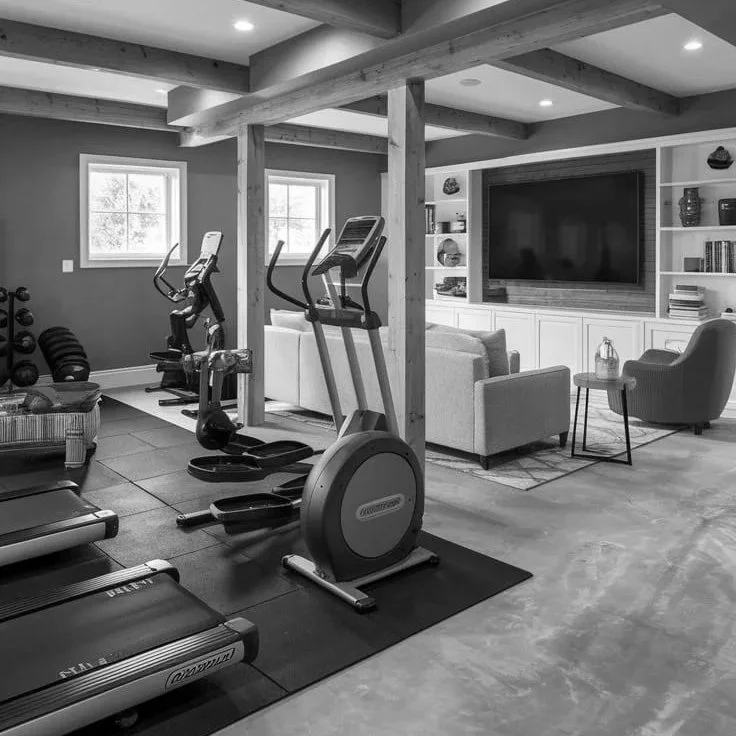
Your basement doesn’t have to be just storage. We can help turn it into a hybrid space—part gym, part lounge, part entertainment zone.
5. Bedroom + Workspace
Even in smaller homes, we can design a layout that allows for productivity without sacrificing rest and relaxation.
Design Tips for Multifunctional Living
Making a room do double duty takes more than just placing two functions in the same space—it requires thoughtful design.
Zoning is key: Use rugs, lighting, or partial walls to define different areas within one room.
Built-ins are your best friend: Custom shelving, desks, and storage solutions keep everything seamless and clutter-free.
Furniture should work harder: Look for foldable, expandable, or hidden-function pieces.
Keep flow in mind: The space should feel natural, not cramped or chaotic.
How Mr. Clean Fix Can Help
This is where we come in.
At Mr. Clean Fix, we specialize in turning “what if” spaces into “why didn’t we do this sooner?” transformations. Whether it’s reframing a layout, adding built-ins, finishing a basement, or creating custom solutions, we help homeowners unlock the full potential of their space.
We don’t believe in one-size-fits-all designs. Every home—and every lifestyle—is different. That’s why we work closely with you to understand how you live, what you need, and how your space can support that.
Your Home, Reimagined
Multifunctional living isn’t just a trend—it’s a smarter way to live. It’s about making your home flexible, efficient, and ready for whatever life throws your way.
If you’ve got a room that isn’t pulling its weight, it might be time to rethink it.
Let’s turn your space into something that truly works for you.

Open Concept vs. Defined Spaces: What’s Right for Today’s Homes?
For years, open concept living has dominated home design. Walls came down, kitchens flowed into living rooms, and entertaining became easier than ever. But recently, homeowners have started reconsidering the idea that bigger and more open is always better.
Now we’re seeing a shift toward defined spaces—rooms with clearer purpose, better sound separation, and more privacy.
So which one is right for your home?
The answer isn’t one-size-fits-all. It depends on how you live in your space. The good news? Mr. Clean Fix can help homeowners move in either direction, whether that means opening things up or creating more functional separation.
Let’s take a look at both styles.
The Appeal of Open Concept Living
Open concept homes remove walls between major living areas, typically connecting the kitchen, dining room, and living room into one large shared space.
Why homeowners love it
• Better for entertaining – Everyone stays connected during gatherings.
• More natural light – Light travels through the entire space instead of being blocked by walls.
• Feels larger – Even modest homes feel bigger when sightlines open up.
• Modern look – Clean lines and spacious layouts still appeal to many buyers.
For families who enjoy hosting, cooking together, or keeping an eye on kids while working in the kitchen, open layouts can make daily life feel more connected.
How Mr. Clean Fix helps
If you're considering opening up your home, we can help with:
• Non-load-bearing wall removal
• Structural modifications when load-bearing walls are involved
• Kitchen remodels that integrate into living areas
• Flooring continuity throughout the open space
• Lighting upgrades to match the new layout
Opening a space properly requires planning, structural knowledge, and finishing work that makes the change feel seamless—and that’s exactly where our experience comes in.
The Return of Defined Spaces
While open concept homes are still popular, many homeowners are rediscovering the value of separate rooms.
After years of remote work, online school, and busy households, people are realizing that sometimes walls are actually useful.
Why defined spaces are making a comeback
• Noise control – Separate rooms reduce distractions.
• Work-from-home privacy – Dedicated offices are easier to focus in.
• Energy efficiency – Smaller rooms are easier to heat and cool.
• More design personality – Each room can have its own character.
Defined spaces can make a home feel more organized and functional, especially for families who need different areas for work, relaxation, and entertainment.
How Mr. Clean Fix can help
If your home feels too open, we can help create structure with:
• Framing new interior walls
• Adding offices, reading rooms, or flex spaces
• Installing sliding barn doors or pocket doors
• Creating mudrooms or entry partitions
• Custom trim and finish work to match your home's style
Sometimes even small layout changes can dramatically improve how a home functions.
Finding the Right Balance
Many modern homes are finding a middle ground between open and defined spaces.
Instead of completely open layouts, homeowners are using design elements like:
• Partial walls
• Archways
• Built-in shelving dividers
• Kitchen islands
• Glass-paneled doors
These features maintain openness while still giving rooms a sense of purpose.
Making Your Home Work for You
The most important question isn’t whether open concept or defined spaces are trending.
It’s how you actually live in your home.
Do you host often?
Need quiet work areas?
Want better flow between rooms?
Every home—and every family—is different.
At Mr. Clean Fix, we help homeowners rethink their spaces so they function better for everyday life. Whether that means opening up walls, creating new rooms, or finding the perfect balance between the two, we’re here to make it happen.
Thinking about updating your home's layout?
Let’s talk about your ideas and how we can bring them to life.
Mr. Clean Fix
Helping North Idaho homeowners create spaces that truly work for them.

When Winter Won’t Let Go: Preparing Your Home During That Awkward Almost-Spring Season
If you live in North Idaho, you know this moment well.
The calendar says spring is around the corner. The days are getting a little longer. You might even feel motivated to start planning yard projects.
Then you look outside…and there’s four inches of fresh snow.
Welcome to the not-winter, not-spring season.
This strange in-between time can feel like a pause button for homeowners. It’s too cold for many outdoor projects, but winter is clearly losing its grip. While it may not feel like the perfect time for big changes, it’s actually one of the best windows to finish the winter tasks that got pushed aside and start quietly preparing for spring.
At Mr. Clean Fix, we often see homeowners use this time to catch up on the small things that make a big difference once the weather truly warms up.
Finish the Winter Projects You Meant to Do
Every winter comes with a list of “I’ll get to that later” repairs.
Maybe it was a small leak.
A drafty window.
Loose trim.
A deck that needed sealing before the snow came.
Winter has a way of hiding those projects under layers of snow, holidays, and busy schedules.
Now is the perfect time to wrap those up before spring projects start competing for attention.
Common late-winter fixes include:
Sealing small roof or gutter leaks
Repairing damaged siding or trim
Replacing cracked caulking around windows and doors
Fixing small drywall damage from winter humidity shifts
Addressing minor plumbing or moisture issues
These smaller repairs prevent bigger problems once snow melts and spring rain arrive.
Check the Areas Winter Hits Hardest
Our winters can be beautiful, but they’re not exactly gentle on homes.
This is the time to take a quick look at the places that endure the most stress during the cold months.
Keep an eye on:
Decks and railings – Snow and ice can cause hidden moisture damage.
Gutters and downspouts – Ice buildup often loosens fasteners or causes small separations.
Walkways and steps – Freeze-thaw cycles can shift materials.
Exterior paint and caulking – Winter temperature swings can create cracks.
Catching these issues early helps avoid expensive repairs later in the year.
Start Planning Your Spring Projects Now
Even if the ground is still frozen, your spring project planning shouldn’t be.
In fact, this in-between season is the best time to start thinking about improvements like:
Deck repairs or resurfacing
Fence installation
Pergolas or patio structures
Exterior painting
Walkway upgrades
Outdoor living spaces
Planning early means materials can be ordered, designs finalized, and schedules set before the busy season hits.
Once the weather finally cooperates, you’ll be ready to move forward instead of starting from scratch.
The Hidden Advantage of This “In-Between” Season
While everyone waits for spring to arrive, homeowners who use this time wisely often end up ahead.
They finish the lingering winter repairs.
They plan their warm-weather projects.
And when the snow finally disappears, they’re ready to go.
That awkward moment between winter and spring may not feel exciting—but it’s actually one of the most productive times of the year for home maintenance and project planning.
And here in North Idaho, we all know one thing for sure:
Spring will get here eventually…even if winter throws one last snowstorm at us first.
Ready to Wrap Up Winter and Prepare for Spring?
If you have winter repairs you never got around to—or projects you want ready when spring arrives—Mr. Clean Fix can help.
From small fixes to bigger outdoor improvements, we’re happy to help homeowners get their homes ready for the season ahead.
Because when the snow finally melts, the best projects are the ones that are already planned.
Small Upgrades That Make Your Home Feel Brand New
Sometimes homeowners think the only way to refresh their home is with a full remodel. While major renovations can be exciting, they aren’t always necessary to create that “wow, this feels amazing again” moment.
The truth is, some of the most satisfying changes come from small upgrades that transform how a space feels without requiring a huge budget or weeks of construction.
At Mr. Clean Fix, we’ve seen firsthand how a few smart improvements can completely change a home’s atmosphere. If your space feels a little tired or outdated, here are some upgrades that can make it feel brand new again.
1. Upgrade Your Lighting
Lighting is one of the most underrated design elements in a home.
Swapping outdated light fixtures for something modern can instantly refresh a room. Even simple changes like brighter LED bulbs, new pendant lights over a kitchen island, or updated bathroom vanity lighting can dramatically improve the mood of a space.
Good lighting doesn’t just help you see better — it makes the entire room feel cleaner, warmer, and more inviting.
2. Replace Old Hardware
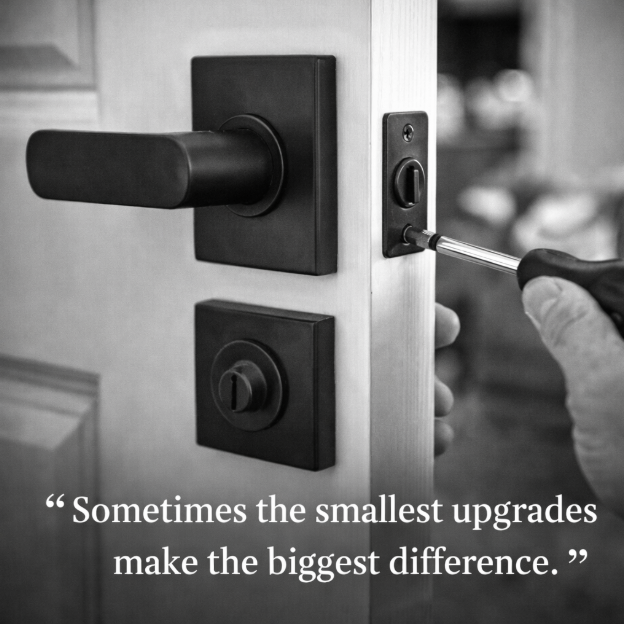
Cabinet handles, drawer pulls, and door hardware are small details that make a big visual impact.
If your kitchen or bathroom cabinets are still in good condition but feel dated, replacing the hardware can completely change the look. Modern matte black, brushed nickel, or warm brass finishes can give cabinets a whole new personality.
It’s one of the fastest ways to create the feeling of a mini remodel.
3. Refresh the Paint
Few things transform a space faster than fresh paint.
Walls collect years of scuffs, small marks, and fading without us realizing it. A new coat of paint can instantly brighten a room and make everything feel cleaner and more updated.
Even better, a subtle color change can completely shift the vibe of a space — from cozy and warm to bright and modern.
4. Install a New Backsplash
A backsplash is like the jewelry of a kitchen.
It’s a relatively small area, but it draws the eye and helps define the style of the entire room. Whether it’s classic subway tile, textured stone, or a modern pattern, a new backsplash can breathe life into a kitchen without replacing cabinets or countertops.
It’s one of those upgrades where homeowners often say, “I wish we did this sooner.”
5. Improve Trim and Caulking
This is one upgrade people rarely think about — but it makes a huge difference.
Over time, caulking cracks, trim gets dinged, and small gaps appear around baseboards and windows. Cleaning up those details with fresh caulking and repaired trim lines gives the home a crisp, finished look again.
It’s subtle, but the entire home feels sharper and more cared for afterward.
6. Update Flooring in High-Impact Areas
If replacing flooring throughout the entire home isn’t in the plan, consider updating one high-traffic area.
Entryways, kitchens, and bathrooms see the most use. Installing something like luxury vinyl plank (LVP) or new tile in those spaces can instantly modernize the home while being durable and practical.
Sometimes one well-chosen flooring update can elevate the entire house.
Small Changes, Big Impact
Home improvement doesn’t always mean tearing everything down and starting over.
Often, the biggest difference comes from thoughtful upgrades that improve the details we interact with every day. Fresh lighting, updated hardware, new paint, and clean finishes can make a home feel refreshed without overwhelming the budget.
If you’re thinking about improving your space but aren’t sure where to start, focusing on a few strategic upgrades can go a long way toward making your home feel brand new again.
And when you’re ready to bring those ideas to life, the team at Mr. Clean Fix is always happy to help.
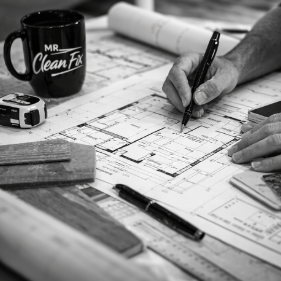
What Happens Behind the Scenes of a Remodeling Project
When homeowners picture a remodeling project, they usually imagine the exciting parts — demolition day, new cabinets arriving, fresh paint going on the walls, and the final reveal.
But what most people don’t see is everything happening behind the scenes to make that transformation possible.
At Mr. Clean Fix, a huge portion of our work happens before a single tool even comes out of the trailer. A successful remodel isn't just construction — it's planning, coordination, and problem-solving every step of the way.
Let’s pull back the curtain and show you what really goes on behind the scenes of a remodeling project.
1. The Planning Phase
Before we start building, we spend time making sure everyone is on the same page.
This includes:
• Meeting with the homeowner
• Understanding goals and budget
• Measuring and documenting the space
• Discussing materials and layout
• Identifying potential structural or layout challenges
This phase helps prevent surprises later. A good contractor doesn’t just start swinging a hammer — we make sure there’s a clear plan first.
2. Material Selection and Ordering
Many materials have lead times that homeowners don’t always expect.
Cabinets, flooring, tile, fixtures, and specialty items often need to be ordered weeks in advance. Part of our job is helping schedule the project around when those materials will arrive.
Behind the scenes we are:
• Checking product availability
• Coordinating deliveries
• Confirming measurements
• Making sure everything will fit and install properly
Getting this right keeps the project moving forward without unnecessary delays.
3. Scheduling and Coordination
A remodeling project is a bit like a puzzle. Different pieces need to happen in the right order.
For example:
Demo
Framing or structural changes
Plumbing and electrical
Insulation and drywall
Flooring and cabinets
Trim, paint, and finishes
If one step is delayed, it can affect everything that follows. Behind the scenes we’re constantly adjusting schedules and coordinating the next phase of work so the project stays on track.
4. Problem Solving (Because Every Remodel Has Surprises)
One thing we’ve learned from years in the field is that every house has a story.
Sometimes we open a wall and find:
• Old plumbing that needs replacement
• Wiring that isn’t up to code
• Hidden water damage
• Structural framing that needs correction
These aren’t things homeowners see during the planning stage, but they’re common in remodeling work. A big part of our job is solving these problems quickly while keeping you informed about the best path forward.
5. Communication with the Homeowner
Good communication is what keeps remodeling projects stress-free.
Behind the scenes we’re often:
• Updating homeowners on progress
• Discussing decisions that come up during construction
• Adjusting timelines if needed
• Making sure expectations stay clear on both sides
A remodel works best when the contractor and homeowner operate as a team.
6. The Final Details
The last stage of a project often takes the most patience.
This is when we focus on:
• Final trim work
• Touch-up paint
• Fixture installation
• Adjustments and fine-tuning
These details are what turn a construction site into a finished space you can enjoy every day.
The Truth About Remodeling
From the outside, a remodel can look like a fast transformation. But behind every successful project is a lot of planning, coordination, and experience.
When done right, the behind-the-scenes work is what keeps the project running smoothly and delivers a finished result that lasts for years.
At Mr. Clean Fix, we believe the best remodeling projects are built on clear communication, careful planning, and quality workmanship from start to finish.

How to Budget for a Remodel Without the Stress
Let’s be honest.
Budgeting for a remodel can feel overwhelming. Numbers everywhere. Pinterest inspiration that keeps growing. Surprises hiding behind drywall. And that little voice that whispers, “What if we can’t afford this?”
At Mr. Clean Fix, we’ve seen it time and time again — the stress doesn’t usually come from the remodel itself.
It comes from not having a clear plan.
Here’s how to budget for your remodel the smart way… without losing sleep over it.
1. Start With Your “Why” (Not the Numbers)
Before you crunch a single number, ask yourself:
Are we remodeling to increase home value?
Improve function?
Fix something failing?
Or create a space we actually love being in?
Your “why” determines your spending strategy.
If you're remodeling to sell, you may focus on ROI.
If you’re remodeling to stay, comfort and quality might matter more than short-term resale value.
Clarity reduces stress. Every time.
2. Set a Realistic Range — Not a Perfect Number
One of the biggest stress triggers is locking yourself into a hard number too early.
Instead, create:
A comfortable range
A ceiling number you absolutely won’t exceed
Example:
“We’d like to stay around $25k, but we’re comfortable up to $30k if it truly improves the project.”
Ranges give breathing room.
Breathing room lowers anxiety.
3. Break the Budget Into Categories
Instead of looking at one big scary number, break it down:
Labor
Materials
Fixtures
Finishes
Permits
Contingency
When clients see how a remodel is built piece by piece, it stops feeling mysterious — and starts feeling manageable.
Transparency removes fear.
4. Always Plan for a Contingency
We say this with love:
If you don’t plan for surprises… they will plan for you.
In remodeling, especially in older homes, there are unknowns behind walls.
Industry standard recommendation:
10% contingency for newer homes
15–20% for older homes
If you don’t use it? Great.
If you need it? You’re calm instead of scrambling.
That’s the difference.
5. Decide Where to Splurge and Where to Save
Every project has “anchor items” — the pieces that matter most.
In a kitchen, that might be:
Cabinets
Countertops
Appliances
You can save on:
Lighting upgrades later
Decorative hardware
Some finish selections
Choose 2–3 elements to prioritize.
Be flexible on the rest.
Stress usually comes from trying to max out everything.
6. Phase It If Needed
Not everything has to happen at once.
If budget feels tight:
Complete structural or functional work first
Upgrade finishes later
Spread projects over seasons
A phased plan is still a plan.
And a plan is power.
7. Work With a Contractor Who Talks Numbers Clearly
A good contractor won’t avoid money conversations.
They’ll:
Explain labor vs material costs
Help you adjust selections to stay within range
Offer options without pressure
Communicate when changes affect pricing
Remodel stress often isn’t about cost — it’s about uncertainty.
Clear communication eliminates that.
8. Focus on Long-Term Value, Not Just Price
Cheaper isn’t always less stressful.
Redoing something twice?
Very stressful.
Paying for quality work that lasts?
Peace of mind.
A remodel should improve your daily life — not create financial regret.
Final Thought
Budgeting doesn’t have to be intimidating.
It’s just a roadmap.
And like any good roadmap, it works best when:
You know your destination
You understand the terrain
And you have the right team guiding you
If you're considering a remodel and want real numbers without pressure or confusion — we’re always happy to walk through it with you.
Clear plan. Clear communication. No chaos.

The Contractor–Client Relationship: What Makes a Project Go Smoothly
Let’s be honest — remodeling isn’t just about lumber, tile, or paint colors.
It’s about people.
At Mr. Clean Fix, we’ve learned that the difference between a stressful project and a smooth one almost always comes down to one thing:
The relationship between contractor and client.
You can have the best materials in the world, but if communication breaks down or expectations aren’t aligned, the experience suffers. When the relationship is strong, though? Projects flow. Decisions get made faster. Problems get solved easier. And everyone walks away proud of the result.
Here’s what truly makes a contractor–client relationship work.
1. Clear Expectations From Day One
Smooth projects start before demo even begins.
That means:
Clear scope of work
Transparent pricing
Honest timelines
Defined responsibilities
When both sides understand exactly what’s included (and what’s not), there are fewer surprises later. Surprises are what derail budgets and moods.
We believe in putting everything in writing and walking through it together. It’s not about paperwork — it’s about clarity.
2. Communication That Goes Both Ways
The best projects feel like teamwork.
Clients should feel comfortable asking questions. Contractors should provide updates before they’re asked for them. If something changes — whether it’s material availability or an unexpected framing issue — it needs to be communicated quickly and clearly.
Silence creates stress.
Transparency builds trust.
Even tough conversations are easier when the foundation is strong.
3. Flexibility Without Chaos
Here’s the reality of remodeling:
Once walls open up, sometimes we find things.
Old wiring. Hidden water damage. Framing that doesn’t meet code. It happens.
A smooth project isn’t one without hiccups — it’s one where both contractor and client approach those hiccups with problem-solving energy instead of panic.
Flexibility matters. So does trust that your contractor is recommending solutions in your best interest, not upselling you.
4. Respect on Both Sides
This one is big.
Contractors are working in your home — that’s personal space. We respect that by:
Keeping work areas clean
Protecting flooring and furniture
Showing up when we say we will
Treating your home like it’s our own
On the flip side, smooth projects happen when clients respect:
Working hours
The process
The expertise they hired
Mutual respect changes everything.
5. Realistic Timelines & Decision-Making
One of the biggest project slowdowns? Delayed decisions.
Tile not picked.
Fixture undecided.
Paint color still “thinking about it.”
When selections are made on time, work keeps moving.
A good contractor will guide you through decision points ahead of schedule so you’re never rushed — but staying engaged on your end keeps momentum strong.
6. Trust the Process (and the Professionals)
There’s a reason you hired a contractor.
You don’t have to know how to sister joists or float drywall. That’s our job. What makes projects smooth is when clients trust the craftsmanship and the sequencing of the work.
And trust is earned — not assumed.
It’s built through communication, consistency, and integrity.
7. Shared Vision
The most satisfying projects happen when everyone is working toward the same outcome.
When contractor and client both care about the finished product — not just “getting it done” — the quality shows.
We love when clients are excited. That energy fuels the work.
The Bottom Line
A smooth project isn’t just about skill.
It’s about partnership.
At Mr. Clean Fix, we don’t see projects as transactions. We see them as collaborations. When expectations are clear, communication is open, and respect flows both ways, remodeling can actually be an enjoyable process.
And that’s always the goal.

Big Care for Small Projects: Project Spotlight – The Chicken Coop & Greenhouse Renovation
At Mr. Clean Fix LLC, we believe every project deserves quality workmanship and careful attention to detail—no matter the size. Small projects often make the biggest difference in how a property functions day to day. This recent chicken coop and greenhouse renovation is a perfect example of how thoughtful improvements can create safer, more efficient, and more enjoyable spaces.
Our client wanted to improve the safety of their chicken coop and transform their greenhouse into a more functional area for starting plants and gardening year-round. While these were not large remodels, they required skill, precision, and customized solutions.
🐓 Chicken Coop Safety Renovation
When we arrived on site, the chicken coop presented a serious fire hazard. The existing insulation and electrical wiring were unsafe and needed immediate attention to protect both the animals and the property.
Our team at Mr. Clean Fix LLC focused on improving safety and durability by completing the following work:
Removing old and damaged insulation from the ceiling
Reinsulating the ceiling with proper fire-safe materials
Resheathing the ceiling to create a clean, secure finish
Completing electrical upgrades to eliminate fire risks
Ensuring the structure was safe, functional, and built for long-term use
The result was a clean, secure, and much safer environment for the chickens. The homeowner now has peace of mind knowing their coop is protected from potential hazards and built to last.
🌿 Greenhouse Upgrade & Custom Plant Start Station
The greenhouse renovation focused on increasing functionality and creating the ideal environment for starting plants. We designed and built a custom shelving system specifically for plant starts and installed custom lighting to support healthy growth.
Our greenhouse improvement work included:
Building a custom shelf system for plant starts
Installing specialized grow lighting for optimal plant development
Replacing an existing window to improve ventilation and overall usability
Assisting with plumbing upgrades inside the greenhouse
Organizing the space to be more efficient and gardener-friendly
Now the greenhouse is refreshed, more functional, and ready to support productive growing seasons all year long.
Why Small Projects Matter
Many homeowners believe contractors only focus on large remodeling jobs. At Mr. Clean Fix LLC, we take pride in handling small projects with the same care and professionalism as full renovations. Chicken coops, greenhouses, sheds, and backyard structures are essential parts of how families live and enjoy their homes.
This project highlights our commitment to:
Safety-first workmanship
Custom solutions for unique spaces
Quality craftsmanship
Honest and dependable handyman services
Treating every project with care and respect
Even small upgrades can dramatically improve safety, efficiency, and comfort.
Big Care for Every Project
This chicken coop and greenhouse renovation perfectly represents our mission: Big Care for Small Projects. Whether it’s a custom shelf system, electrical safety upgrades, plumbing assistance, or structural repairs, Mr. Clean Fix LLC is here to help homeowners improve the spaces that support their lifestyle and passions.
If you have a small project that’s been sitting on your to-do list, our team is ready to help turn it into a clean, safe, and functional space you can enjoy for years to come.

Design Trends That Actually Add Value (And Ones That Don’t)
n the world of home remodeling, trends come and go faster than you can say “open concept.” While some updates can make your home more enjoyable—and more valuable—others can leave you with buyer hesitation and buyer’s remorse. Here’s a guide to which design trends truly add value and which are better left in Pinterest boards.
Trends That Actually Add Value
1. Timeless Kitchen Updates
Kitchens are the heart of the home, and investing wisely here pays off. Think neutral countertops (quartz is a favorite for durability), shaker-style cabinets, and modern, energy-efficient appliances. A fresh backsplash or upgraded hardware can make a big visual impact without over-customizing.
2. Functional Bathrooms
Buyers love bathrooms that are practical and modern. Walk-in showers with glass doors, double vanities in master bathrooms, and updated fixtures give a polished look without going overboard. Avoid over-personalized tile patterns or bold colors that might not appeal to the masses.
3. Smart Storage Solutions
Built-in shelving, mudrooms with cubbies, and pantry organizers might not be flashy, but they scream “functional and well thought-out.” Storage upgrades often resonate with buyers, especially in family homes.
4. Outdoor Living Spaces
A usable, low-maintenance deck, patio, or porch can increase your home’s appeal. Think of a space where people can gather comfortably—not necessarily a full-blown outdoor kitchen unless it fits your neighborhood’s market.
5. Energy Efficiency
Smart thermostats, efficient HVAC systems, and double-pane windows can make a home feel modern and responsible. Buyers love the idea of saving money and reducing environmental impact.
Trends That Often Don’t Add Value
1. Over-the-Top Customizations
While a bright purple accent wall or a themed “Star Wars” bathroom might be fun for you, it’s unlikely to resonate with buyers. Stick to neutral palettes for long-term value.
2. Ultra-Luxury Features in Mid-Range Homes
Think home theaters, indoor pools, or extravagant wine cellars in an average neighborhood. These can price a home out of the market and don’t usually give you a dollar-for-dollar return.
3. Niche Flooring Choices
Trendy options like bright-colored epoxy floors or unusual tile patterns may be eye-catching, but they can also turn buyers off. Neutral, durable, and easy-to-clean flooring usually wins.
4. Obscure Materials or Finishes
Exotic woods, neon-colored cabinets, or overly shiny metals might look cool now, but trends fade. Stick with classic finishes that are easier to maintain and appeal to a wider audience.
5. Excessive Open Concept
While open floor plans are popular, completely removing walls in older homes can disrupt the natural flow and feel of the home. Balance openness with functional spaces.
The Bottom Line
Trends aren’t inherently bad—but when it comes to home value, it pays to invest in updates that enhance functionality, longevity, and broad appeal. Think: timeless, practical, and neutral. The trick is knowing the difference between a statement that will wow buyers and one that will make them scroll past your listing.

Remodel Now or Wait? How to Know When It’s Time to Invest in Your Home
One of the most common questions we hear is this:
“Should we remodel now… or wait?”
It’s a fair question. Remodeling is an investment — financially, emotionally, and logistically. And timing matters.
But here’s the truth most homeowners don’t realize:
The right time isn’t just about the market.
It’s about your life.
Let’s break this down in a way that actually helps you decide.
Market Timing vs. Personal Timing
Everyone wants to “time it right.”
Interest rates.
Material costs.
Housing values.
Economic headlines.
Yes — those things matter.
But market timing only tells part of the story.
Market Timing
If:
Home values are strong
Inventory is low
You plan to sell in the near future
Strategic updates can increase resale appeal and ROI.
On the flip side, waiting for the “perfect” market moment can keep you stuck for years. Materials fluctuate. Labor fluctuates. Rates fluctuate. There is rarely a magical window where everything aligns perfectly.
Personal Timing (The One That Matters More)
Ask yourself:
Are you staying in this home 5+ years?
Is your current layout causing daily frustration?
Are you avoiding rooms in your own house?
Is maintenance starting to pile up?
If your home no longer supports your lifestyle, that’s personal timing speaking.
And personal timing usually outweighs market timing.
Because quality of life has value too.
Functional vs. Cosmetic Upgrades
Not all remodels are created equal.
Understanding the difference can clarify whether you should move now or wait.
Functional Upgrades (Usually Shouldn’t Wait)
These impact safety, structure, efficiency, or daily usability:
Failing decks or stairs
Water damage
Drafty windows
Electrical or plumbing issues
Layouts that no longer work for your family
Delaying these can compound problems — and costs.
Functional upgrades often prevent larger expenses later.
Cosmetic Upgrades (Sometimes Can Wait)
These improve aesthetics but not function:
Cabinet color changes
Decorative tile swaps
Trend-driven finishes
Minor trim updates
If your home works well but just feels outdated, you may have flexibility.
But here’s something to consider:
Living in a space you dislike has a cost too. It affects how you host, relax, and enjoy your home.
Sometimes “cosmetic” is actually emotional functionality.
When Waiting Actually Costs More
Waiting feels safe.
But it isn’t always cheaper.
Here’s when delay becomes expensive:
1. Small Issues Turn Into Big Repairs
A minor moisture issue becomes structural damage.
A soft board becomes a rebuild.
A draft becomes long-term energy loss.
Preventative remodeling often costs less than reactive repairs.
2. Phased Projects Cost More Long-Term
Doing a kitchen in three separate waves over five years usually costs more than planning it correctly from the start.
Mobilization, material changes, labor fluctuations — they add up.
3. Material & Labor Rarely Go Backwards
While prices fluctuate, long-term trends generally rise.
Waiting five years hoping costs will drop significantly isn’t typically how the industry behaves.
4. You Lose Years of Enjoyment
This one doesn’t show up on spreadsheets.
If you plan to stay in your home, upgrading sooner means:
More years enjoying it
Less daily frustration
Better functionality for your family now — not someday
Time in a better space has value.
So… Remodel Now or Wait?
Here’s a simple framework:
Remodel now if:
There are functional or structural concerns
Your layout no longer fits your life
You’re staying long-term
Delaying increases repair risk
Consider waiting if:
It’s purely trend-driven
You may sell very soon
The space works fine functionally
You need more financial cushion first
The key is clarity.
A thoughtful consultation and honest evaluation can remove the guesswork.
At Mr. Clean Fix, we don’t push projects. We help homeowners make smart decisions — even if that means waiting.
Because the right time isn’t about pressure.
It’s about readiness.
If you’re unsure where your project falls, we’re happy to talk it through.
Sometimes clarity is the most valuable part of the process.

Monday Musings: Seahawks Champions, Gray Skies & Valentine’s Around the Corner
Monday mornings usually roll in quietly — but not this one.
After the Seattle Seahawks claimed their Super Bowl victory on Sunday, the excitement didn’t stay in Seattle. Even here at home, fireworks lit up the sky, proving once again that Seahawks pride runs deep across the Northwest. The game itself delivered exactly what fans hoped for: a dominant defensive showing, a strong ground game, and a statement win that reminded everyone why Seattle football hits different.
By the time the celebration settled down, reality checked back in — because winter isn’t done with us yet.
This Monday is coming in gray and rainy, with forecasts hinting at possible snow later this week. It’s that familiar stretch of late winter where the weather can’t quite decide what it wants to do, and homeowners start noticing every draft, drip, and creak a little more than usual.
Honestly? It’s not the worst thing.
Rainy days and colder nights have a way of slowing things down. Homes feel cozier, coffee tastes better, and it’s a perfect time to take stock of the spaces we live in — what’s working, what’s not, and what could use a little attention before spring finally shows up.
And speaking of timing, Valentine’s Day lands this Saturday. If the weather doesn’t cooperate (shocking, we know), it’s the perfect excuse to skip the crowds and lean into simple plans: cooking at home, movie nights, or just enjoying a warm, comfortable space together while winter does its thing outside.
Monday Mindset
A Seahawks Super Bowl win, fireworks in the neighborhood, rain on the windows, and snow possibly on the way — it’s a reminder that even in the middle of winter, there’s plenty to celebrate. Big wins, small comforts, and homes that keep us warm through it all.
Here’s to starting the week on a high note — rain or shine.

🏈 Super Bowl Sunday: What Home Projects and Football Have in Common
Super Bowl LX is just days away — the Seattle Seahawks vs. the New England Patriots face off in a historic rematch at Levi’s Stadium in Santa Clara, CA on February 8, 2026 with kickoff at 6:30 p.m. ET / 3:30 p.m. PT.
Whether you bleed blue and green 💙💚 or you’re just here for the snacks, halftime show (Bad Bunny, anyone?), and commercials, there’s something about Super Bowl Sunday that gets everyone rallied up — not unlike a home improvement project.
🏠 Game Plans = Project Plans
Just like a championship-level football game, any remodeling job — whether it’s a kitchen revamp or a new deck build — requires a solid game plan. You wouldn’t call an audible in the biggest moment without practice, and you shouldn’t start demo without a clear plan either.
Here’s how the two line up:
📋 Pre-Game Prep
Football teams watch hours of film; homeowners should walk through every detail of a project before swinging a hammer. Planning saves time and money.
⚙️ The Right Players
Just like a team needs its stars — the QB, the linemen, the defensive backs — your home project needs the right crew. Skilled professionals make the difference between a hail mary and a touchdown.
⏱️ Timing Matters
Nobody wants a game to drag into overtime, and a project stalled by delays can feel just as long. Setting expectations and milestones helps keep everything on track.
🛠️ Huddle Up for Projects This Season
Super Bowl Sunday is a reminder that every win — in football or in home improvement — comes from teamwork, preparation, and commitment to execution.
If you’ve been thinking about that kitchen backsplash, bathroom upgrade, or deck refresh, now is a great time to call your own play and get started. Reach out to us at Mr. Clean Fix and let’s draw up a plan that’s guaranteed to score! 😉

Winter Walkthroughs: What We Look For (and What Homeowners Should Expect)
Winter isn’t just about snow, ice, and cozy nights inside—it’s also one of the most important times of year to evaluate your home. And with Punxsutawney Phil seeing his shadow this Groundhog Day, we’re officially in for six more weeks of winter, which makes winter walkthroughs even more valuable.
At Mr. Clean Fix, winter walkthroughs help us spot issues before they turn into expensive spring surprises. Cold temperatures, snow load, and freeze–thaw cycles can expose weaknesses that stay hidden the rest of the year.
Here’s what we’re looking for—and what you can expect during a winter walkthrough.
Why Winter Is a Smart Time for a Walkthrough
Winter stresses a home in ways no other season does:
Materials contract and expand
Snow and ice test roofs and drainage
Moisture finds every tiny weakness
Heating systems work overtime
If something is going to fail, winter often shows us early warning signs.
Think of a winter walkthrough as preventative maintenance—not doom and gloom, just smart planning.
What We Look For During a Winter Walkthrough
🏠 Roof & Exterior
Winter conditions quickly reveal roof and siding issues. We check for:
Ice dams or uneven snow melt
Missing, cracked, or lifted shingles
Loose or damaged siding
Signs of wind damage
Gutter performance and ice buildup
These clues tell us how your home handles moisture and snow load.
💧 Moisture & Water Intrusion
Water is sneaky—especially in winter. We’re looking for:
Interior water staining on ceilings or walls
Condensation buildup
Drafty windows or doors
Signs of leaks around penetrations and flashing
Catching moisture issues now can prevent mold, rot, and major repairs later.
🔥 Insulation & Heat Loss
If your heating bill feels painful, there’s usually a reason.
We look for:
Cold spots and drafts
Poor attic insulation
Unsealed penetrations
Inefficient windows or doors
Winter walkthroughs help pinpoint where heat is escaping—and where upgrades will give the biggest return.
🧱 Foundations, Decks & Structural Areas
Freeze–thaw cycles can shift and stress structures. We check:
Foundation cracks or movement
Deck posts and footings
Stair stability
Exterior trim and fascia
Small issues now are far easier (and cheaper) to address before spring.
What Homeowners Can Expect
A winter walkthrough isn’t about pressure or panic—it’s about information.
You can expect:
Honest feedback on current conditions
Identification of urgent vs. “plan-for-later” items
Recommendations for temporary winter fixes if needed
Ideas for spring projects based on what we see now
Sometimes the result is peace of mind. Sometimes it’s a smart plan. Either way, you’re ahead of the game.
Groundhog Day & Six More Weeks of Winter 🐿️❄️
With Phil predicting six more weeks of winter, now’s the perfect time to ask:
Is your home ready to handle the rest of the season?
Winter walkthroughs help ensure your home makes it through the cold months safely—and comes out the other side ready for spring projects instead of emergency repairs.
Thinking ahead beats fixing behind.
If winter has taught us anything, it’s that your home always tells a story—we just know how to read the signs.
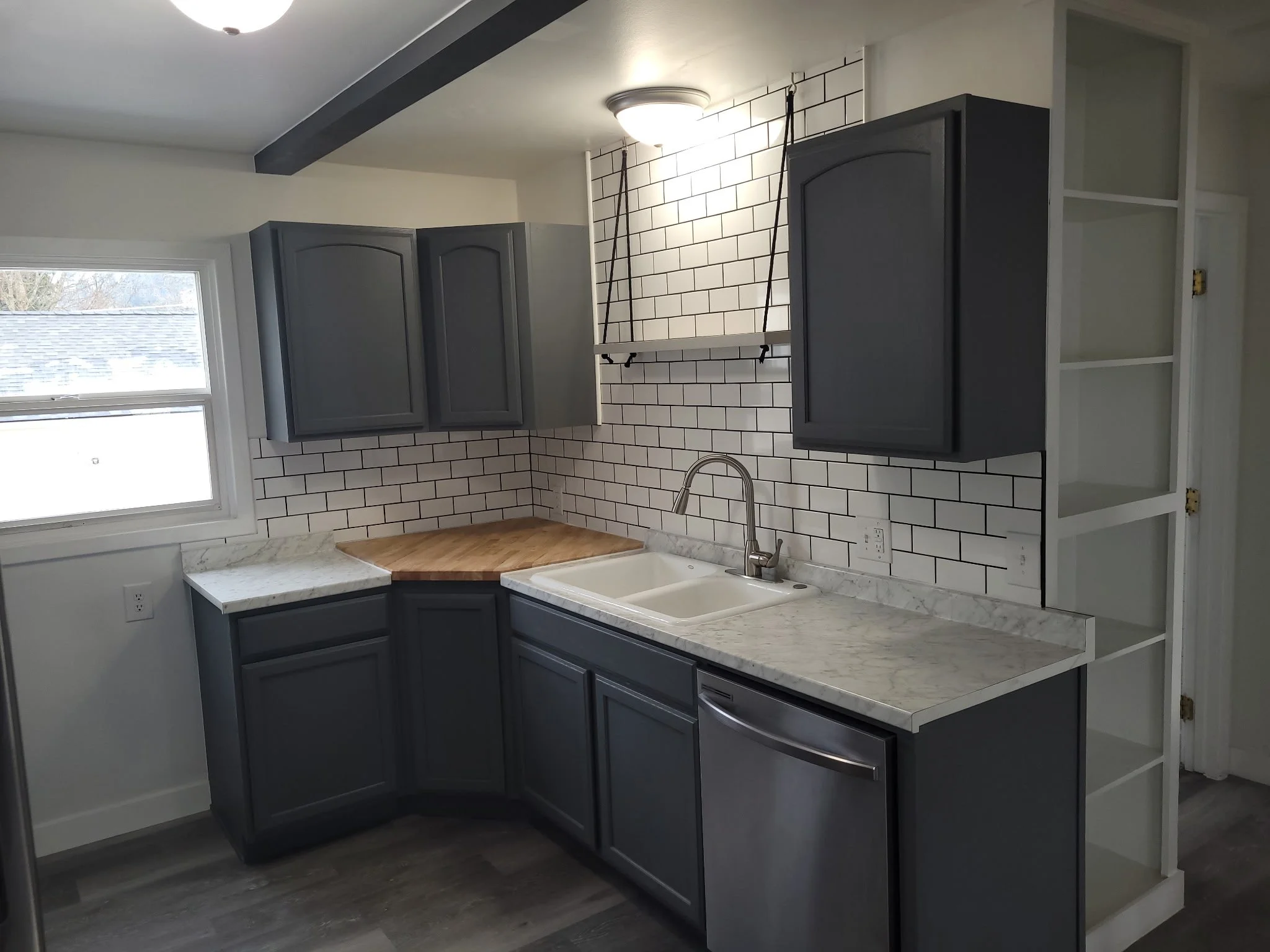
From Water Damage to Fresh Start: A Look Back at One of Our Early Remodels
Some projects stick with you—not because they were flashy, but because they marked a turning point.
This kitchen was part of a water damage insurance claim we handled in late 2022, just as we were wrapping up our first full year in business. At the time, it felt like “just another job.” Looking back now, it’s one of those projects that quietly represents growth—for us and for the homeowner.
What started as damage control quickly turned into a full refresh.
When Repairs Turn Into Opportunity
Water damage has a way of forcing hard decisions. Once walls are opened and materials are removed, homeowners often realize they’re standing at a crossroads:
put it back exactly how it was—or reimagine the space entirely.
In this case, the homeowner chose the second path.
Instead of patching and matching, she leaned into a clean, cohesive update:
Fresh cabinetry in a deep, timeless tone
Classic subway tile for a bright, durable backsplash
Updated countertops and fixtures
Improved layout flow and usable prep space
The result was a kitchen that felt intentional, not “repaired.”
Small Kitchen, Big Impact
This wasn’t a massive house or a sprawling kitchen—but that’s what makes the transformation meaningful. Smart material choices, thoughtful finishes, and solid workmanship can completely change how a space feels, regardless of square footage.
Natural light, contrast, and texture do a lot of the heavy lifting here. The open shelving adds visual breathing room, while the darker cabinets ground the space. It’s practical, durable, and still welcoming—exactly what a working kitchen should be.
Why We Still Love This Project
When we look back at this job now, what stands out isn’t just the finished product—it’s the reminder of where we were as a company.
We were still early, still building systems, still learning how to balance craftsmanship with growing demand. This project reflects the standards we set from the beginning: do it right, even when no one’s watching. Especially then.
It’s also a reminder that sometimes the most impactful remodels start with situations no one wants—like water damage—and end with something better than what was there before.
Looking Back to Move Forward
We don’t always get to revisit older projects from new angles, literally and figuratively. Finding this photo reminded us how far we’ve come—and why we do what we do.
Quality work ages well. And when it’s done thoughtfully, it continues to add value long after the last tool is packed up.

Motivation Monday: Why Waiting Until Spring Can Cost You More (When It’s 20° Outside)
When it’s 20 degrees outside, the last thing anyone wants to think about is home repairs. But here’s the hard truth:
Cold weather doesn’t pause problems—it makes them worse.
If you’re waiting for spring, you may already be paying for it.
Cold Temps Expose Weak Spots ❄️
At 20°, materials contract, seals fail, and moisture finds every tiny opening. That small leak, drafty window, or soft board you’ve been ignoring is under maximum stress right now.
What starts as a minor issue in winter often shows up in spring as:
Rot or water damage
Mold from trapped moisture
Higher-than-normal heating bills
Freeze–Thaw Damage Adds Up 🧊➡️💧
When temperatures swing above and below freezing, water expands and contracts inside cracks and gaps. Over time, that means bigger cracks, loosened fasteners, and accelerated wear—especially on decks, siding, and exterior trim.
Spring Repairs Cost More 🌷
Once the weather warms up, everyone calls at once. Crews book out fast, material costs fluctuate, and projects get rushed. Waiting until spring often means paying more and waiting longer.
Emergency Repairs Don’t Care About the Weather 🚨
When something fails in freezing temps, it’s rarely convenient—or cheap. Emergency calls, temporary fixes, and cold-weather damage control add stress and cost that could’ve been avoided.
Motivation Monday Takeaway 💡
When it’s 20° outside, the smartest move isn’t ignoring the problem—it’s getting ahead of it.
Progress sometimes looks like handling things before they become urgent.
Your home—and your wallet—will thank you come spring.