Thinking About a Shower Remodel? What Homeowners Should Know Before Choosing a New Shower Door
A new shower door can completely change the look and feel of a bathroom.
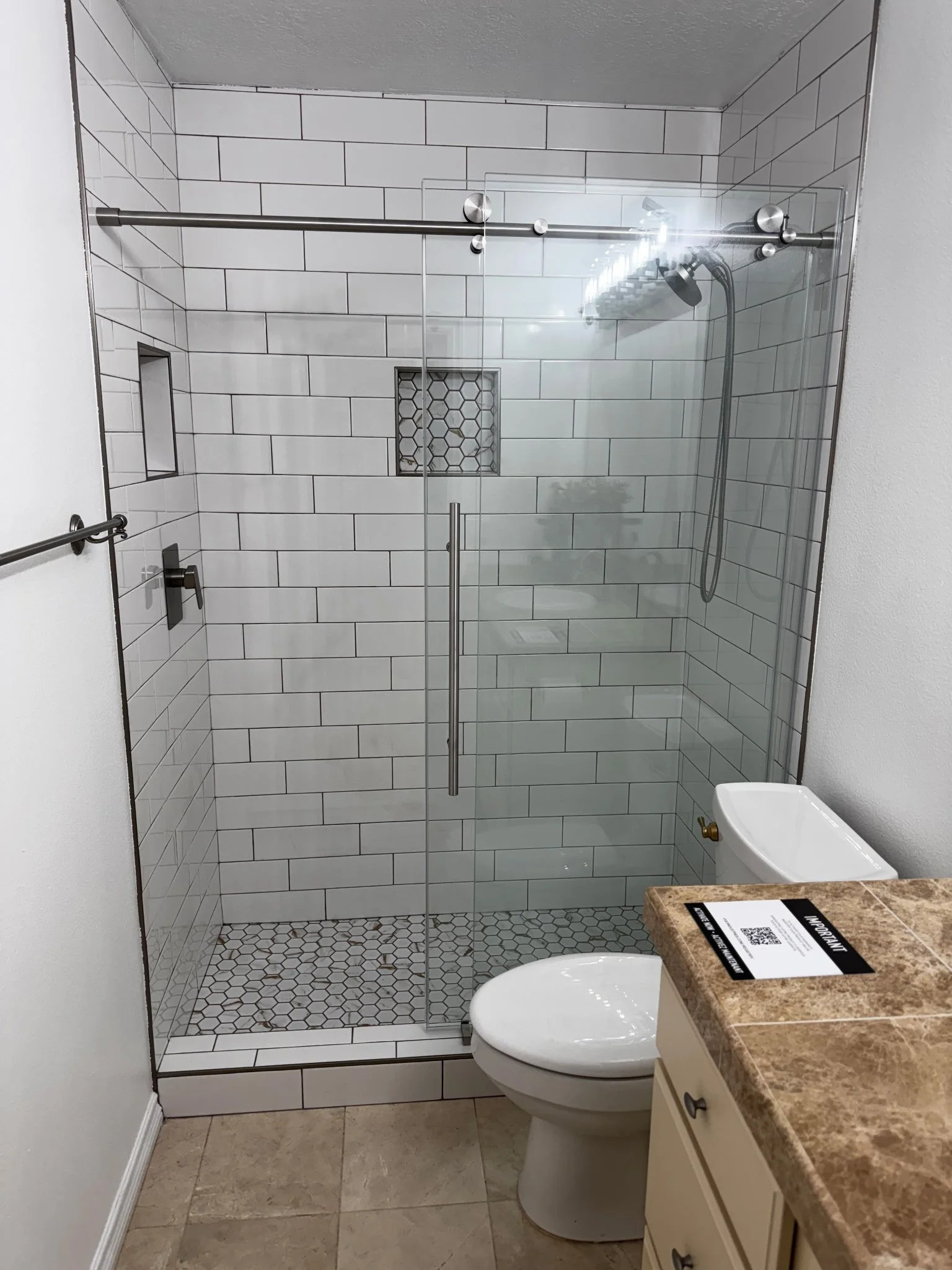
We were reminded of that this week after installing two new shower doors for local homeowners. While a shower door might seem like a small part of a bathroom remodel, the right door can make the space feel more open, finished, and intentional.
But choosing one isn't always as simple as picking the style you like best.
There are a few things homeowners should think about before ordering a shower door—especially because the existing shower or tub opening can determine what will actually work.
Start With the Shower You Have
The first question is whether you're working with a tub/shower combination, a standard shower enclosure, or a larger walk-in shower.
Each setup has different options.
For a tub/shower combination, a sliding door is often a practical choice because it doesn't require additional clearance into the bathroom. For a larger walk-in shower, homeowners have more flexibility with fixed glass panels, hinged doors, or larger frameless configurations.
The size and shape of the opening matter, too.
That's why it's important to measure the actual opening rather than assuming a particular door will fit because the dimensions seem close.
Framed, Semi-Frameless or Frameless?
Once you know what type of opening you're working with, you can start thinking about the look.
Framed doors have more visible metal around the glass and have been a popular choice for years. They can be a good practical option, particularly when working with certain existing openings.
Semi-frameless doors reduce some of the visible framing while still providing structure where it's needed. They offer a cleaner, more updated appearance without necessarily going all the way to frameless.
Frameless doors have minimal hardware and framing, giving the bathroom a more open, modern look. They're especially popular in contemporary bathroom remodels because they allow more of the tile and shower design to remain visible.
None of these is automatically the "best" choice. The right option depends on the bathroom, the opening, the surrounding tile, the homeowner's style, and the budget.
Don't Forget the Hardware
The glass gets most of the attention, but the hardware matters more than you might think.
The finish you choose for the hinges, handles and other hardware can either tie the bathroom together or look completely out of place.
Black, brushed nickel, chrome and other finishes can all work beautifully depending on the rest of the bathroom.
If you're already remodeling the space, this is a good time to think about the shower door as part of the overall design rather than as a separate decision.
Your plumbing fixtures, cabinet hardware, lighting and shower door don't necessarily have to match perfectly—but they should look like they belong together.
The Existing Opening Can Change Everything
This is one of the biggest things homeowners sometimes don't realize.
A shower door isn't installed into a blank canvas.
The existing walls, tile, tub, shower opening and surrounding surfaces all affect the installation.
An opening that's slightly out of square, walls that aren't perfectly plumb, or an existing tub that isn't level can all affect which door will work and how it needs to be installed.
That's why measurements are so important.
A door that looks perfect online might not be the right choice for your particular bathroom.
And if you're remodeling the shower at the same time, it's even more important to plan the door before all of the surrounding work is finished. The door should be considered when planning the opening, tile and finished surfaces—not as an afterthought once everything else is done.
Think About How You'll Use the Bathroom
Looks are important, but so is everyday life.
Do you want a door that slides open because space is limited? Would a hinged door be easier to use? Is this a bathroom that gets used by kids every day, or a primary bathroom where you're creating more of a spa-like feel?
If you're planning to stay in your home for years, think beyond what looks good in a photo.
Think about what will be comfortable, practical and easy to live with.
A Shower Door Doesn't Have to Mean a Full Bathroom Remodel
One of the other things we've been reminded of lately is that not every bathroom project needs to turn into a complete renovation.
Sometimes the bathroom layout works perfectly well and the homeowner simply wants to update the shower area.
A new shower door can make a noticeable difference without replacing the entire bathroom.
On the other hand, if you're already planning to replace the tile, change the shower layout, update the vanity or make other major changes, that's when it makes sense to look at the bathroom as a whole and coordinate everything together.
The important part is knowing which situation you're dealing with before you start buying materials.
Planning a Bathroom Update?
Whether you're replacing a shower door or planning a larger bathroom remodel, the best place to start is with the existing space.
What works?
What doesn't?
What do you want to change?
And what needs to stay?
From there, you can choose the shower configuration, door style, glass, hardware and other finishes that make sense for both the space and the way you use it.
We've installed everything from smaller bathroom updates to complete bathroom remodels, and sometimes the right improvement is a full renovation. Other times, it's one well-chosen upgrade that makes the entire room feel better.
If you're considering a shower remodel or simply want to talk through your options, Mr. Clean Fix can help you figure out what makes sense for your bathroom before you start ordering materials.
Thinking about updating your bathroom?
Contact Mr. Clean Fix to talk through your project and see what options make sense for your home.
What Homeowners Should Know Before Starting a Kitchen Remodel
With Labor Day weekend here, we're taking a moment to appreciate something we know pretty well at Mr. Clean Fix: good work takes planning, skill, and a lot more behind the scenes than most people ever see.
A kitchen remodel is a perfect example.
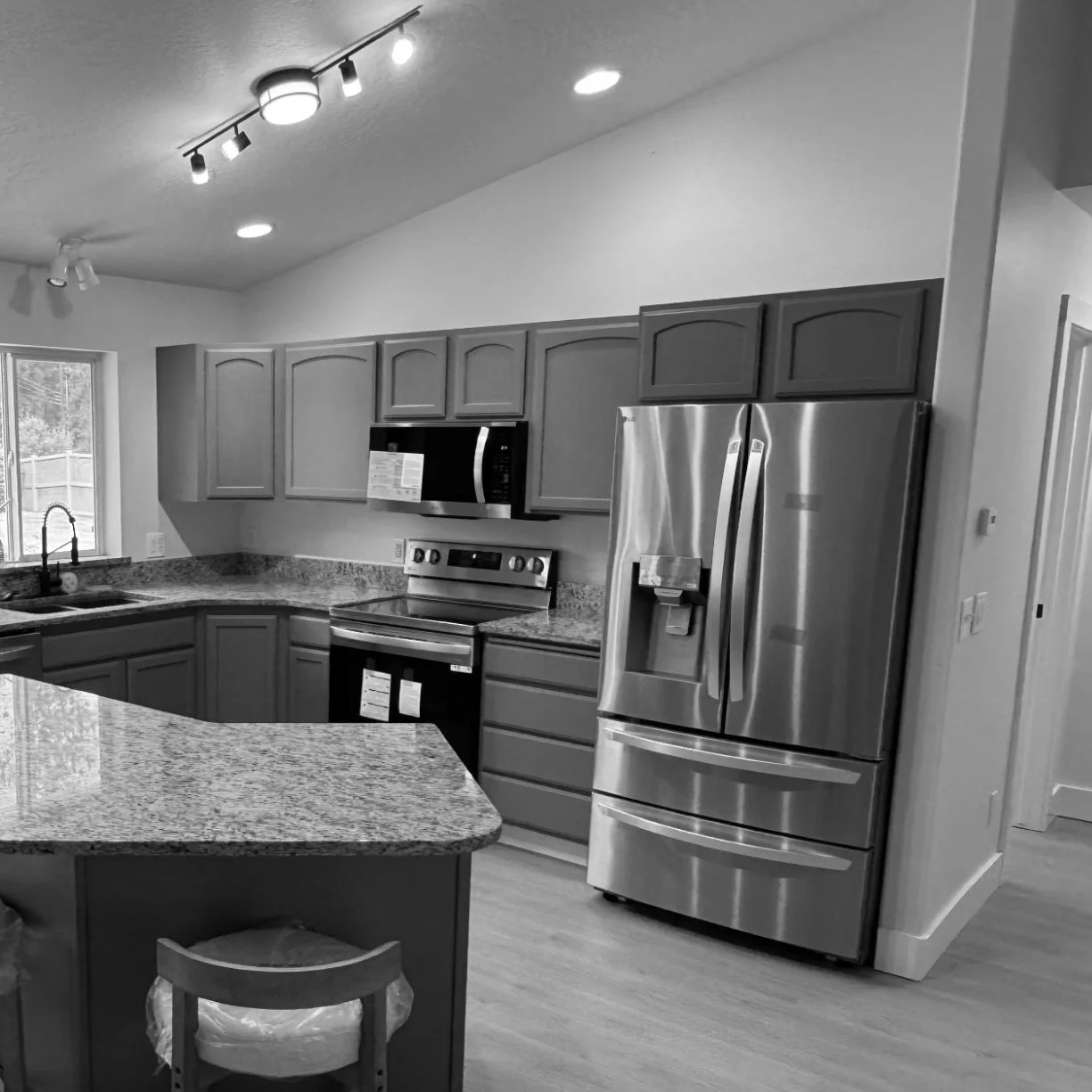
From the first conversation about what isn't working in your current kitchen to the final cabinet adjustment and backsplash detail, a successful remodel involves dozens of decisions—and plenty of skilled work along the way.
If you're thinking about remodeling your kitchen, here's what we think homeowners should know before construction begins.
Start With How You Use Your Kitchen
Before you start picking out countertops or scrolling through cabinet colors, think about what's actually frustrating you about your current kitchen.
Is there not enough counter space?
Do people constantly get in each other's way?
Is the refrigerator in an awkward location?
Do you need more storage?
Is there nowhere for someone to sit and hang out without being in the cooking area?
A beautiful kitchen that doesn't function well isn't much of an upgrade.
The best kitchen remodels start with how you actually live in the space.
That means looking at traffic flow, work areas, storage, appliances, seating, and the way your family uses the kitchen on an ordinary day—not just how the room looks in a picture.
The Layout Comes Before the Cabinets
It's tempting to start with cabinets because they're one of the most visible parts of a kitchen remodel.
But the layout should come first.
Where should the refrigerator go? Where will food be prepped? Where will the sink and dishwasher sit? Is there enough room around an island? Can two people work in the kitchen at the same time without constantly bumping into each other?
These decisions affect almost everything that comes afterward.
And this is where remodeling can become much more than simply replacing old cabinets with new ones. Sometimes the best solution involves moving a wall, relocating plumbing, changing electrical, or completely rethinking the existing layout.
That's why planning matters so much.
Cabinetry Is More Than a Color Choice
Once the layout is right, cabinetry becomes one of the biggest decisions in the project.
Of course, style matters. Cabinet color, door style, hardware, and finish all contribute to the overall look.
But what's inside the cabinets matters just as much.
Think about how you store pots and pans, where you want your spices, how often you use certain appliances, and whether drawers or doors make more sense for the way you work.
A well-designed kitchen doesn't just give you more storage.
It puts the storage where you actually need it.
Countertops Need to Work With the Whole Design
Countertops are another major visual element, but they're also one of the surfaces that gets used constantly.
When choosing a countertop, consider durability, maintenance, color, edge profile, and how it works with the cabinets, backsplash, flooring, and other finishes.
You don't necessarily need the most expensive material available.
You need the right material for the way you use your kitchen and the overall design you're trying to create.
A high-end remodel is about making intentional choices—not automatically choosing the highest-priced option.
Don't Forget the Appliances
Appliances can have a surprisingly large impact on your kitchen layout.
The size and location of the refrigerator, range, oven, dishwasher, microwave, and other appliances need to be considered before cabinetry is finalized.
This is especially important if you're changing appliance locations.
Moving an appliance can mean moving electrical, plumbing, gas, or ventilation as well. Those decisions are much easier to address during the planning stage than after the cabinets have already been installed.
Lighting Is Part of the Design
One ceiling light isn't a lighting plan.
A well-designed kitchen typically needs a combination of general lighting, task lighting, and accent lighting.
Think about where you'll actually be working. Countertops can look beautiful during the day but become frustrating at night if you're standing in your own shadow while preparing dinner.
Under-cabinet lighting can make a huge difference. So can thoughtfully placed recessed lighting, pendants, and lighting over an island or dining area.
Lighting should be planned before the walls and ceilings are finished, especially when new electrical work is involved.
Plumbing and Electrical Are Part of the Remodel
The things you don't see can be some of the most important parts of a kitchen renovation.
Moving a sink means plumbing.
Changing the range may mean electrical or gas work.
Adding appliances may require additional circuits.
Adding lighting means electrical planning.
And opening walls can reveal existing conditions that need to be addressed before the new kitchen can come together.
This is one of the reasons we encourage homeowners to think about the entire project before construction starts. A kitchen remodel isn't just cabinets and countertops. It's the systems behind those finishes that make the kitchen function.
The Order of Operations Matters
A kitchen remodel has a sequence for a reason.
Depending on the project, demolition may come first, followed by framing or structural changes, plumbing and electrical work, drywall and finishing, flooring, cabinetry, countertops, backsplash, fixtures, appliances, and final details.
Not every kitchen follows exactly the same sequence, but the important thing is that the work needs to be coordinated.
You don't want to install something today only to have another trade come back tomorrow and undo part of it.
Good scheduling keeps the project moving and helps prevent unnecessary rework.
The Cheapest Estimate Isn't Always the Best Value
A kitchen remodel is a significant investment, and it's completely reasonable to compare estimates.
But make sure you're comparing the scope of work, not just the bottom-line number.
Are the same materials included?
Is electrical work included?
What about plumbing?
What happens if something unexpected is found behind the walls?
Who is coordinating the different parts of the project?
What level of finish and craftsmanship should you expect?
A lower estimate isn't necessarily a better deal if important parts of the project aren't included.
A Kitchen Remodel Is Skilled Work
That's probably the biggest thing we want homeowners to take away this Labor Day weekend.
A finished kitchen may look simple when you walk into it.
Cabinets. Countertops. Appliances. Lights. Flooring.
But behind that finished room is planning, measuring, demolition, carpentry, electrical work, plumbing, installation, finishing, problem-solving, scheduling, and a lot of attention to detail.
The better all of those pieces work together, the more natural the finished kitchen feels.
And that's the goal.
You shouldn't walk into your remodeled kitchen and think about all the work that went into making it function.
You should simply think:
"This makes so much more sense."
Planning a Kitchen Remodel?
At Mr. Clean Fix, we believe the best kitchen remodels start with a conversation—not a cabinet catalog.
If your kitchen is outdated, doesn't function well, or simply no longer fits the way your family lives, we're happy to help you look at the possibilities.
Whether you're considering a kitchen update, a larger kitchen renovation, or a complete remodel involving layout, electrical, plumbing, cabinetry, countertops, lighting, and finishes, we'll help you look at the project as a whole.
This Labor Day weekend, we're grateful for the homeowners who trust us with their homes—and for the skilled work that turns an idea into a finished space.
Ready to start planning your kitchen remodel? Let's talk.
What Makes a High-End Home Remodel Worth the Investment?
What Makes a High-End Home Remodel Worth the Investment?
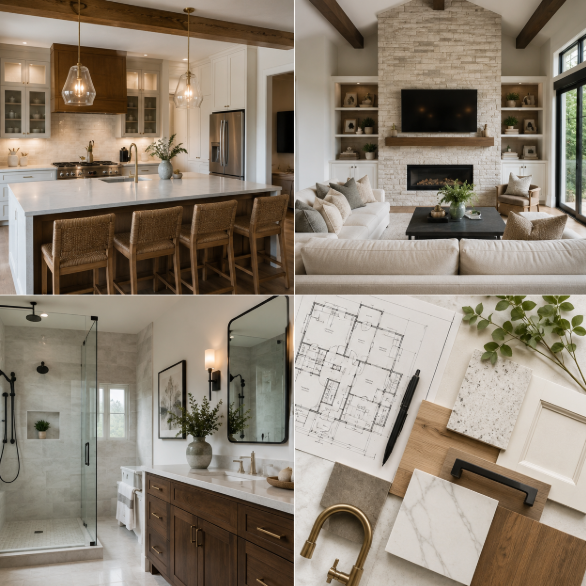
A home remodel is a significant investment. Whether you're updating a kitchen, transforming a bathroom, opening up your living space, or taking on a larger whole-home renovation, the goal shouldn't simply be to make your home look newer.
A well-executed remodel should make your home work better, feel better, and hold its value for years to come.
That's what separates a high-end remodel from a basic renovation.
At Mr. Clean Fix, we believe the difference isn't necessarily about choosing the most expensive materials or creating a space that looks like it belongs in a magazine. It's about making smart decisions throughout the entire project—from the initial layout to the final details.
It Starts With the Layout
One of the biggest advantages of a well-planned remodel is the opportunity to improve how your home actually functions.
A beautiful kitchen can still be frustrating if the refrigerator, sink, and cooking area aren't positioned well. A bathroom can have beautiful finishes but still feel cramped. A living space may have plenty of square footage but an awkward layout that doesn't fit the way your family uses the room.
High-end remodeling starts by looking at the whole space, not just the finishes.
Sometimes that means moving walls, changing the location of a doorway, reconfiguring a kitchen, improving storage, or creating better connections between rooms. The goal is to make the finished space feel intentional rather than simply renovated.
Quality Materials Make a Difference
Materials are another major part of what makes a remodel worthwhile.
That doesn't mean every project needs the most expensive countertop, flooring, fixture, or cabinet available. It means choosing materials that make sense for the space, the way it will be used, and the overall goals of the homeowner.
Durability matters.
So does appearance.
And just as importantly, materials need to work together.
A cohesive combination of flooring, cabinetry, countertops, tile, fixtures, trim, paint, and lighting can make an entire home feel more polished. Choosing each item independently because you like it can produce a very different result than designing the space as a whole.
Craftsmanship Is Where the Difference Shows
Even the best materials can't make up for poor installation.
The details matter in a high-end remodel.
Clean tile lines. Properly installed trim. Consistent reveals. Carefully finished transitions. Doors and cabinets that operate correctly. Flooring that flows naturally from one space to another. Fixtures installed with attention to detail.
These things may not always be the first things you notice when you walk into a finished room, but they contribute to the feeling that everything belongs exactly where it should.
Quality craftsmanship is what turns good materials into a finished project that feels truly finished.
Think Beyond the Current Trend
It's easy to get caught up in what's popular right now.
But a remodel is an investment in your home—not just in what happens to be trending this year.
That doesn't mean your home needs to be boring or completely traditional. It means choosing finishes and design elements thoughtfully so that the space still feels appealing years down the road.
A high-end remodel should balance current style with timeless elements.
The best projects don't necessarily scream, "This house was remodeled in 2026."
Instead, they simply feel well designed.
Longevity Matters
One of the biggest reasons to invest in quality during a remodel is that you don't want to do the same project twice.
A lower-cost renovation may look good initially, but if materials wear quickly, installation problems develop, or the layout doesn't actually solve the problems you started with, you may find yourself spending more money later.
A quality remodel considers what happens after the project is complete.
How will the space hold up to everyday use?
Will the materials remain practical?
Does the layout make sense for how the homeowners live?
Are the improvements likely to remain useful if the home is eventually sold?
Those questions are part of the investment.
A Remodel Should Feel Like It Belongs in Your Home
One of our favorite parts of remodeling is taking an existing home and making it feel like a better version of itself.
That doesn't always mean starting over.
Sometimes the best result comes from preserving the things that work while improving the things that don't.
A successful remodel should feel connected to the home rather than like a completely separate space that was dropped into it. Finishes should complement one another, proportions should make sense, and the improvements should feel intentional from room to room.
That's where cohesive design becomes especially important.
Is a High-End Remodel Worth It?
For the right homeowner and the right project, absolutely.
But "high-end" shouldn't simply mean spending the most money possible.
It should mean spending intentionally.
Investing in the areas that matter. Choosing materials that will last. Improving the layout. Hiring experienced professionals. Paying attention to the details that are easy to overlook. And creating a finished space that works for your life today while still making sense years from now.
That's the kind of remodeling investment that can make a real difference—not just in the appearance of your home, but in how you experience it every day.
Ready to Talk About Your Remodel?
If you're considering a kitchen remodel, bathroom renovation, addition, or larger home improvement project in the Coeur d'Alene and North Idaho area, Mr. Clean Fix can help you look at the project from the big picture down to the finishing details.
A great remodel isn't just about making a house look better. It's about making the investment count.
Contact Mr. Clean Fix to start planning your next home renovation.
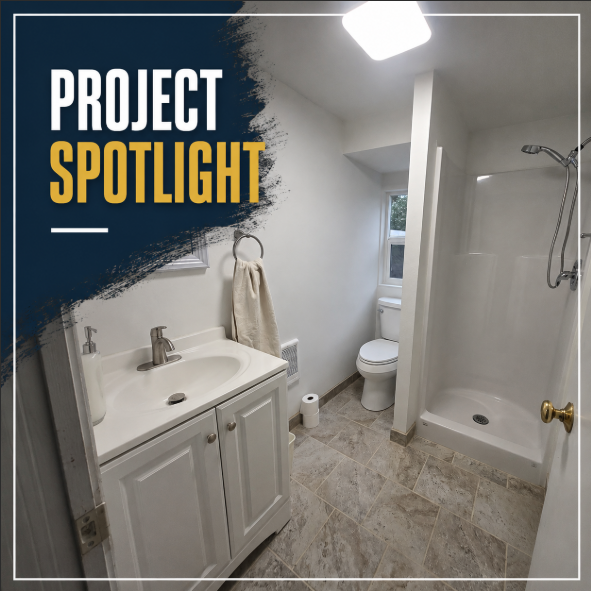
Project Spotlight: Small Footprint, Big Upgrade- A Full Bathroom Addition
This project started with a larger bedroom and an idea:
What if part of this space became a new bathroom?
Originally, the plan was to frame in and build a simple half bath — just enough to add convenience and functionality to the home without taking too much square footage away from the bedroom.
But partway through the project, the homeowner made a bigger decision:
Instead of stopping at a half bath, they wanted a full bathroom with a shower.
And honestly, that changed everything.
Starting From Nothing
There wasn’t a bathroom here before.
No plumbing rough-in waiting in the floor.
No shower space already framed out.
No “easy conversion.”
This was bedroom space being completely reworked into an entirely new bathroom addition inside the home.
That meant building the room from the ground up:
Framing new walls
Running new plumbing
Creating drainage and water supply lines
Adding electrical and lighting
Designing a layout that could actually function comfortably in a compact footprint
Once the project shifted from a half bath to a full bath, the layout had to evolve fast. Adding a shower into a space that wasn’t originally planned for one takes careful planning — especially in a mobile home where every inch counts.
Making the Layout Work
One of the biggest challenges was balancing function with space.
The bathroom needed to fit:
A vanity
Toilet
Walk-in shower
Comfortable walking space
Proper plumbing access
…without feeling cramped or boxed in.
The framed section beside the shower became part of the solution, helping accommodate the plumbing and structure while still keeping the room open and usable. Projects like this are a reminder that remodeling is often about solving problems creatively, not just installing finishes.
When it's done right, the finished space feels natural — like it was always supposed to be there.
What Was Included
This remodel included:
New bathroom framing and layout creation
Full plumbing installation
Walk-in shower installation
Vanity and sink installation
Toilet installation
New flooring throughout
Electrical and lighting updates
Paint, trim, and finish work
The final bathroom feels bright, clean, and practical. The lighter color palette helps open up the room visually, while the flooring adds texture and warmth without making the space feel busy.
Most importantly, the home now has a completely new full bathroom where there was once only bedroom space.
Why This Project Stands Out
This wasn’t a cosmetic refresh.
This was creating entirely new function inside the home.
Projects like this have a huge impact on everyday living because they change how the house actually works for the people inside it. Adding another bathroom — especially a full bath — can dramatically improve convenience, flexibility, and long-term usability.
And unlike large open remodels, smaller-space additions often require even more careful planning. There’s very little wasted space in a mobile home, so every decision matters.
That’s the kind of challenge we enjoy.
The Finished Result
What used to be part of a bedroom is now a clean, fully functional bathroom that looks like it belongs there.
That’s always the goal:
Not just adding something new — but making it feel like it was meant to be part of the home from the beginning.

Flashback Friday: One of Those Remodels That Changed the Whole House
Some remodels are a quick update.
Some completely change how a home feels when you walk through the front door.
This was one of those projects.
About a year ago, we completed a full home remodel for a North Idaho homeowner who wanted the house to finally feel updated, cohesive, and personal — not like a collection of unfinished ideas from different decades.
The project included a full kitchen remodel, both bathrooms, updates throughout the bedrooms, garage improvements, paint, fixtures, finishes, and new flooring throughout the home.
And honestly, this is still one of those projects we look back on and think, yeah… that came together really well.
The Kitchen
The original kitchen had good bones, but everything felt dated. Honey oak cabinets, older white appliances, dark finishes — the kind of space that still worked but didn’t feel fresh anymore.
Instead of tearing everything apart unnecessarily, the goal was to transform the space without wasting what was still solid.
The cabinet color ended up becoming the centerpiece of the whole project — a deep olive green that completely changed the personality of the room. Once the color went on, everything else started making sense around it.
New stainless appliances, updated lighting, black fixtures, fresh countertops, and cleaner finishes pulled the kitchen into a much more modern look without making it feel cold or overly trendy.
It went from “older kitchen that functions” to a space people actually wanted to spend time in.
Carrying the Style Through the Entire Home
One of the biggest reasons this remodel worked is because the updates didn’t stop at one room.
The same design choices carried throughout the house — the green cabinetry, matte black fixtures, updated lighting, cleaner trim work, fresh paint, and consistent flooring all tied the spaces together instead of making every room feel separate.
Both bathrooms were remodeled with the same approach. Updated vanities, fixtures, mirrors, lighting, and finishes made them feel intentional and connected to the rest of the house instead of feeling like an afterthought.
The bedrooms got refreshed with new paint, updated finishes, and improvements that made the entire home feel lighter, cleaner, and more current.
Even the garage got attention, which is something a lot of remodels skip completely. But when you're doing a whole-home project, those spaces matter too.
What Actually Makes a Remodel Feel Expensive
Usually it’s not one giant dramatic feature.
It’s consistency.
When the colors make sense together.
When the hardware matches.
When the lighting flows room to room.
When nothing feels random anymore.
That’s what turns a remodel from “we updated some stuff” into a home that feels finished.
This project is a good example of that. Nothing about it feels overdone, but everything feels intentional.
And a year later, it still holds up.
The Mr. Clean Fix Take
A lot of homes in North Idaho don’t necessarily need to be completely gutted. Most of the time, the structure and layout are already there.
What changes everything is having a clear plan, making solid design choices, and doing the work correctly the first time.
That’s what this project was.
A full-home remodel that took a dated house and made it feel modern, cohesive, and comfortable without losing the character of the home itself.
These are the kinds of projects we love doing.

Do You Actually Need an Island?
Because More Cabinets Doesn’t Always Mean a Better Kitchen
Kitchen islands are one of the most requested features we get.
Everyone wants one.
And sometimes… they absolutely should have one.
But a lot of times?
It’s the wrong move for the space—and nobody says it out loud.
The Island Obsession (and Where It Goes Wrong)
We’ve walked into a lot of kitchens where an island was clearly added because it felt like the thing to do.
Not because the layout actually supported it.
What you end up with:
Tight walkways
Appliances that can’t fully open
Two people trying to cook and constantly bumping into each other
It looks good in photos.
It doesn’t work in real life.
The Clearance Rule Nobody Talks About
Here’s where most island plans fall apart:
You need space around it.
Not “just enough to squeeze by.”
Actual working room.
General rule:
36 inches minimum (and that’s tight)
42–48 inches is where it actually starts to feel right
Anything less and your kitchen starts feeling cramped fast—especially once cabinets, handles, and appliances come into play.
If adding an island means shrinking your walkways below that, it’s probably not worth it.
Function First — Not Just a Flat Surface
Before adding an island, ask:
What is it actually doing?
Because “extra counter space” sounds good… but it’s vague.
A good island usually has a clear purpose:
Prep space near the sink or stove
Seating that actually gets used
Storage that replaces something missing elsewhere
A place to gather without blocking the work area
If it’s just sitting there in the middle of the room with no real job, it turns into a traffic problem more than an upgrade.
When an Island Does Make Sense
There are plenty of kitchens where an island is the right call.
Usually when:
The kitchen is open and has room to support it
You need separation between kitchen and living space
You want seating without a separate dining setup
The layout allows for clean workflow between sink, stove, and fridge
In those cases, an island can be one of the best features in the house.
When It’s the Wrong Move
We talk people out of islands more than you’d think.
Biggest red flags:
Narrow kitchens where space is already tight
Layouts where appliances end up fighting each other
Walkways that drop below comfortable spacing
Islands that block natural movement through the space
Sometimes removing the idea of an island actually makes the kitchen feel bigger, not smaller.
Better Alternatives Most People Don’t Consider
If an island doesn’t work, you’re not out of options.
Some better fits depending on the space:
Peninsula layouts (attached counter that still gives seating)
Extended countertops with overhang for stools
Built-in storage walls instead of crowding the center
Mobile islands if you want flexibility without committing
A lot of these end up being more functional than forcing an island into a space that can’t handle it.
The Mr. Clean Fix Take
Not every kitchen needs an island.
And forcing one in just because it’s popular usually makes the space worse, not better.
A good kitchen isn’t about checking boxes—it’s about how it actually works when you’re in it.
If there’s room, and it has a purpose, an island can be a great addition.
If not, there are better ways to use the space.
Most kitchens we walk into don’t have the wrong features.
They just have the wrong layout.
If you want to run your kitchen layout by us before making changes, we’re always happy to take a look.
Because it’s a lot easier to plan it right than fix it later.
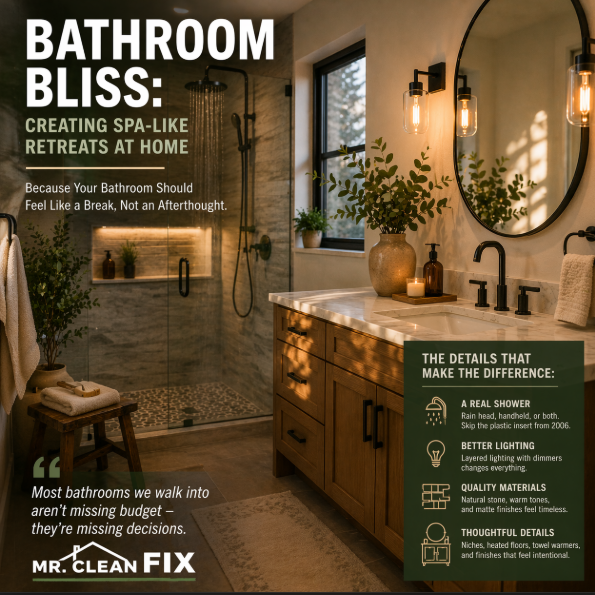
Bathroom Bliss: Creating Spa-Like Retreats at Home
Bathroom Bliss: Creating Spa-Like Retreats at Home
Because Your Bathroom Should Feel Like a Break, Not an Afterthought
Most bathrooms in North Idaho homes are functional. They do the job.
But there's a difference between a bathroom that works and a bathroom that actually feels good to be in.
You know the feeling — you walk into a hotel bathroom, or a friend's newly remodeled space, and something just shifts. The tension in your shoulders drops slightly. You slow down without deciding to. Everything feels intentional.
That's not magic. That's design.
We walked into a bathroom last year where the homeowner was convinced they'd picked the wrong tile color. They were ready to rip it out and start over.
It wasn't the tile.
It was the lighting. One harsh overhead fixture making everything look flat and slightly gray. We changed the lighting. The tile was fine. The whole room looked completely different.
That's how much the details matter in a bathroom.
It's Not About Square Footage
Here's the first thing we tell people who assume a spa-like bathroom requires a massive budget or a massive footprint.
It doesn't.
We've transformed small bathrooms into genuinely relaxing spaces — and walked away from large ones that still felt cold and clinical because nobody thought about the details.
Size doesn't create the feeling. Intention does.
Start With What You're Removing
Before you add anything, think about what's currently working against you.
Harsh overhead lighting that makes everything feel like a doctor's office. Builder-grade fixtures that haven't been updated since the house was built. Grout lines so far gone they make a clean bathroom feel dirty.
Sometimes the biggest upgrade isn't what you add — it's what you finally get rid of.
A dated vanity. A plastic shower surround that's seen better days. A mirror that's purely functional with zero personality.
Start there. The spa feeling has room to come in once the things fighting it are gone.
The Shower Is Everything
If there's one place to invest in a bathroom remodel, it's the shower.
Not because it's the most visible — though it is — but because it's the experience you're in every single morning. It sets the tone for your entire day.
What makes a shower feel like a retreat instead of a rinse:
Large format tile. Fewer grout lines mean a cleaner, calmer visual. The eye has less to process. The space feels bigger even when it isn't.
A real showerhead. Not the builder-grade trickle that came with the house. And if your shower still has a plastic insert from 2006, no amount of decor is going to make it feel like a spa. That's just the truth. A rain head, a handheld, or both — this is one of the highest return upgrades per dollar in any bathroom.
A frameless glass enclosure. Nothing opens up a bathroom visually like removing a framed shower door or a curtain rod. Frameless glass makes even a modest shower feel intentional and upscale.
Niches. Built-in storage inside the shower wall. No more wire caddies hanging off the showerhead. No more shampoo bottles lined up on the floor. Just clean, built-in shelving that looks like it was always supposed to be there.
Lighting: The Detail That Changes Everything
We wrote a whole blog about how lighting transforms a home. In bathrooms it's especially true.
One overhead light is not a lighting plan. It's a starting point — and not a good one.
Layered bathroom lighting looks like this:
Overhead for general light. Vanity lighting at eye level so your face is lit from the front not the top — this eliminates the harsh shadows that make even a nice bathroom feel unflattering. And dimmer switches that let you wind down at night instead of staring into bright white light before bed.
In North Idaho winters when daylight is short and mornings are dark, good bathroom lighting isn't a luxury. It's how you start the day without feeling like it already beat you.
The Vanity: Where Function Meets Personality
The vanity is the focal point of most bathrooms. It's also where most builder-grade homes phone it in completely.
Upgrading the vanity doesn't always mean replacing the whole unit. Sometimes it means:
New hardware. Matte black, brushed brass, or brushed nickel — the finish you choose signals the whole room's personality.
A new mirror. Or mirrors. Or a framed mirror that actually has presence instead of just reflecting light back at you.
A new faucet. One of the fastest ways to make a bathroom feel like it was designed instead of assembled.
And if a full vanity replacement is in the plan — double sinks where space allows. One of the most requested upgrades we do, and one of the most appreciated once it's in.
Materials and Texture Do the Heavy Lifting
Spa environments don't feel sterile. They feel warm, layered, and natural.
That translates to bathrooms through material choices. Natural stone or stone-look porcelain. Wood tones in the vanity. Matte finishes over glossy ones. Warm whites and soft neutrals over stark bright white.
These choices don't cost dramatically more than their builder-grade alternatives. They just require someone to actually make them deliberately instead of defaulting to whatever's standard.
The Details Nobody Notices — Until They're Gone
Heated floors. A towel warmer. A niche with subtle lighting. A door that actually closes quietly.
These are the things guests can't quite put their finger on — but they feel them. They're what separate a bathroom that's been finished from one that's been thought through.
None of them are expensive in the context of a full remodel. All of them change the daily experience in ways that are hard to put a price on.
The Mr. Clean Fix Take
Most bathrooms we walk into aren't missing budget — they're missing decisions.
The right tile. The right light. The right showerhead. None of it requires a fortune. It just requires someone to actually think it through instead of defaulting to whatever was standard when the house was built.
That's what we do.
Your bathroom is one of the only places in your house where you're completely alone and completely off the clock — even if just for ten minutes.
It should feel like it was designed for that.
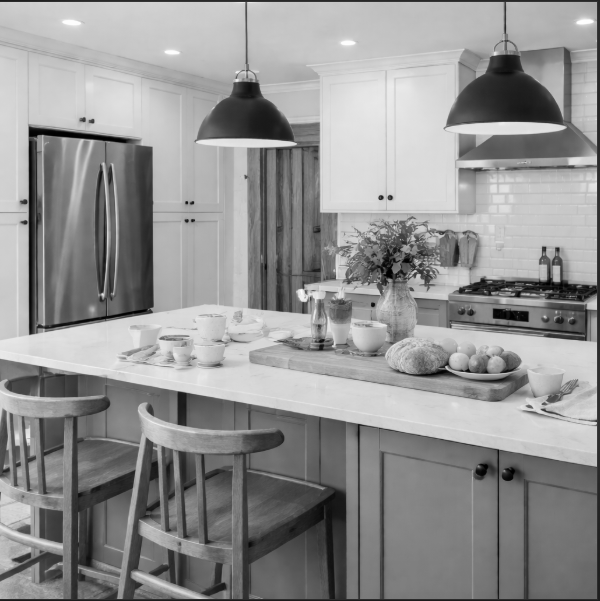
5 Kitchen Layout Mistakes We See All the Time
Kitchen Reality Check — Part 2 of 3
This is Part 2 of our Kitchen Reality Check series — three blogs breaking down what actually makes a kitchen work, from a contractor who's seen the good, the bad, and the "why did anyone think that was a good idea."
We walk into a lot of kitchens.
Some are beautiful. Some are functional. Some are both.
And then there are the ones where you open the dishwasher and can't get to the sink. Where the fridge is marooned at the end of a counter with nowhere to set anything down. Where one overhead light casts a shadow directly onto the one place you're trying to work.
These aren't rare. They're not one-offs. They're the same five mistakes — over and over — in kitchens all across North Idaho, from older homes to brand-new remodels that were finished just a few years ago.
Here they are — and more importantly, why they happen and how to avoid them.
Mistake #1: The Fridge in the Wild
You know this one when you see it.
The refrigerator shoved to the end of a cabinet run with zero counter space on the handle side. No landing zone. No place to set anything down.
So every time someone opens that fridge and pulls out groceries — raw chicken, a gallon of milk, whatever — they're turning around, dripping, hunting for a surface that isn't there.
This isn't a budget problem. It's not a space problem.
It's a two-foot planning mistake that affects daily life forever.
Counter space on the handle side of the fridge isn't optional. It's how kitchens are supposed to work. When that gets skipped — usually to squeeze in one more cabinet — you feel it every single day.
Mistake #2: The Walkway That Became a Traffic Jam
This one shows up constantly in remodels where someone really wanted an island.
The island goes in. It looks great. And then you realize the walkway on one side is 32 inches wide.
Thirty-two inches sounds fine until the dishwasher is open. Or two people are cooking at the same time. Or someone is trying to get to the pantry while another person is standing at the stove.
Now you've got shoulder bumping, blocked paths, and a kitchen that fights you at exactly the moment you need it to cooperate.
Here's what makes this particularly frustrating in North Idaho: the space is usually there. Most of these homes have room to do it right. The mistake isn't square footage — it's forcing a Pinterest layout into a kitchen that needed something different.
Minimum 42 inches in a working aisle. 48 if two people cook together regularly. That's not a luxury. That's just math.
Mistake #3: The Dishwasher Door Trap
This one is so specific it almost feels personal.
A dishwasher placed so that when the door drops open it either blocks the sink, pins someone against the island, or swings directly into the main walkway.
The result: you literally cannot load dishes while another person is at the sink. You can't have the dishwasher open and move freely through the kitchen at the same time.
We've literally seen it where someone has to step back and just wait to rinse a plate because the dishwasher door is down. Every single day. In a kitchen that was supposedly designed.
It sounds like a small thing. It isn't.
You load that dishwasher every single day. And every single day it's going to remind you that nobody thought this through.
The worst part? This one almost never gets caught until install day. By then the plumbing is roughed in and moving it is a whole different conversation. This is exactly why layout decisions need to happen on paper — not on the jobsite.
Mistake #4: The Corner Cabinet Black Hole
Somewhere in almost every kitchen there's a corner cabinet that became a graveyard.
The opening is too small for what's behind it. The lazy Susan spins but nothing useful actually comes out. Half the cabinet hasn't been touched in three years because whatever's in there requires a minor excavation to retrieve.
That corner had options. Blind corner pull-outs. Deep drawers. Even intentional dead space used smarter.
Instead it got a lazy Susan that isn't lazy — and definitely isn't useful.
Corner storage is one of the most solvable problems in kitchen design. It just requires someone to actually think about it instead of defaulting to whatever's easiest to order.
Mistake #5: Lighting That Pretends to Be Enough
One overhead fixture in the center of the ceiling.
That's it. That's the whole lighting plan.
Here's the problem: the moment you stand at the counter to prep food, your body blocks that light. You're working in your own shadow. Every single time.
No under-cabinet lighting. No task lighting over the sink. Just one light behind you pretending to illuminate a whole kitchen.
This one stings a little more in North Idaho because our winters are dark. Long dark mornings, early dark evenings — your kitchen lighting isn't just a design choice, it's a quality of life choice for about five months of the year.
And here's the thing that makes this mistake so avoidable: lighting is cheap compared to everything else in a kitchen remodel. Cabinets, countertops, appliances — those are where the budget goes. Under-cabinet lighting is a fraction of that cost and it completely changes how the kitchen feels and functions.
There's no good reason to skip it.
The Bonus Mistake Nobody Talks About: The Microwave in No-Man's Land
Mounted too high for anyone under six feet to use safely. Shoved in a corner nowhere near where food is actually prepped. Tucked above the stove where you're reaching over hot burners to pull out a bowl of something hot.
The microwave gets treated like an afterthought in almost every kitchen we walk into.
It shouldn't be. Most people use it multiple times a day. It deserves a real spot in the layout — at counter height, near the prep zone, accessible without a circus act.
The Common Thread
Every single one of these mistakes has the same root cause.
Someone made a decision that looked fine on paper — or looked good in a showroom — without thinking through how a real family actually uses a kitchen on a real Tuesday night.
That's the whole game. Not what looks good. What works.
Next time you're in your kitchen, open the dishwasher. Check the fridge landing zone. Stand at the counter and notice where the light actually falls.
Your kitchen will tell you exactly where the planning stopped — you just have to look at how it fights you.
Next up — the final installment of Kitchen Reality Check: "Do You Actually Need an Island?" We're settling this one for good. Publishing next Friday.
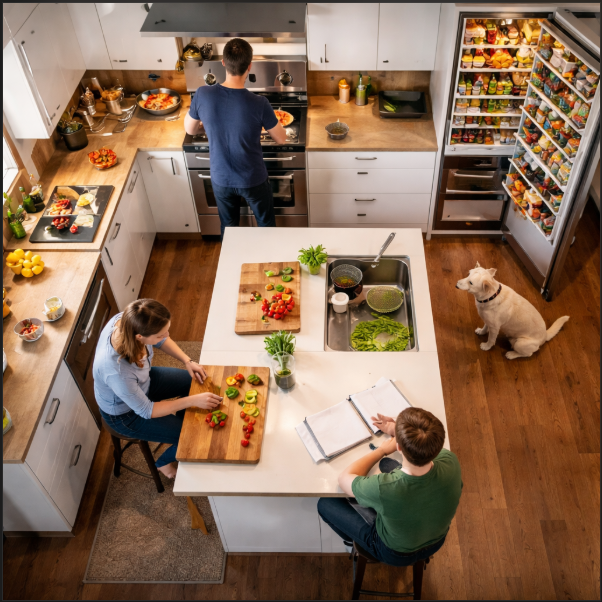
The Kitchen Triangle Is Dead. Here's What Actually Matters Now.
Kitchen Reality Check — Part 1 of 3
This is Part 1 of our Kitchen Reality Check series — three blogs breaking down what actually makes a kitchen work, from a contractor who's seen the good, the bad, and the "why did anyone think that was a good idea."
For decades, kitchen design lived and died by one rule.
The kitchen triangle — the invisible line connecting your sink, stove, and refrigerator — was supposed to be the golden formula for a functional kitchen. Keep those three points close, keep traffic out, boom. Efficient kitchen.
It made sense. In 1948.
The problem? Nobody told your kitchen it was living in 2026.
At Mr. Clean Fix, we've remodeled a lot of kitchens across North Idaho. And we can tell you firsthand — the triangle isn't what's making people's kitchens fail. It's that nobody designed them around how the family actually lives in them.
That's the real conversation. So let's have it.
Why the Triangle Stopped Working
The triangle was built for one cook, one task, one small closed-off room. That was the kitchen of mid-century America.
Today's kitchens are open. They're loud. They've got two people cooking, a kid doing homework, someone digging through the fridge, and a dog parked right where you need to stand — all at the same time.
A three-point triangle doesn't solve any of that. Not even close.
What Actually Works: Zones
Around here in North Idaho, most kitchens we walk into were built for a different era and a different family. When zones are laid out right, everything just works. When they're not — you feel it every single night.
A zone is a dedicated area for a specific task. Here's what a well-designed kitchen actually looks like:
The Prep Zone — Where the real work happens. Counter space, cutting board, easy access to tools, close to the sink. If you're walking across the kitchen every time you need to rinse something, this zone is broken.
The Cooking Zone — Your range and everything that belongs with it. Spices, oils, pots and pans within arm's reach. Not across the room. Not in a lower cabinet you have to dig through while something's boiling over.
The Cleanup Zone — Sink and dishwasher. These two should always be next to each other. Always. We still walk into kitchens where they're separated and wonder what the original designer was thinking.
The Consumables Zone — Fridge and pantry. Ideally accessible from the edge of the kitchen so someone can grab a snack without walking through the middle of everything and derailing whoever's cooking.
The Non-Cook Zone — This one's underrated and most kitchens don't have it. A spot where people can hang out, help with homework, pour a drink — without being in the way. A well-placed island with seating usually handles this. A poorly placed one makes it worse.
Let's Talk Islands — Honestly
Almost every kitchen remodel conversation gets to the island eventually. And we love islands. But only when they actually make sense.
We've also seen plenty that had no business being where they were — crammed into spaces too small, blocking traffic, creating a pinch point that makes the kitchen harder to use than before. That's not an upgrade. That's an obstacle with a countertop.
Before committing to an island, answer these honestly:
Is there at least 42 inches of clearance on every side? 48 is better.
Does it add real counter space and storage — or just eat up floor space?
Does it create that non-cook zone, or does it just push everyone into the same tight path?
If it doesn't improve how you actually move through the kitchen on a busy Tuesday night, it's not worth it.
Most "Storage Problems" Aren't Storage Problems
This comes up constantly. Homeowners feel like they don't have enough storage — so they want more cabinets, more drawers, more pull-outs.
Sometimes that's true. But more often? It's a layout problem wearing a storage costume.
Your pots live across the kitchen from your stove. Your spices are in a cabinet behind you while you're cooking. Your prep area is nowhere near your most-used tools. That's not a storage issue — that's everything living in the wrong place.
Fix the layout first. Then see how much storage you actually still need.
The Honest Contractor Take
No formula replaces a real conversation about how you actually cook and live.
Before we ever talk cabinets or countertops or finishes, we want to know: what drives you crazy about your kitchen right now? Where does it break down? What works?
Those answers tell us more about the right design than any rule ever will.
Because a kitchen that looks incredible in photos but fights you every night isn't a win. A kitchen that just works — for your family, your routine, your real life — that's the goal.
If it doesn't work on a busy Tuesday night, it's not a good kitchen. Period.
That's what we design for. Every time.
Next up in the Kitchen Reality Check series: the 5 kitchen layout mistakes we see over and over in North Idaho homes — and how to avoid every single one of them. Publishing next Friday.
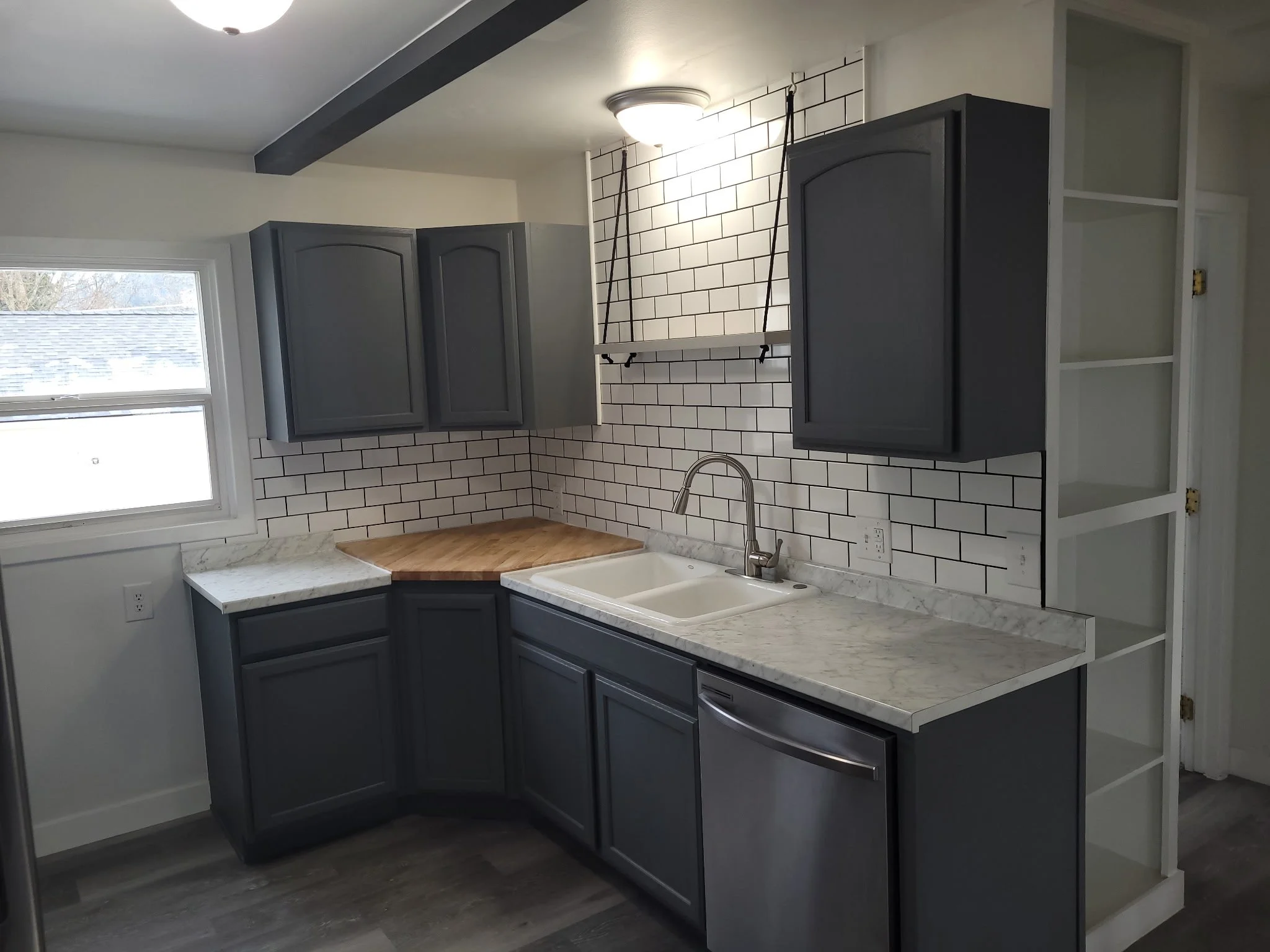
From Water Damage to Fresh Start: A Look Back at One of Our Early Remodels
Some projects stick with you—not because they were flashy, but because they marked a turning point.
This kitchen was part of a water damage insurance claim we handled in late 2022, just as we were wrapping up our first full year in business. At the time, it felt like “just another job.” Looking back now, it’s one of those projects that quietly represents growth—for us and for the homeowner.
What started as damage control quickly turned into a full refresh.
When Repairs Turn Into Opportunity
Water damage has a way of forcing hard decisions. Once walls are opened and materials are removed, homeowners often realize they’re standing at a crossroads:
put it back exactly how it was—or reimagine the space entirely.
In this case, the homeowner chose the second path.
Instead of patching and matching, she leaned into a clean, cohesive update:
Fresh cabinetry in a deep, timeless tone
Classic subway tile for a bright, durable backsplash
Updated countertops and fixtures
Improved layout flow and usable prep space
The result was a kitchen that felt intentional, not “repaired.”
Small Kitchen, Big Impact
This wasn’t a massive house or a sprawling kitchen—but that’s what makes the transformation meaningful. Smart material choices, thoughtful finishes, and solid workmanship can completely change how a space feels, regardless of square footage.
Natural light, contrast, and texture do a lot of the heavy lifting here. The open shelving adds visual breathing room, while the darker cabinets ground the space. It’s practical, durable, and still welcoming—exactly what a working kitchen should be.
Why We Still Love This Project
When we look back at this job now, what stands out isn’t just the finished product—it’s the reminder of where we were as a company.
We were still early, still building systems, still learning how to balance craftsmanship with growing demand. This project reflects the standards we set from the beginning: do it right, even when no one’s watching. Especially then.
It’s also a reminder that sometimes the most impactful remodels start with situations no one wants—like water damage—and end with something better than what was there before.
Looking Back to Move Forward
We don’t always get to revisit older projects from new angles, literally and figuratively. Finding this photo reminded us how far we’ve come—and why we do what we do.
Quality work ages well. And when it’s done thoughtfully, it continues to add value long after the last tool is packed up.

Progress Takes Time: Why the Small Steps in Remodeling Matter
When you scroll through Pinterest-perfect kitchens or magazine-worthy remodels, it’s easy to forget the process behind the polish. The truth is, home remodeling is rarely instant — but it’s always worth it.
Take this kitchen we're currently transforming for a client. At first glance, it might just look like a space in mid-chaos: tools on the counter, paint lines in progress, cabinet doors off their hinges. But every little detail in this photo tells a story of momentum — the kind that builds quietly with each task completed.
Remodeling Is a Marathon, Not a Sprint
Behind every “after” shot is a series of carefully planned and executed steps:
Measuring and leveling.
Priming and painting.
Installing hardware, replacing trim, testing lighting layouts.
These steps aren’t glamorous — but they’re essential. Each one lays the foundation for the next, and skipping them would compromise the final result.
Why the Middle Matters
In this project, the flooring has been replaced, repainted cabinetry in a bold and beautiful green, and prepped for custom touches throughout. It’s not finished yet — but it’s on its way. And that’s the magic of remodeling: you get to witness the evolution of a space becoming something truly special.
Trust the Process
Whether you're painting a single room or gutting an entire kitchen, trust the small wins. The progress you can’t always see — like better durability, tighter corners, or straighter seams — makes all the difference in the finished product.
So if you’re in the middle of a remodel and starting to feel impatient, remember this: progress isn’t always loud. Sometimes it looks like painter’s tape, cabinet screws, and sawdust. But in the end, it turns into something beautiful.

The ROI of Remodeling: Why It Pays to Invest in Your Home
When it comes to homeownership, your house isn’t just a place to live—it’s also one of your most significant financial assets. Whether you plan to sell in the near future or stay for years to come, remodeling is one of the smartest ways to increase your home's value. Kitchen and bathroom upgrades, in particular, consistently yield some of the highest returns on investment (ROI). Let’s explore why remodeling pays off and how you can make strategic improvements that benefit both your lifestyle and your bottom line.
Why Remodeling is a Smart Investment
1. Increases Property Value
Certain home renovations significantly boost your home’s market value. According to Remodeling Magazine’s Cost vs. Value Report, kitchen and bathroom remodels often yield an ROI of 60-80%, depending on the scope of the project and the local housing market. Even minor updates, such as painting, new fixtures, and updated countertops, can make a home more appealing to potential buyers.
2. Helps Your Home Sell Faster
If you’re thinking about selling, a remodeled home is more likely to attract buyers. Many buyers are willing to pay more for move-in-ready properties rather than taking on renovation projects themselves. A modern kitchen with new appliances and a stylish bathroom with updated finishes can make all the difference in a competitive real estate market.
3. Enhances Functionality & Comfort
Not all remodeling projects are about resale value—some are simply about improving your daily life. A well-planned kitchen renovation can make cooking and entertaining more enjoyable, while a bathroom upgrade can turn an outdated space into a spa-like retreat. These changes add value to your life, whether you plan to stay or sell.
4. Energy Efficiency Pays Off
Updating appliances, lighting, windows, and insulation as part of a remodel can significantly reduce your utility bills. Energy-efficient upgrades not only save you money but also make your home more attractive to buyers who prioritize sustainability.
5. Keeps Your Home Competitive in the Market
In neighborhoods where home values are rising, remodeling helps your property stay competitive. If nearby homes are being updated, an outdated home could struggle to sell at top dollar. Renovating ensures that your home remains desirable and in line with current market trends.
Top Remodeling Projects with High ROI
Kitchen Remodel (ROI: 60-80%)
Upgrade countertops to quartz or granite
Install modern cabinets or refinish existing ones
Replace outdated appliances with energy-efficient models
Add a stylish backsplash and updated lighting
Bathroom Remodel (ROI: 60-70%)
Install a walk-in shower or freestanding tub
Upgrade vanity with new countertops and storage
Improve lighting and add modern fixtures
Use neutral, high-end finishes for timeless appeal
Basement Finishing (ROI: 60-75%)
Convert an unfinished basement into a living space
Add a home office, gym, or extra bedroom
Improve insulation and lighting for a cozy feel
Deck Addition (ROI: 50-75%)
Expand your outdoor living space
Use durable, low-maintenance materials
Add seating, lighting, and an outdoor kitchen for appeal
Curb Appeal Enhancements (ROI: 70-100%)
Repaint the exterior
Update landscaping with fresh plants and walkways
Install a new front door and updated lighting
Ready to Invest in Your Home?
At Mr Clean Fix, we specialize in home remodels that enhance both your home’s value and your quality of life. Whether you’re looking for a full-scale renovation or simple updates, our expert team can help you make the most of your investment.
👉 Contact us today to start planning your home remodel!

Cold Outside? These Are the Perfect Jobs to Get Done Inside This Winter
When winter’s chill sets in, the best way to make the most of your time indoors is to focus on refreshing your home. With Valentine’s Day just around the corner, there’s no better way to show love than by giving your home the care and attention it deserves. Strategic interior remodeling not only upgrades your space but also gets everything in top shape before spring and summer tempt you to spend more time outside.
Here are some perfect winter projects to consider:
1. Interior Painting
Winter is a prime time to refresh your walls with a coat of paint. Whether you're creating a cozy vibe with warm tones or brightening things up with neutrals, a fresh paint job can transform your space. Plus, painting in winter takes advantage of lower humidity levels for quicker drying times. Why not make Valentine’s Day even sweeter by turning a spare room into a romantic retreat with a dreamy accent wall?
2. Flooring Upgrades
Whether it’s swapping old carpet for luxurious hardwood or installing modern and durable LVP (luxury vinyl plank), upgrading your floors during winter is a practical choice. Warm your home’s aesthetic while creating a clean, fresh canvas for your furniture and décor. Imagine surprising your partner with a fully revamped living room just in time for Valentine’s Day movie nights!
3. Bathroom Remodeling
Treat your significant other—and yourself—to a spa-like bathroom upgrade. Replace outdated fixtures, refresh tiles, or install that dreamy soaking tub you’ve always wanted. A strategic remodel now ensures you’ll have a serene retreat all year long, perfect for relaxing after a day of outdoor adventures once the weather warms up.
4. Kitchen Refresh
Winter is ideal for making functional yet beautiful updates to your kitchen. Whether it’s replacing countertops, installing a stylish backsplash, or upgrading cabinets, a kitchen remodel is an investment that transforms the heart of your home. Make it extra special by surprising your loved one with a revamped kitchen ready to host Valentine’s Day dinner.
5. Organization Makeovers
From custom shelving to stylish built-ins, winter is the time to tackle clutter and maximize storage. Create a clean and organized space that’s ready for all the spring activities ahead. A decluttered home is the perfect Valentine’s Day gift that keeps on giving.
Why Winter Remodeling?
Winter provides the perfect opportunity to focus on indoor projects, so your home is polished and ready for outdoor fun when the weather improves. Whether you’re tackling minor updates or planning a larger remodel, our team at Mr Clean Fix LLC is here to help you bring your vision to life.
Show Your Home Some Love
This Valentine’s Day, let’s work together to make your home a space you’ll fall in love with all over again. Schedule your winter project with Mr Clean Fix LLC, and you’ll enjoy a home that’s ready for both cozy nights in and sunny days ahead.