
Week 3: Where Homeowners Should (and Shouldn't) Spend Money Before Selling
Preparing a home for sale can feel overwhelming. Every room has something that could be updated, repaired, or improved — but that doesn’t mean every project is worth doing.
One of the biggest mistakes homeowners make before selling is thinking they need to completely remodel their home to compete in the market.
The reality is usually different.
The goal of pre-sale improvements is not to create someone else’s dream home. The goal is to help buyers see the home’s potential, feel confident about its condition, and avoid focusing on problems that could affect their decision.
A smart pre-sale renovation focuses on the updates that make the biggest impact.
Start With What Buyers Notice First
When buyers walk into a home, they quickly form an opinion based on condition and presentation.
Small signs of deferred maintenance can create doubt:
Worn or damaged flooring
Old, tired paint
Broken trim or baseboards
Doors that don’t close properly
Outdated fixtures
Visible repairs that were never completed
These issues may seem minor individually, but together they can make buyers wonder what other problems might be hiding.
Taking care of these details helps create a home that feels cared for.
Where It Usually Makes Sense to Spend Money
Fresh Paint
Paint remains one of the most cost-effective ways to improve the look of a home.
A fresh, neutral color palette helps buyers focus on the space itself instead of being distracted by outdated colors, scuffs, or worn finishes.
Flooring Updates
Flooring has a major impact because it covers so much of the home.
Replacing damaged or outdated flooring can completely change how a home feels when someone walks through the door.
Repairs and Finish Work
This is where many homes lose buyer confidence.
Small repairs like:
Replacing damaged trim
Fixing doors
Repairing drywall
Updating hardware
Correcting visible maintenance issues
can make a home feel much more complete.
Exterior Improvements
First impressions start before someone walks through the front door.
Projects like:
Exterior cleanup
Paint touch-ups
Siding repairs
Landscaping improvements
Addressing visible exterior issues
can help buyers feel positive from the beginning.
Where Homeowners Often Overspend
Not every improvement will provide a return before selling.
Large renovations can be tempting, but they are not always the best choice.
Projects that may require careful consideration include:
Full kitchen remodels
Luxury bathroom upgrades
High-end finishes that may not match the neighborhood
Personal design choices that appeal to one homeowner but not the next
A beautiful remodel is great when you are creating your forever home. But when preparing to sell, the question changes:
"Will this help buyers see the value of this home?"
The Best Pre-Sale Improvements Remove Doubt
The best projects before selling are often the ones that make buyers think:
"This home has been taken care of."
That confidence matters.
A good contractor should not only tell you what they can build — they should help you decide what actually makes sense for your goals and budget.
Whether you are preparing to list your home, getting ready for a move, or simply trying to make smart improvements, the right plan starts with understanding where your money will have the biggest impact.
At Mr. Clean Fix, we help homeowners evaluate repairs, updates, and remodels with the bigger picture in mind — creating spaces that work better today and make sense for tomorrow.

Do You Actually Need an Island?
Because More Cabinets Doesn’t Always Mean a Better Kitchen
Kitchen islands are one of the most requested features we get.
Everyone wants one.
And sometimes… they absolutely should have one.
But a lot of times?
It’s the wrong move for the space—and nobody says it out loud.
The Island Obsession (and Where It Goes Wrong)
We’ve walked into a lot of kitchens where an island was clearly added because it felt like the thing to do.
Not because the layout actually supported it.
What you end up with:
Tight walkways
Appliances that can’t fully open
Two people trying to cook and constantly bumping into each other
It looks good in photos.
It doesn’t work in real life.
The Clearance Rule Nobody Talks About
Here’s where most island plans fall apart:
You need space around it.
Not “just enough to squeeze by.”
Actual working room.
General rule:
36 inches minimum (and that’s tight)
42–48 inches is where it actually starts to feel right
Anything less and your kitchen starts feeling cramped fast—especially once cabinets, handles, and appliances come into play.
If adding an island means shrinking your walkways below that, it’s probably not worth it.
Function First — Not Just a Flat Surface
Before adding an island, ask:
What is it actually doing?
Because “extra counter space” sounds good… but it’s vague.
A good island usually has a clear purpose:
Prep space near the sink or stove
Seating that actually gets used
Storage that replaces something missing elsewhere
A place to gather without blocking the work area
If it’s just sitting there in the middle of the room with no real job, it turns into a traffic problem more than an upgrade.
When an Island Does Make Sense
There are plenty of kitchens where an island is the right call.
Usually when:
The kitchen is open and has room to support it
You need separation between kitchen and living space
You want seating without a separate dining setup
The layout allows for clean workflow between sink, stove, and fridge
In those cases, an island can be one of the best features in the house.
When It’s the Wrong Move
We talk people out of islands more than you’d think.
Biggest red flags:
Narrow kitchens where space is already tight
Layouts where appliances end up fighting each other
Walkways that drop below comfortable spacing
Islands that block natural movement through the space
Sometimes removing the idea of an island actually makes the kitchen feel bigger, not smaller.
Better Alternatives Most People Don’t Consider
If an island doesn’t work, you’re not out of options.
Some better fits depending on the space:
Peninsula layouts (attached counter that still gives seating)
Extended countertops with overhang for stools
Built-in storage walls instead of crowding the center
Mobile islands if you want flexibility without committing
A lot of these end up being more functional than forcing an island into a space that can’t handle it.
The Mr. Clean Fix Take
Not every kitchen needs an island.
And forcing one in just because it’s popular usually makes the space worse, not better.
A good kitchen isn’t about checking boxes—it’s about how it actually works when you’re in it.
If there’s room, and it has a purpose, an island can be a great addition.
If not, there are better ways to use the space.
Most kitchens we walk into don’t have the wrong features.
They just have the wrong layout.
If you want to run your kitchen layout by us before making changes, we’re always happy to take a look.
Because it’s a lot easier to plan it right than fix it later.

Lighting Matters: How the Right Light Can Change the Entire Home
Lighting is one of the most underestimated elements in a home—and one of the most powerful. You can have beautiful flooring, perfectly painted walls, and high-end finishes, but if the lighting is off, the entire space can feel… wrong. On the flip side, the right lighting can elevate even the simplest room into something warm, inviting, and intentional.
At its core, lighting isn’t just functional—it’s emotional. It shapes how a space feels, how it’s used, and even how you experience your home day to day.
The Mood Maker You Didn’t Know You Needed
Lighting directly impacts mood. Bright, cool-toned lighting can make a space feel energetic and productive—great for kitchens, bathrooms, and workspaces. Warmer, softer lighting creates a relaxed, cozy atmosphere, perfect for living rooms and bedrooms.
Ever walked into a room and instantly felt at ease? Or the opposite—harsh lighting that makes everything feel sterile? That’s not an accident. That’s lighting doing its job (or failing to).
Layers Are Everything
One overhead light in the center of a room just doesn’t cut it anymore. Thoughtful lighting design uses layers:
Ambient lighting: The main source of light (ceiling fixtures, recessed lighting)
Task lighting: Focused lighting for specific activities (under-cabinet lights, desk lamps)
Accent lighting: Highlights architectural features or decor (wall sconces, LED strips)
When these layers work together, the room feels dynamic and balanced instead of flat and one-dimensional.
Lighting Can Change Perception of Space
Want a room to feel bigger? Brighter lighting and strategically placed fixtures can open it up.
Need to make a large space feel more intimate? Lower, warmer lighting brings everything back down to a human scale.
Even ceiling height can feel different depending on how light is directed. Uplighting can make ceilings feel higher, while downward lighting creates a more grounded, cozy feel.
Color Temperature Matters More Than You Think
Not all light is created equal. The “temperature” of a bulb—measured in Kelvins—affects how colors appear and how a room feels:
2700K–3000K: Warm, soft, inviting (ideal for living spaces)
3500K–4000K: Neutral, balanced (great for kitchens and bathrooms)
5000K+: Cool, bright daylight (best for garages or work areas)
Choosing the wrong temperature can make your beautiful finishes look dull, washed out, or overly harsh.
Highlighting What Matters
Good lighting doesn’t just illuminate a space—it tells you where to look.
A well-placed pendant light draws attention to a kitchen island.
Under-cabinet lighting showcases a backsplash.
Accent lighting can turn a simple wall into a feature.
It’s about guiding the eye and creating subtle focal points throughout the home.
Energy Efficiency Meets Style
Modern lighting solutions don’t just look better—they perform better too. LED technology offers longer lifespan, lower energy use, and more flexibility in color and brightness.
That means you can have beautiful, customized lighting without sacrificing efficiency.
The Takeaway
Lighting isn’t just a finishing touch—it’s a foundation. It has the power to completely transform how your home looks, feels, and functions.
If your space feels off and you can’t quite figure out why, take a look up. The answer might not be in your walls or floors—it might be in the light above them.
Because when lighting is done right, everything else falls into place.
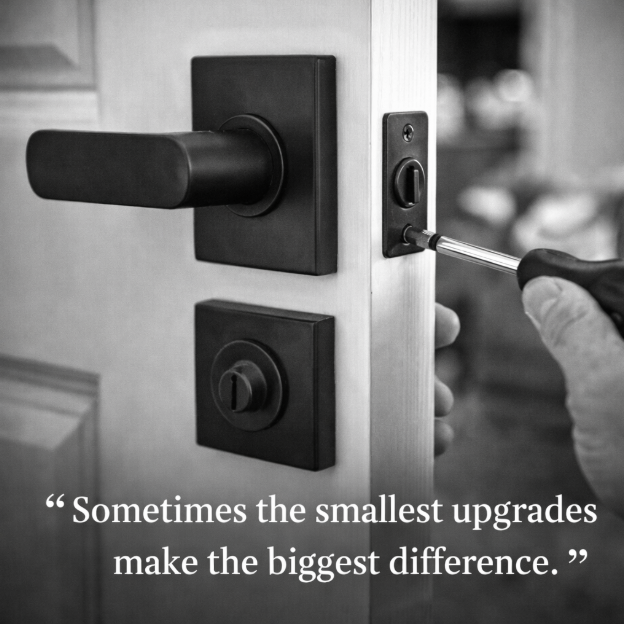
Small Upgrades That Make Your Home Feel Brand New
Sometimes homeowners think the only way to refresh their home is with a full remodel. While major renovations can be exciting, they aren’t always necessary to create that “wow, this feels amazing again” moment.
The truth is, some of the most satisfying changes come from small upgrades that transform how a space feels without requiring a huge budget or weeks of construction.
At Mr. Clean Fix, we’ve seen firsthand how a few smart improvements can completely change a home’s atmosphere. If your space feels a little tired or outdated, here are some upgrades that can make it feel brand new again.
1. Upgrade Your Lighting
Lighting is one of the most underrated design elements in a home.
Swapping outdated light fixtures for something modern can instantly refresh a room. Even simple changes like brighter LED bulbs, new pendant lights over a kitchen island, or updated bathroom vanity lighting can dramatically improve the mood of a space.
Good lighting doesn’t just help you see better — it makes the entire room feel cleaner, warmer, and more inviting.
2. Replace Old Hardware
Cabinet handles, drawer pulls, and door hardware are small details that make a big visual impact.
If your kitchen or bathroom cabinets are still in good condition but feel dated, replacing the hardware can completely change the look. Modern matte black, brushed nickel, or warm brass finishes can give cabinets a whole new personality.
It’s one of the fastest ways to create the feeling of a mini remodel.
3. Refresh the Paint
Few things transform a space faster than fresh paint.
Walls collect years of scuffs, small marks, and fading without us realizing it. A new coat of paint can instantly brighten a room and make everything feel cleaner and more updated.
Even better, a subtle color change can completely shift the vibe of a space — from cozy and warm to bright and modern.
4. Install a New Backsplash
A backsplash is like the jewelry of a kitchen.
It’s a relatively small area, but it draws the eye and helps define the style of the entire room. Whether it’s classic subway tile, textured stone, or a modern pattern, a new backsplash can breathe life into a kitchen without replacing cabinets or countertops.
It’s one of those upgrades where homeowners often say, “I wish we did this sooner.”
5. Improve Trim and Caulking
This is one upgrade people rarely think about — but it makes a huge difference.
Over time, caulking cracks, trim gets dinged, and small gaps appear around baseboards and windows. Cleaning up those details with fresh caulking and repaired trim lines gives the home a crisp, finished look again.
It’s subtle, but the entire home feels sharper and more cared for afterward.
6. Update Flooring in High-Impact Areas
If replacing flooring throughout the entire home isn’t in the plan, consider updating one high-traffic area.
Entryways, kitchens, and bathrooms see the most use. Installing something like luxury vinyl plank (LVP) or new tile in those spaces can instantly modernize the home while being durable and practical.
Sometimes one well-chosen flooring update can elevate the entire house.
Small Changes, Big Impact
Home improvement doesn’t always mean tearing everything down and starting over.
Often, the biggest difference comes from thoughtful upgrades that improve the details we interact with every day. Fresh lighting, updated hardware, new paint, and clean finishes can make a home feel refreshed without overwhelming the budget.
If you’re thinking about improving your space but aren’t sure where to start, focusing on a few strategic upgrades can go a long way toward making your home feel brand new again.
And when you’re ready to bring those ideas to life, the team at Mr. Clean Fix is always happy to help.

How to Budget for a Remodel Without the Stress
Let’s be honest.
Budgeting for a remodel can feel overwhelming. Numbers everywhere. Pinterest inspiration that keeps growing. Surprises hiding behind drywall. And that little voice that whispers, “What if we can’t afford this?”
At Mr. Clean Fix, we’ve seen it time and time again — the stress doesn’t usually come from the remodel itself.
It comes from not having a clear plan.
Here’s how to budget for your remodel the smart way… without losing sleep over it.
1. Start With Your “Why” (Not the Numbers)
Before you crunch a single number, ask yourself:
Are we remodeling to increase home value?
Improve function?
Fix something failing?
Or create a space we actually love being in?
Your “why” determines your spending strategy.
If you're remodeling to sell, you may focus on ROI.
If you’re remodeling to stay, comfort and quality might matter more than short-term resale value.
Clarity reduces stress. Every time.
2. Set a Realistic Range — Not a Perfect Number
One of the biggest stress triggers is locking yourself into a hard number too early.
Instead, create:
A comfortable range
A ceiling number you absolutely won’t exceed
Example:
“We’d like to stay around $25k, but we’re comfortable up to $30k if it truly improves the project.”
Ranges give breathing room.
Breathing room lowers anxiety.
3. Break the Budget Into Categories
Instead of looking at one big scary number, break it down:
Labor
Materials
Fixtures
Finishes
Permits
Contingency
When clients see how a remodel is built piece by piece, it stops feeling mysterious — and starts feeling manageable.
Transparency removes fear.
4. Always Plan for a Contingency
We say this with love:
If you don’t plan for surprises… they will plan for you.
In remodeling, especially in older homes, there are unknowns behind walls.
Industry standard recommendation:
10% contingency for newer homes
15–20% for older homes
If you don’t use it? Great.
If you need it? You’re calm instead of scrambling.
That’s the difference.
5. Decide Where to Splurge and Where to Save
Every project has “anchor items” — the pieces that matter most.
In a kitchen, that might be:
Cabinets
Countertops
Appliances
You can save on:
Lighting upgrades later
Decorative hardware
Some finish selections
Choose 2–3 elements to prioritize.
Be flexible on the rest.
Stress usually comes from trying to max out everything.
6. Phase It If Needed
Not everything has to happen at once.
If budget feels tight:
Complete structural or functional work first
Upgrade finishes later
Spread projects over seasons
A phased plan is still a plan.
And a plan is power.
7. Work With a Contractor Who Talks Numbers Clearly
A good contractor won’t avoid money conversations.
They’ll:
Explain labor vs material costs
Help you adjust selections to stay within range
Offer options without pressure
Communicate when changes affect pricing
Remodel stress often isn’t about cost — it’s about uncertainty.
Clear communication eliminates that.
8. Focus on Long-Term Value, Not Just Price
Cheaper isn’t always less stressful.
Redoing something twice?
Very stressful.
Paying for quality work that lasts?
Peace of mind.
A remodel should improve your daily life — not create financial regret.
Final Thought
Budgeting doesn’t have to be intimidating.
It’s just a roadmap.
And like any good roadmap, it works best when:
You know your destination
You understand the terrain
And you have the right team guiding you
If you're considering a remodel and want real numbers without pressure or confusion — we’re always happy to walk through it with you.
Clear plan. Clear communication. No chaos.

The Contractor–Client Relationship: What Makes a Project Go Smoothly
Let’s be honest — remodeling isn’t just about lumber, tile, or paint colors.
It’s about people.
At Mr. Clean Fix, we’ve learned that the difference between a stressful project and a smooth one almost always comes down to one thing:
The relationship between contractor and client.
You can have the best materials in the world, but if communication breaks down or expectations aren’t aligned, the experience suffers. When the relationship is strong, though? Projects flow. Decisions get made faster. Problems get solved easier. And everyone walks away proud of the result.
Here’s what truly makes a contractor–client relationship work.
1. Clear Expectations From Day One
Smooth projects start before demo even begins.
That means:
Clear scope of work
Transparent pricing
Honest timelines
Defined responsibilities
When both sides understand exactly what’s included (and what’s not), there are fewer surprises later. Surprises are what derail budgets and moods.
We believe in putting everything in writing and walking through it together. It’s not about paperwork — it’s about clarity.
2. Communication That Goes Both Ways
The best projects feel like teamwork.
Clients should feel comfortable asking questions. Contractors should provide updates before they’re asked for them. If something changes — whether it’s material availability or an unexpected framing issue — it needs to be communicated quickly and clearly.
Silence creates stress.
Transparency builds trust.
Even tough conversations are easier when the foundation is strong.
3. Flexibility Without Chaos
Here’s the reality of remodeling:
Once walls open up, sometimes we find things.
Old wiring. Hidden water damage. Framing that doesn’t meet code. It happens.
A smooth project isn’t one without hiccups — it’s one where both contractor and client approach those hiccups with problem-solving energy instead of panic.
Flexibility matters. So does trust that your contractor is recommending solutions in your best interest, not upselling you.
4. Respect on Both Sides
This one is big.
Contractors are working in your home — that’s personal space. We respect that by:
Keeping work areas clean
Protecting flooring and furniture
Showing up when we say we will
Treating your home like it’s our own
On the flip side, smooth projects happen when clients respect:
Working hours
The process
The expertise they hired
Mutual respect changes everything.
5. Realistic Timelines & Decision-Making
One of the biggest project slowdowns? Delayed decisions.
Tile not picked.
Fixture undecided.
Paint color still “thinking about it.”
When selections are made on time, work keeps moving.
A good contractor will guide you through decision points ahead of schedule so you’re never rushed — but staying engaged on your end keeps momentum strong.
6. Trust the Process (and the Professionals)
There’s a reason you hired a contractor.
You don’t have to know how to sister joists or float drywall. That’s our job. What makes projects smooth is when clients trust the craftsmanship and the sequencing of the work.
And trust is earned — not assumed.
It’s built through communication, consistency, and integrity.
7. Shared Vision
The most satisfying projects happen when everyone is working toward the same outcome.
When contractor and client both care about the finished product — not just “getting it done” — the quality shows.
We love when clients are excited. That energy fuels the work.
The Bottom Line
A smooth project isn’t just about skill.
It’s about partnership.
At Mr. Clean Fix, we don’t see projects as transactions. We see them as collaborations. When expectations are clear, communication is open, and respect flows both ways, remodeling can actually be an enjoyable process.
And that’s always the goal.

Design Trends That Actually Add Value (And Ones That Don’t)
n the world of home remodeling, trends come and go faster than you can say “open concept.” While some updates can make your home more enjoyable—and more valuable—others can leave you with buyer hesitation and buyer’s remorse. Here’s a guide to which design trends truly add value and which are better left in Pinterest boards.
Trends That Actually Add Value
1. Timeless Kitchen Updates
Kitchens are the heart of the home, and investing wisely here pays off. Think neutral countertops (quartz is a favorite for durability), shaker-style cabinets, and modern, energy-efficient appliances. A fresh backsplash or upgraded hardware can make a big visual impact without over-customizing.
2. Functional Bathrooms
Buyers love bathrooms that are practical and modern. Walk-in showers with glass doors, double vanities in master bathrooms, and updated fixtures give a polished look without going overboard. Avoid over-personalized tile patterns or bold colors that might not appeal to the masses.
3. Smart Storage Solutions
Built-in shelving, mudrooms with cubbies, and pantry organizers might not be flashy, but they scream “functional and well thought-out.” Storage upgrades often resonate with buyers, especially in family homes.
4. Outdoor Living Spaces
A usable, low-maintenance deck, patio, or porch can increase your home’s appeal. Think of a space where people can gather comfortably—not necessarily a full-blown outdoor kitchen unless it fits your neighborhood’s market.
5. Energy Efficiency
Smart thermostats, efficient HVAC systems, and double-pane windows can make a home feel modern and responsible. Buyers love the idea of saving money and reducing environmental impact.
Trends That Often Don’t Add Value
1. Over-the-Top Customizations
While a bright purple accent wall or a themed “Star Wars” bathroom might be fun for you, it’s unlikely to resonate with buyers. Stick to neutral palettes for long-term value.
2. Ultra-Luxury Features in Mid-Range Homes
Think home theaters, indoor pools, or extravagant wine cellars in an average neighborhood. These can price a home out of the market and don’t usually give you a dollar-for-dollar return.
3. Niche Flooring Choices
Trendy options like bright-colored epoxy floors or unusual tile patterns may be eye-catching, but they can also turn buyers off. Neutral, durable, and easy-to-clean flooring usually wins.
4. Obscure Materials or Finishes
Exotic woods, neon-colored cabinets, or overly shiny metals might look cool now, but trends fade. Stick with classic finishes that are easier to maintain and appeal to a wider audience.
5. Excessive Open Concept
While open floor plans are popular, completely removing walls in older homes can disrupt the natural flow and feel of the home. Balance openness with functional spaces.
The Bottom Line
Trends aren’t inherently bad—but when it comes to home value, it pays to invest in updates that enhance functionality, longevity, and broad appeal. Think: timeless, practical, and neutral. The trick is knowing the difference between a statement that will wow buyers and one that will make them scroll past your listing.

🏈 Super Bowl Sunday: What Home Projects and Football Have in Common
Super Bowl LX is just days away — the Seattle Seahawks vs. the New England Patriots face off in a historic rematch at Levi’s Stadium in Santa Clara, CA on February 8, 2026 with kickoff at 6:30 p.m. ET / 3:30 p.m. PT.
Whether you bleed blue and green 💙💚 or you’re just here for the snacks, halftime show (Bad Bunny, anyone?), and commercials, there’s something about Super Bowl Sunday that gets everyone rallied up — not unlike a home improvement project.
🏠 Game Plans = Project Plans
Just like a championship-level football game, any remodeling job — whether it’s a kitchen revamp or a new deck build — requires a solid game plan. You wouldn’t call an audible in the biggest moment without practice, and you shouldn’t start demo without a clear plan either.
Here’s how the two line up:
📋 Pre-Game Prep
Football teams watch hours of film; homeowners should walk through every detail of a project before swinging a hammer. Planning saves time and money.
⚙️ The Right Players
Just like a team needs its stars — the QB, the linemen, the defensive backs — your home project needs the right crew. Skilled professionals make the difference between a hail mary and a touchdown.
⏱️ Timing Matters
Nobody wants a game to drag into overtime, and a project stalled by delays can feel just as long. Setting expectations and milestones helps keep everything on track.
🛠️ Huddle Up for Projects This Season
Super Bowl Sunday is a reminder that every win — in football or in home improvement — comes from teamwork, preparation, and commitment to execution.
If you’ve been thinking about that kitchen backsplash, bathroom upgrade, or deck refresh, now is a great time to call your own play and get started. Reach out to us at Mr. Clean Fix and let’s draw up a plan that’s guaranteed to score! 😉

Winter Walkthroughs: What We Look For (and What Homeowners Should Expect)
Winter isn’t just about snow, ice, and cozy nights inside—it’s also one of the most important times of year to evaluate your home. And with Punxsutawney Phil seeing his shadow this Groundhog Day, we’re officially in for six more weeks of winter, which makes winter walkthroughs even more valuable.
At Mr. Clean Fix, winter walkthroughs help us spot issues before they turn into expensive spring surprises. Cold temperatures, snow load, and freeze–thaw cycles can expose weaknesses that stay hidden the rest of the year.
Here’s what we’re looking for—and what you can expect during a winter walkthrough.
Why Winter Is a Smart Time for a Walkthrough
Winter stresses a home in ways no other season does:
Materials contract and expand
Snow and ice test roofs and drainage
Moisture finds every tiny weakness
Heating systems work overtime
If something is going to fail, winter often shows us early warning signs.
Think of a winter walkthrough as preventative maintenance—not doom and gloom, just smart planning.
What We Look For During a Winter Walkthrough
🏠 Roof & Exterior
Winter conditions quickly reveal roof and siding issues. We check for:
Ice dams or uneven snow melt
Missing, cracked, or lifted shingles
Loose or damaged siding
Signs of wind damage
Gutter performance and ice buildup
These clues tell us how your home handles moisture and snow load.
💧 Moisture & Water Intrusion
Water is sneaky—especially in winter. We’re looking for:
Interior water staining on ceilings or walls
Condensation buildup
Drafty windows or doors
Signs of leaks around penetrations and flashing
Catching moisture issues now can prevent mold, rot, and major repairs later.
🔥 Insulation & Heat Loss
If your heating bill feels painful, there’s usually a reason.
We look for:
Cold spots and drafts
Poor attic insulation
Unsealed penetrations
Inefficient windows or doors
Winter walkthroughs help pinpoint where heat is escaping—and where upgrades will give the biggest return.
🧱 Foundations, Decks & Structural Areas
Freeze–thaw cycles can shift and stress structures. We check:
Foundation cracks or movement
Deck posts and footings
Stair stability
Exterior trim and fascia
Small issues now are far easier (and cheaper) to address before spring.
What Homeowners Can Expect
A winter walkthrough isn’t about pressure or panic—it’s about information.
You can expect:
Honest feedback on current conditions
Identification of urgent vs. “plan-for-later” items
Recommendations for temporary winter fixes if needed
Ideas for spring projects based on what we see now
Sometimes the result is peace of mind. Sometimes it’s a smart plan. Either way, you’re ahead of the game.
Groundhog Day & Six More Weeks of Winter 🐿️❄️
With Phil predicting six more weeks of winter, now’s the perfect time to ask:
Is your home ready to handle the rest of the season?
Winter walkthroughs help ensure your home makes it through the cold months safely—and comes out the other side ready for spring projects instead of emergency repairs.
Thinking ahead beats fixing behind.
If winter has taught us anything, it’s that your home always tells a story—we just know how to read the signs.

The Hidden Damage Winter Reveals Inside Your Home
Winter has a way of exposing things we don’t always notice the rest of the year. When the temperatures drop and your home is sealed up tight, small issues that were easy to ignore in summer suddenly make themselves known.
Sometimes winter damage isn’t loud or dramatic. It’s quiet. Subtle. And if left unchecked, it can turn into costly repairs by spring.
Here’s what winter often reveals inside your home—and why now is the right time to pay attention.
1. Drafts You Didn’t Know You Had
Cold air has a talent for finding the smallest gaps. Windows, doors, baseboards, and even electrical outlets can become entry points.
Signs to watch for:
Cold spots near walls or floors
Curtains moving when windows are closed
Higher-than-normal heating bills
What feels like “just winter” is often lost energy—and money—leaking out of your home.
2. Moisture Where It Doesn’t Belong
Winter creates condensation, especially in bathrooms, kitchens, basements, and poorly ventilated areas. Over time, that moisture can lead to:
Peeling paint
Soft drywall
Hidden mold growth
Swollen trim or flooring
Moisture problems rarely fix themselves—and winter is usually when they first show up.
3. Cracks That Grow Under Pressure
Your home expands and contracts with temperature changes. That movement can make existing cracks worse or create new ones.
Common areas:
Ceiling seams
Door and window frames
Tile grout or caulk lines
What starts as cosmetic can eventually affect structural integrity if ignored long enough.
4. Flooring That Tells a Story
Cold air and dry heat can wreak havoc on flooring.
You may notice:
LVP or laminate separating
Hardwood gaps widening
Tile grout cracking
These signs often point to subfloor movement, moisture imbalance, or installation issues that winter makes impossible to hide.
5. Slow Drains & Plumbing Red Flags
Winter puts extra stress on plumbing systems. Cold temperatures can reveal:
Partial clogs
Venting issues
Pipes that weren’t properly insulated
If drains are slower than usual or you’re noticing new smells, it’s worth addressing before spring thaw makes things worse.
Why Winter Is the Best Time to Catch These Issues
When life slows down and projects aren’t stacked back-to-back, winter becomes the perfect season to:
Identify small problems early
Plan smart repairs or remodels
Avoid emergency fixes later
By the time spring hits, contractors are booked—and minor issues have a habit of turning major.
What to Do Next
You don’t need to panic or tackle everything at once. Start by:
Walking through your home with fresh eyes
Noting anything that changed this winter
Asking questions before damage spreads
And if you’re not sure what you’re looking at, that’s where we come in.
One Last Thing…
We’ve been working on something new behind the scenes—something designed to reward the people who already support and refer us. 👀
We’ll be sharing details this Monday, and if you’ve ever passed our name along (or thought about it), you’ll want to keep an eye out.
Winter reveals a lot. Sometimes it even reveals opportunities.