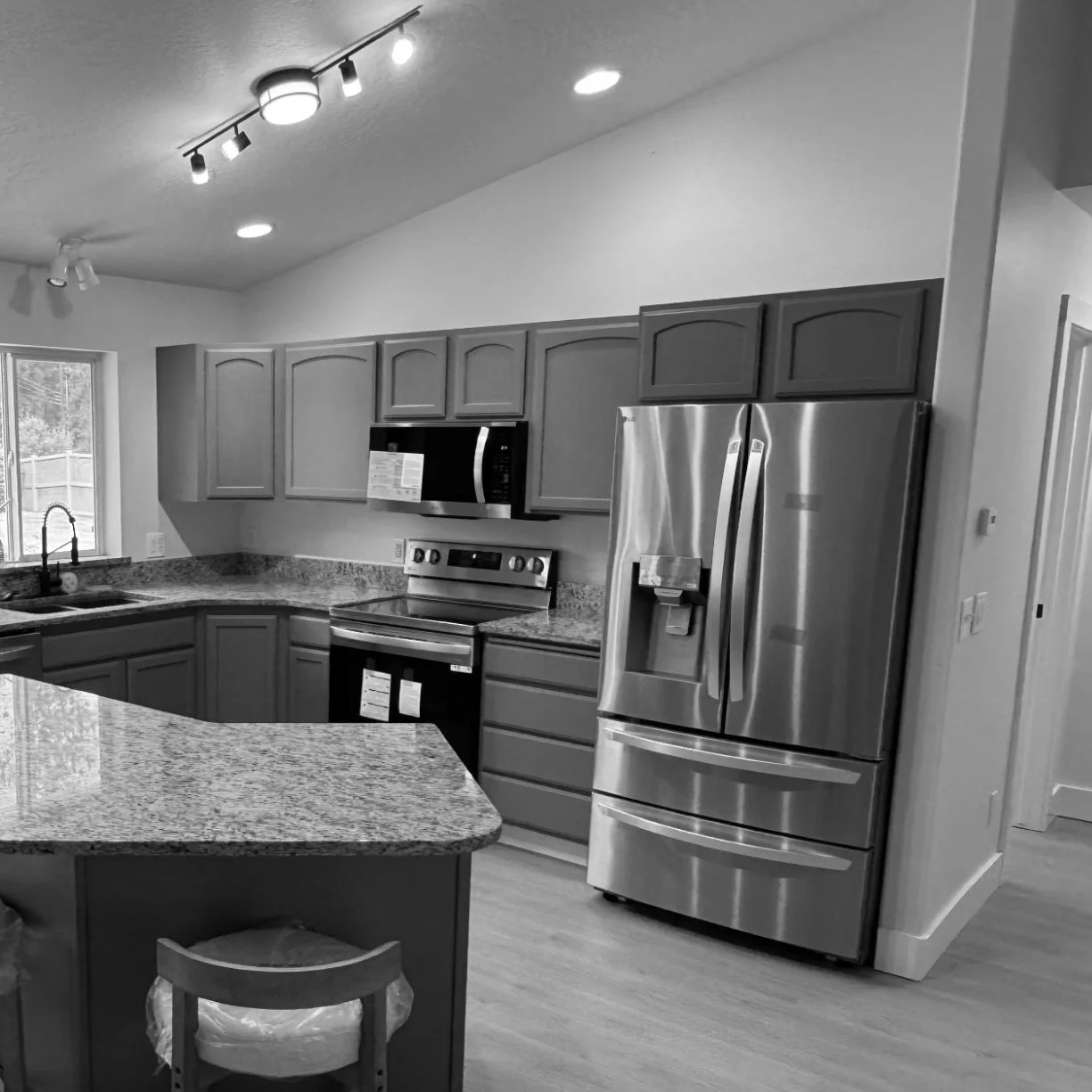
What Homeowners Should Know Before Starting a Kitchen Remodel
With Labor Day weekend here, we're taking a moment to appreciate something we know pretty well at Mr. Clean Fix: good work takes planning, skill, and a lot more behind the scenes than most people ever see.
A kitchen remodel is a perfect example.
From the first conversation about what isn't working in your current kitchen to the final cabinet adjustment and backsplash detail, a successful remodel involves dozens of decisions—and plenty of skilled work along the way.
If you're thinking about remodeling your kitchen, here's what we think homeowners should know before construction begins.
Start With How You Use Your Kitchen
Before you start picking out countertops or scrolling through cabinet colors, think about what's actually frustrating you about your current kitchen.
Is there not enough counter space?
Do people constantly get in each other's way?
Is the refrigerator in an awkward location?
Do you need more storage?
Is there nowhere for someone to sit and hang out without being in the cooking area?
A beautiful kitchen that doesn't function well isn't much of an upgrade.
The best kitchen remodels start with how you actually live in the space.
That means looking at traffic flow, work areas, storage, appliances, seating, and the way your family uses the kitchen on an ordinary day—not just how the room looks in a picture.
The Layout Comes Before the Cabinets
It's tempting to start with cabinets because they're one of the most visible parts of a kitchen remodel.
But the layout should come first.
Where should the refrigerator go? Where will food be prepped? Where will the sink and dishwasher sit? Is there enough room around an island? Can two people work in the kitchen at the same time without constantly bumping into each other?
These decisions affect almost everything that comes afterward.
And this is where remodeling can become much more than simply replacing old cabinets with new ones. Sometimes the best solution involves moving a wall, relocating plumbing, changing electrical, or completely rethinking the existing layout.
That's why planning matters so much.
Cabinetry Is More Than a Color Choice
Once the layout is right, cabinetry becomes one of the biggest decisions in the project.
Of course, style matters. Cabinet color, door style, hardware, and finish all contribute to the overall look.
But what's inside the cabinets matters just as much.
Think about how you store pots and pans, where you want your spices, how often you use certain appliances, and whether drawers or doors make more sense for the way you work.
A well-designed kitchen doesn't just give you more storage.
It puts the storage where you actually need it.
Countertops Need to Work With the Whole Design
Countertops are another major visual element, but they're also one of the surfaces that gets used constantly.
When choosing a countertop, consider durability, maintenance, color, edge profile, and how it works with the cabinets, backsplash, flooring, and other finishes.
You don't necessarily need the most expensive material available.
You need the right material for the way you use your kitchen and the overall design you're trying to create.
A high-end remodel is about making intentional choices—not automatically choosing the highest-priced option.
Don't Forget the Appliances
Appliances can have a surprisingly large impact on your kitchen layout.
The size and location of the refrigerator, range, oven, dishwasher, microwave, and other appliances need to be considered before cabinetry is finalized.
This is especially important if you're changing appliance locations.
Moving an appliance can mean moving electrical, plumbing, gas, or ventilation as well. Those decisions are much easier to address during the planning stage than after the cabinets have already been installed.
Lighting Is Part of the Design
One ceiling light isn't a lighting plan.
A well-designed kitchen typically needs a combination of general lighting, task lighting, and accent lighting.
Think about where you'll actually be working. Countertops can look beautiful during the day but become frustrating at night if you're standing in your own shadow while preparing dinner.
Under-cabinet lighting can make a huge difference. So can thoughtfully placed recessed lighting, pendants, and lighting over an island or dining area.
Lighting should be planned before the walls and ceilings are finished, especially when new electrical work is involved.
Plumbing and Electrical Are Part of the Remodel
The things you don't see can be some of the most important parts of a kitchen renovation.
Moving a sink means plumbing.
Changing the range may mean electrical or gas work.
Adding appliances may require additional circuits.
Adding lighting means electrical planning.
And opening walls can reveal existing conditions that need to be addressed before the new kitchen can come together.
This is one of the reasons we encourage homeowners to think about the entire project before construction starts. A kitchen remodel isn't just cabinets and countertops. It's the systems behind those finishes that make the kitchen function.
The Order of Operations Matters
A kitchen remodel has a sequence for a reason.
Depending on the project, demolition may come first, followed by framing or structural changes, plumbing and electrical work, drywall and finishing, flooring, cabinetry, countertops, backsplash, fixtures, appliances, and final details.
Not every kitchen follows exactly the same sequence, but the important thing is that the work needs to be coordinated.
You don't want to install something today only to have another trade come back tomorrow and undo part of it.
Good scheduling keeps the project moving and helps prevent unnecessary rework.
The Cheapest Estimate Isn't Always the Best Value
A kitchen remodel is a significant investment, and it's completely reasonable to compare estimates.
But make sure you're comparing the scope of work, not just the bottom-line number.
Are the same materials included?
Is electrical work included?
What about plumbing?
What happens if something unexpected is found behind the walls?
Who is coordinating the different parts of the project?
What level of finish and craftsmanship should you expect?
A lower estimate isn't necessarily a better deal if important parts of the project aren't included.
A Kitchen Remodel Is Skilled Work
That's probably the biggest thing we want homeowners to take away this Labor Day weekend.
A finished kitchen may look simple when you walk into it.
Cabinets. Countertops. Appliances. Lights. Flooring.
But behind that finished room is planning, measuring, demolition, carpentry, electrical work, plumbing, installation, finishing, problem-solving, scheduling, and a lot of attention to detail.
The better all of those pieces work together, the more natural the finished kitchen feels.
And that's the goal.
You shouldn't walk into your remodeled kitchen and think about all the work that went into making it function.
You should simply think:
"This makes so much more sense."
Planning a Kitchen Remodel?
At Mr. Clean Fix, we believe the best kitchen remodels start with a conversation—not a cabinet catalog.
If your kitchen is outdated, doesn't function well, or simply no longer fits the way your family lives, we're happy to help you look at the possibilities.
Whether you're considering a kitchen update, a larger kitchen renovation, or a complete remodel involving layout, electrical, plumbing, cabinetry, countertops, lighting, and finishes, we'll help you look at the project as a whole.
This Labor Day weekend, we're grateful for the homeowners who trust us with their homes—and for the skilled work that turns an idea into a finished space.
Ready to start planning your kitchen remodel? Let's talk.
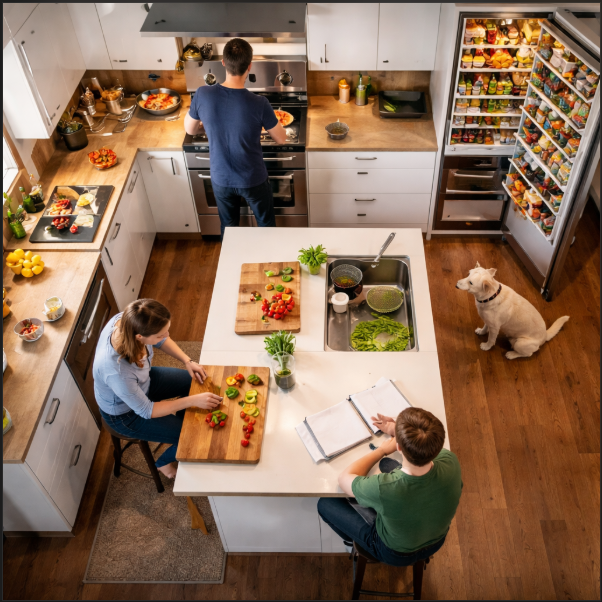
The Kitchen Triangle Is Dead. Here's What Actually Matters Now.
Kitchen Reality Check — Part 1 of 3
This is Part 1 of our Kitchen Reality Check series — three blogs breaking down what actually makes a kitchen work, from a contractor who's seen the good, the bad, and the "why did anyone think that was a good idea."
For decades, kitchen design lived and died by one rule.
The kitchen triangle — the invisible line connecting your sink, stove, and refrigerator — was supposed to be the golden formula for a functional kitchen. Keep those three points close, keep traffic out, boom. Efficient kitchen.
It made sense. In 1948.
The problem? Nobody told your kitchen it was living in 2026.
At Mr. Clean Fix, we've remodeled a lot of kitchens across North Idaho. And we can tell you firsthand — the triangle isn't what's making people's kitchens fail. It's that nobody designed them around how the family actually lives in them.
That's the real conversation. So let's have it.
Why the Triangle Stopped Working
The triangle was built for one cook, one task, one small closed-off room. That was the kitchen of mid-century America.
Today's kitchens are open. They're loud. They've got two people cooking, a kid doing homework, someone digging through the fridge, and a dog parked right where you need to stand — all at the same time.
A three-point triangle doesn't solve any of that. Not even close.
What Actually Works: Zones
Around here in North Idaho, most kitchens we walk into were built for a different era and a different family. When zones are laid out right, everything just works. When they're not — you feel it every single night.
A zone is a dedicated area for a specific task. Here's what a well-designed kitchen actually looks like:
The Prep Zone — Where the real work happens. Counter space, cutting board, easy access to tools, close to the sink. If you're walking across the kitchen every time you need to rinse something, this zone is broken.
The Cooking Zone — Your range and everything that belongs with it. Spices, oils, pots and pans within arm's reach. Not across the room. Not in a lower cabinet you have to dig through while something's boiling over.
The Cleanup Zone — Sink and dishwasher. These two should always be next to each other. Always. We still walk into kitchens where they're separated and wonder what the original designer was thinking.
The Consumables Zone — Fridge and pantry. Ideally accessible from the edge of the kitchen so someone can grab a snack without walking through the middle of everything and derailing whoever's cooking.
The Non-Cook Zone — This one's underrated and most kitchens don't have it. A spot where people can hang out, help with homework, pour a drink — without being in the way. A well-placed island with seating usually handles this. A poorly placed one makes it worse.
Let's Talk Islands — Honestly
Almost every kitchen remodel conversation gets to the island eventually. And we love islands. But only when they actually make sense.
We've also seen plenty that had no business being where they were — crammed into spaces too small, blocking traffic, creating a pinch point that makes the kitchen harder to use than before. That's not an upgrade. That's an obstacle with a countertop.
Before committing to an island, answer these honestly:
Is there at least 42 inches of clearance on every side? 48 is better.
Does it add real counter space and storage — or just eat up floor space?
Does it create that non-cook zone, or does it just push everyone into the same tight path?
If it doesn't improve how you actually move through the kitchen on a busy Tuesday night, it's not worth it.
Most "Storage Problems" Aren't Storage Problems
This comes up constantly. Homeowners feel like they don't have enough storage — so they want more cabinets, more drawers, more pull-outs.
Sometimes that's true. But more often? It's a layout problem wearing a storage costume.
Your pots live across the kitchen from your stove. Your spices are in a cabinet behind you while you're cooking. Your prep area is nowhere near your most-used tools. That's not a storage issue — that's everything living in the wrong place.
Fix the layout first. Then see how much storage you actually still need.
The Honest Contractor Take
No formula replaces a real conversation about how you actually cook and live.
Before we ever talk cabinets or countertops or finishes, we want to know: what drives you crazy about your kitchen right now? Where does it break down? What works?
Those answers tell us more about the right design than any rule ever will.
Because a kitchen that looks incredible in photos but fights you every night isn't a win. A kitchen that just works — for your family, your routine, your real life — that's the goal.
If it doesn't work on a busy Tuesday night, it's not a good kitchen. Period.
That's what we design for. Every time.
Next up in the Kitchen Reality Check series: the 5 kitchen layout mistakes we see over and over in North Idaho homes — and how to avoid every single one of them. Publishing next Friday.
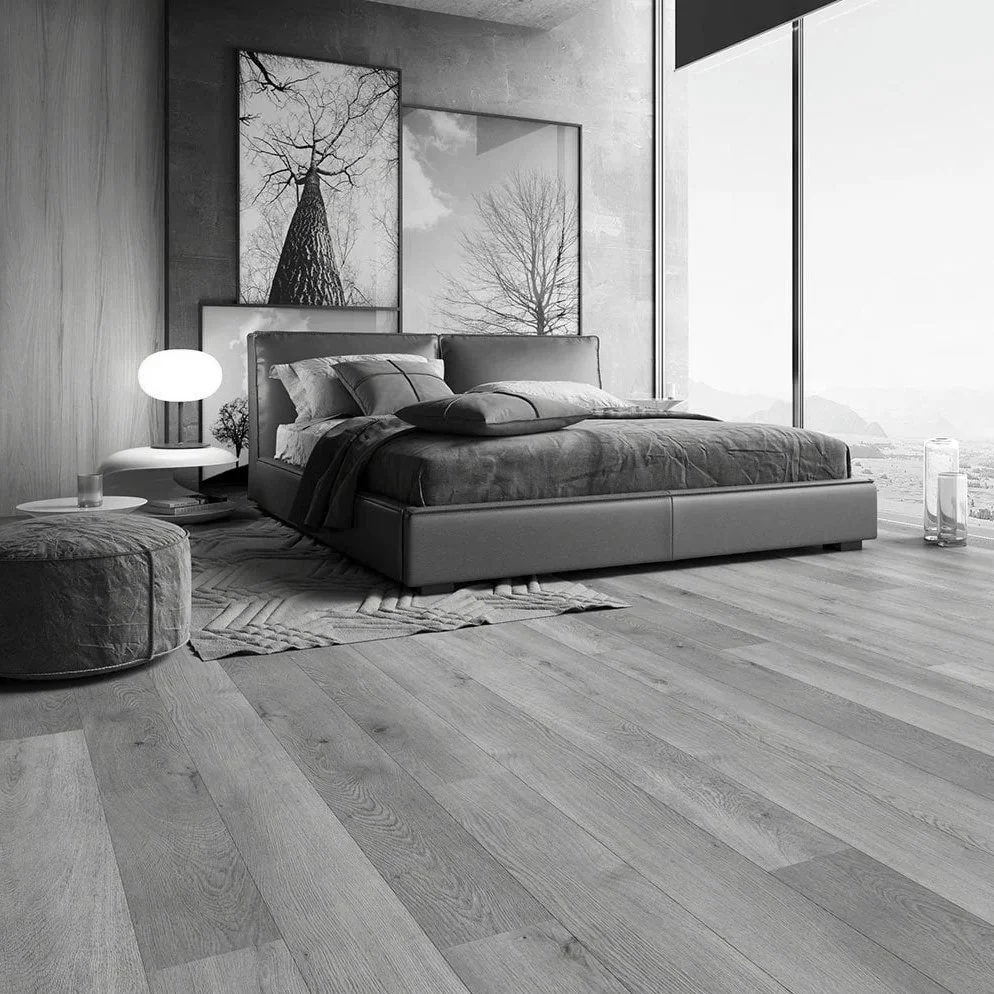
Flooring Trends for Modern Homes: Choosing Style and Durability
Your floors set the tone for everything above them.
Before the furniture, the lighting, the paint colors — the floor is what your eye lands on first. It's what your feet feel every single morning. And yet, flooring is one of those decisions homeowners often rush — or get talked into — without fully understanding their options.
At Mr. Clean Fix, we've installed, repaired, and replaced a lot of flooring in North Idaho homes. And we've seen what holds up, what doesn't, and what homeowners wish they'd chosen differently.
Here's what's trending in 2026 — and more importantly, what's actually worth it.
Wide Plank Everything
If you've been scrolling design feeds lately, you've noticed it: planks are getting wider. The narrow strip hardwood of decades past is giving way to wide plank formats — in hardwood, LVP, and engineered options — that make rooms feel more open and modern.
Why it works: Fewer seams mean a cleaner visual flow. Wide planks also showcase the natural grain and character of the material better than narrow strips ever could.
Why it lasts: This isn't a trend that's going anywhere. Wide plank has deep roots in traditional European design and it translates beautifully into both modern and farmhouse aesthetics.
Luxury Vinyl Plank (LVP) — Still the Reigning Champion
LVP has dominated the flooring market for years now, and for good reason. It looks like hardwood, performs like tile, and costs a fraction of either.
Modern LVP has evolved significantly. Today's options feature:
Deeper embossing that mimics real wood grain
Wider and longer plank formats
Improved wear layers for high-traffic durability
Waterproof cores that make it ideal for kitchens, bathrooms, and basements
For North Idaho homes — where winter means wet boots, muddy dogs, and temperature swings — LVP is often the smartest choice we recommend.
Warm, Natural Tones Are Back
The gray-everything trend had a long run. But design is shifting back toward warmer, more organic tones: honey oak, warm walnut, creamy beige, and natural wood expressions that feel alive instead of cold.
This shift mirrors a broader movement in interior design toward materials that feel grounded and natural. Think less "showroom" and more "lived-in warmth."
If you're choosing flooring you plan to keep for the next decade, leaning into warm neutral tones is a safer bet than committing to a trend color that may feel dated in five years.
Matte Finishes Over High Gloss
Glossy floors had their moment — and then homeowners discovered exactly how unforgiving they are. Every footprint, every scratch, every dust particle shows up under a high-gloss finish.
Matte and satin finishes are the current standard for good reason. They're more forgiving on everyday wear, they photograph better, and they tend to feel more intentional and modern than their shiny counterparts.
Whether you're going hardwood, LVP, or tile, the finish you choose matters as much as the material itself.
Large Format Tile in Kitchens and Bathrooms
In wet areas, tile is still king. And like plank flooring, tile is going bigger.
Large format tiles — think 24x24 or even larger — create a seamless, sophisticated look with fewer grout lines. That means less maintenance and a cleaner aesthetic that works in both modern and transitional spaces.
Porcelain continues to be the go-to material for its durability and low maintenance, especially in high-use bathrooms and kitchens.
Mixing Materials Intentionally
One of the more interesting design moves we're seeing is the intentional mix of materials between spaces.
Instead of running the same flooring throughout an entire home, homeowners are defining zones with different materials — tile in the kitchen that transitions into LVP in the living room, or hardwood in the main area that gives way to a patterned tile in an entryway.
Done well, this approach adds visual interest and allows each space to have its own personality while still feeling cohesive. Done poorly, it feels choppy.
The key word is intentional. The transition needs to make sense — visually and functionally.
What to Ask Before You Choose
Before picking a floor based on what looks good in a showroom, ask yourself:
Who lives in this home? Kids, pets, and heavy foot traffic change the equation entirely.
What's the subfloor situation? The best flooring fails on a bad subfloor. This is something we assess before recommending any material.
Are you staying or selling? If resale is the goal, neutral and durable wins every time.
What's the long-term plan for the space? Flooring a basement differently than a master bedroom isn't just acceptable — it's smart.
The Mr. Clean Fix Take
Flooring trends come and go, but the homes that hold up best — and feel best to live in — are the ones where decisions were made thoughtfully.
Beautiful flooring isn't just about choosing the right material. It's about proper prep, professional installation, and choosing something that fits how you actually live — not just how a room looks in a magazine.
If you're considering new flooring and want honest guidance before you commit, we're always happy to walk through the options with you.
Because the right floor is one you'll still love five years from now.

Remodel Now or Wait? How to Know When It’s Time to Invest in Your Home
One of the most common questions we hear is this:
“Should we remodel now… or wait?”
It’s a fair question. Remodeling is an investment — financially, emotionally, and logistically. And timing matters.
But here’s the truth most homeowners don’t realize:
The right time isn’t just about the market.
It’s about your life.
Let’s break this down in a way that actually helps you decide.
Market Timing vs. Personal Timing
Everyone wants to “time it right.”
Interest rates.
Material costs.
Housing values.
Economic headlines.
Yes — those things matter.
But market timing only tells part of the story.
Market Timing
If:
Home values are strong
Inventory is low
You plan to sell in the near future
Strategic updates can increase resale appeal and ROI.
On the flip side, waiting for the “perfect” market moment can keep you stuck for years. Materials fluctuate. Labor fluctuates. Rates fluctuate. There is rarely a magical window where everything aligns perfectly.
Personal Timing (The One That Matters More)
Ask yourself:
Are you staying in this home 5+ years?
Is your current layout causing daily frustration?
Are you avoiding rooms in your own house?
Is maintenance starting to pile up?
If your home no longer supports your lifestyle, that’s personal timing speaking.
And personal timing usually outweighs market timing.
Because quality of life has value too.
Functional vs. Cosmetic Upgrades
Not all remodels are created equal.
Understanding the difference can clarify whether you should move now or wait.
Functional Upgrades (Usually Shouldn’t Wait)
These impact safety, structure, efficiency, or daily usability:
Failing decks or stairs
Water damage
Drafty windows
Electrical or plumbing issues
Layouts that no longer work for your family
Delaying these can compound problems — and costs.
Functional upgrades often prevent larger expenses later.
Cosmetic Upgrades (Sometimes Can Wait)
These improve aesthetics but not function:
Cabinet color changes
Decorative tile swaps
Trend-driven finishes
Minor trim updates
If your home works well but just feels outdated, you may have flexibility.
But here’s something to consider:
Living in a space you dislike has a cost too. It affects how you host, relax, and enjoy your home.
Sometimes “cosmetic” is actually emotional functionality.
When Waiting Actually Costs More
Waiting feels safe.
But it isn’t always cheaper.
Here’s when delay becomes expensive:
1. Small Issues Turn Into Big Repairs
A minor moisture issue becomes structural damage.
A soft board becomes a rebuild.
A draft becomes long-term energy loss.
Preventative remodeling often costs less than reactive repairs.
2. Phased Projects Cost More Long-Term
Doing a kitchen in three separate waves over five years usually costs more than planning it correctly from the start.
Mobilization, material changes, labor fluctuations — they add up.
3. Material & Labor Rarely Go Backwards
While prices fluctuate, long-term trends generally rise.
Waiting five years hoping costs will drop significantly isn’t typically how the industry behaves.
4. You Lose Years of Enjoyment
This one doesn’t show up on spreadsheets.
If you plan to stay in your home, upgrading sooner means:
More years enjoying it
Less daily frustration
Better functionality for your family now — not someday
Time in a better space has value.
So… Remodel Now or Wait?
Here’s a simple framework:
Remodel now if:
There are functional or structural concerns
Your layout no longer fits your life
You’re staying long-term
Delaying increases repair risk
Consider waiting if:
It’s purely trend-driven
You may sell very soon
The space works fine functionally
You need more financial cushion first
The key is clarity.
A thoughtful consultation and honest evaluation can remove the guesswork.
At Mr. Clean Fix, we don’t push projects. We help homeowners make smart decisions — even if that means waiting.
Because the right time isn’t about pressure.
It’s about readiness.
If you’re unsure where your project falls, we’re happy to talk it through.
Sometimes clarity is the most valuable part of the process.

Winter Is the Best Time to Plan (and Sometimes Start) Your Remodel
Winter Is the Best Time to Plan (and Sometimes Start) Your Remodel
Winter has a reputation for being the off-season for home improvement. The weather slows things down, holidays drain budgets, and many homeowners decide to “wait until spring.” But in reality, winter can be one of the smartest times to plan — and in some cases even begin — a remodel.
If you’ve been thinking about a project but haven’t taken the first step yet, January might actually be working in your favor.
Planning Doesn’t Have a Season
Even if construction waits for warmer weather, planning never should. Winter is ideal for:
Talking through ideas and options
Reviewing layouts and functionality
Creating realistic scopes of work
Identifying hidden issues before they worsen
Locking in timelines before spring schedules fill
By the time spring arrives, homeowners who waited are just starting the conversation — while those who planned during winter are already on the schedule.
Interior Projects Don’t Stop for Cold Weather
Many of the most impactful remodels are interior projects, which are largely unaffected by winter conditions.
Winter-friendly projects include:
Bathroom remodels
Kitchen updates
Basement finishing or repairs
Flooring installation
Trim, doors, and carpentry work
Drywall, paint, and layout changes
These projects can move forward now, helping you actually enjoy the results instead of waiting another season.
Winter Reveals Problems You Can’t See in Summer
Cold weather has a way of exposing issues that often go unnoticed:
Moisture intrusion and leaks
Drafts and insulation failures
Condensation and ventilation problems
Water damage that shows up after snow or ice
Addressing these issues early can prevent more expensive repairs later — and often changes the scope of future remodeling plans for the better.
More Availability, Better Conversations
Spring and summer schedules fill quickly. Winter allows for:
More flexible scheduling
Better communication and planning time
Thoughtful decision-making instead of rushed choices
Instead of scrambling to book during peak season, winter gives you space to make decisions that truly fit your home and your budget.
Planning Now Means Building Forward
Even if your project doesn’t start tomorrow, planning now means:
Clear expectations
Fewer surprises
Smoother timelines
A stronger outcome overall
A remodel shouldn’t feel rushed or reactive. Winter planning puts you in control.
A Smarter Way to Start the Year
If improving your home is part of your 2026 goals, winter is not a setback — it’s an advantage.
Whether you’re ready to start an interior project or simply want to plan for warmer months, this is the time to start the conversation.
Thinking about a remodel this year? Let’s talk through your ideas, timelines, and options — and build a plan that moves you forward.

A Resolution for Your Home: Building Spaces That Inspire in 2026
A Resolution for Your Home: Building Spaces That Inspire in 2026
It’s January 9th, 2026. The gym is still crowded, planners are still fresh, and conversations about New Year’s resolutions are everywhere. Most of those goals revolve around health, routines, and personal growth—but there’s one resolution that often gets overlooked:
Your home.
Your home is where your resolutions live. It’s where mornings begin, evenings unwind, and everyday life unfolds. If you’re committing to growth in 2026, your space should support that journey—not work against it.
Big Goals Don’t Stop With You
We often think of resolutions as internal changes: eat better, move more, slow down, save money. But your environment has a powerful influence on how well those goals stick.
A cramped kitchen makes healthy cooking harder
Poor lighting affects mood and motivation
Worn-out bathrooms or cluttered layouts add daily stress
Spaces that don’t function for your life quietly drain energy
Remodeling isn’t about indulgence—it’s about alignment. When your home matches how you live (or how you want to live), everything else becomes easier.
A New Kind of Resolution: Intentional Spaces
Instead of saying, “This year I’ll finally remodel someday,” try reframing it:
“In 2026, I will build spaces that support the life I’m creating.”
That could mean:
A kitchen that invites cooking instead of takeout
A bathroom that feels calming, not chaotic
A basement that becomes usable space instead of storage
A deck or outdoor area that reconnects you with fresh air
A layout that finally works for your family’s flow
These aren’t just projects. They’re quality-of-life upgrades.
Remodeling as Self-Investment
We see it all the time—homeowners wait until something breaks before taking action. But the most impactful renovations aren’t emergency fixes; they’re proactive decisions.
Investing in your home can:
Reduce daily friction
Increase comfort and efficiency
Improve mental well-being
Support healthier routines
Add long-term value
Just like fitness or personal growth, meaningful home improvements happen step by step. You don’t need to do everything at once—start with what affects you most.
Start Small. Think Long-Term.
Not every resolution needs to be a full-scale remodel. Sometimes it’s about starting the conversation or creating a plan.
Ask yourself:
What space frustrates me the most right now?
Where do we spend the most time—and does it work?
What would make daily life feel easier?
What project could move us forward this year?
Even small upgrades—better lighting, improved storage, updated finishes—can change how a space feels and functions.
2026 Is About Forward Momentum
A new year carries momentum. Don’t let it pass without considering how your home supports your goals.
Your resolution doesn’t have to be perfection. It just needs intention.
This year, let your home grow with you.
If you’re ready to talk through ideas, explore possibilities, or plan a project for 2026, we’re here to help you take that first step.
Thinking about a renovation this year? Let’s turn your goals into spaces that inspire—one project at a time.

New Year, New Projects: 2026 Remodeling Trends to Watch
As we kick off 2026, homeowners are feeling energized and ready to invest in spaces that not only look great — but truly work for how they live. Whether you’re planning small upgrades or whole-home transformations, this year’s remodeling trends are all about functionality, sustainability, and personalization.
Here’s what we’re seeing take center stage in 2026 remodeling projects:
1. Flexible Spaces for Dynamic Lifestyles
Today’s homes need to adapt. With hybrid work and flexible family routines, multifunctional rooms are must-haves. Think:
Home offices that double as guest suites
Playrooms that convert to media rooms
Open areas with sliding partitions
Flexibility isn’t just smart — it’s essential.
2. Wellness-Forward Design
Healthy living isn’t a trend — it’s a lifestyle. Homeowners are prioritizing features that support physical and mental well-being:
Air and water purification systems
Spa-style bathrooms and steam showers
Natural lighting and biophilic design
Remodeling for wellness enhances comfort and quality of life.
3. Sustainable Materials & Eco-Conscious Builds
2026 homeowners are more eco-aware than ever. Green choices are influencing remodels across the board:
Reclaimed wood and recycled tiles
Low-VOC paints and finishes
Energy-efficient windows, doors, and appliances
Sustainability isn’t just stylish — it pays off long-term.
4. Bold Kitchen Statements
Kitchens continue to be the heart of the home — and in 2026, they’re getting bolder:
Two-tone cabinets and textured finishes
Statement ranges and oversized islands
Hidden storage solutions that actually hide
Function meets personality in every corner.
5. Outdoor Living Upgrades
Backyards are evolving into everyday extensions of the home:
Covered patios with outdoor kitchens
Fire features and year-round seating
Built-in planters and smart lighting
Outdoor spaces are no longer extras — they’re essentials.
6. Smart Home Integration
Home tech isn’t optional anymore — it’s expected. In 2026, we’re installing:
Voice-activated systems
Smart HVAC, lighting, and security
Integrated home health sensors
Convenience and safety, all at your fingertips.
7. Textures, Warmth & Contrast
Aesthetic trends in 2026 focus on depth and richness:
Matte black and brass hardware
Rich wood tones paired with soft neutrals
Artisan tile and mixed materials
Design trends favor character and thoughtful detail.
Ready to Bring Your 2026 Project to Life?
If you’re feeling inspired and ready to transform your space this year, Mr Clean Fix LLC is here to guide you through every step — from initial concept to flawless finish.
Let’s make 2026 the year your home truly reflects your lifestyle.

Between Christmas and the New Year: A Quiet Moment to Notice Your Home
There’s a unique calm that settles in after Christmas.
The decorations are still up. The leftovers are in the fridge. Guests have gone home. The house exhales.
This in-between week—after the holiday rush and before the new year begins—is one of the best times to simply notice your home.
You start to see which spaces worked hard and which struggled. Where people naturally gathered. Where clutter collected. Which rooms felt cozy and which felt cramped. There’s no pressure right now—just awareness.
Maybe the entryway felt overwhelmed with coats and shoes. Maybe the kitchen handled everything beautifully, or maybe you wished for more counter space when everyone was helping cook. Maybe the living room felt just right, or maybe you noticed how lighting or layout affected how people connected.
These observations matter—not as criticism, but as information.
Our homes quietly tell us what we need. More storage. Better flow. A space to slow down. A place to gather. A little less chaos in everyday routines.
This isn’t about resolutions or trends. It’s about paying attention. About appreciating what carried you through the year and gently noticing what could support you better moving forward.
At Mr. Clean Fix, we believe the best projects start with understanding how a home is truly lived in. That understanding often comes during moments like this—when life pauses just long enough to reflect.
So as this year winds down, take a moment. Sit in your space. Notice what you love. Notice what feels hard. Your home has been there for it all—and it’s still showing you what’s possible.

Homes Hold the Holidays: What This Season Reminds Us About the Spaces We Live In
The holidays have a way of making us see our homes differently.
Suddenly, every space is working overtime. The front door opens and closes constantly. Boots pile up. Coats get tossed over chairs. The kitchen becomes the heart of everything—food, conversation, late-night snacks, and early-morning coffee. Living rooms fill with people, laughter, wrapping paper, and memories.
This season reminds us that homes aren’t just places we live—they’re places where life happens.
At Mr. Clean Fix, we see it all year long, but especially during the holidays. Homes become gathering spaces, safe places, and sometimes chaotic places. And that’s okay. A lived-in home is a loved home.
Christmas has a way of highlighting what works well and what could use a little help. Drafty doors feel colder. Tight entryways feel tighter. Storage suddenly feels non-existent. But at the same time, warmth shows up in unexpected ways—in shared meals, in people squeezed onto couches, in the quiet moments once the house finally settles.
Your home doesn’t have to be perfect to be meaningful. It just has to support the way you live.
Thoughtful spaces make a difference—not because they’re trendy, but because they make room for connection. A welcoming entryway, a kitchen that flows, a living room that invites people to stay a little longer. These aren’t luxuries; they’re the backdrop to your traditions.
As the year comes to a close, we’re grateful. Grateful for the homes we’ve worked in, the families we’ve met, and the trust our clients place in us. We’re grateful for spaces that tell stories—especially this time of year.
From our family to yours, we hope your home is filled with warmth, comfort, and moments worth remembering this Christmas.

💪 Motivation Monday: Your Mind Builds Everything
At Mr. Clean Fix, we talk a lot about building — homes, decks, kitchens, spaces that people love. But the truth is, everything you build on the outside begins with what’s happening on the inside.
Your mindset is the foundation.
Your focus is the framework.
Your habits are the tools that shape everything that follows.
When your thoughts are aligned, clear, and strong, the way you move through life changes. You make sharper decisions. You handle challenges with steadiness. You see opportunity instead of obstacles.
This week, take a look at what you’re feeding your mind.
Are you surrounding yourself with people who bring out your best?
Are you learning from those who’ve built something real?
Are you giving your attention to growth, not gossip — progress, not problems?
Your mental hygiene is your maintenance plan for success.
Feed your mind with good information.
Keep your goals front and center.
Let discipline, not distraction, guide your day.
Because when your mind is strong, your work is stronger.
When your attitude is steady, your vision grows clearer.
And when you take care of your mindset — intentionally, daily, uncompromisingly — your entire life begins to rise to that same level.
Here’s to a week of clarity, growth, and purpose.
Let’s build something great — starting within.

🕒 Aggressive Patience: Building, Waiting, and Winning with Time
If there’s one thing this week reminded us of, it’s this — real progress doesn’t always make noise.
We’ve been deep in those quiet grind stages on a few jobs:
The garage/patio is fully painted, the new door’s installed, and we’re waiting on final inspection.
In the secret room, the corners and ceiling got a clean refresh, and we’re swapping in a new window that actually opens.
The deck keeps stretching out beautifully — just waiting on the next load of boards to arrive.
From the outside, it might look like we’ve hit pause. But this is where the work really happens.
As Andy Frisella said this week:
“Time will either expose you or reward you. It all depends on how you spend it.”
That perspective fits perfectly. Because remodeling — like business, like life — is all about aggressive patience.
You give everything you’ve got today, even when there’s nothing flashy to show for it yet.
You keep pushing through the waiting, the deliveries, the weather, the details.
And when it all comes together, the result speaks louder than words ever could.
So if your own project — or your goals — feel like they’re inching forward right now, don’t lose heart.
You’re not stuck; you’re stacking progress that’s about to break through.
Time isn’t your enemy. It’s just a mirror — reflecting what you do with it.

Closer Than You Think: The Power of Tiny Wins in a Remodel (and in Life)
It’s Tuesday again, and to be honest — it feels like one of those weeks where progress is happening in slow motion. Every project on our list moved forward… just not far enough to brag about yet.
But that’s real life in remodeling (and honestly, real life in general). I reread an email from Andy Frisella this morning that hit home — about how the hardest seasons are the ones that forge the strongest versions of us. It reminded me how much that applies to what we do here every day.
Because behind every “before and after” photo are weeks of tiny wins:
A stubborn piece of trim finally comes loose.
The primer dries evenly.
A leak gets fixed before it turns into a problem.
A client texts, “It’s looking great so far.”
None of it feels headline-worthy… until you realize those little moments are what make the big reveal possible.
Why this matters more than shiny before/after photos
People remember how they felt during a project — stressed, excited, proud. The tiny wins make the stress tolerable, build trust, and create the stories you’ll tell later. Projects don’t just change spaces; they change people’s confidence in their home and in themselves.
So if you’re in the middle of a job and it feels slow, don’t quit. If you’re dreaming about starting but worried about the grind, know this — every little step moves you closer. And if you want a team that values small wins as much as final results, we’ve got your back.
— Jess @ Mr Clean Fix LLC

The Work Nobody Sees—And Why It’s My Opportunity
I’ve been staring at the Mr. Clean Fix website for weeks—hours spent clicking, typing, dragging, deleting, redoing. A photo here, a paragraph there. Some days it feels like I’m just moving pixels around. Other days, it feels like building a whole new world for our business from scratch.
And yeah… it’s weird to write a blog about updating the website on the website itself. But that’s kind of the point. Most people walk past the work that actually creates opportunity for a small business like ours.
Today, I read an email from Andy Frisella: “Most people walk right past opportunity every single day… It’s the hard work. It’s the extra responsibility. …You just need to be the person who says, ‘I’ll do it.’”
That’s exactly what updating this website has been for me and for Mr. Clean Fix. Opportunity didn’t show up with a red carpet or a spotlight. It showed up as messy pages, slow load times, missing photos, confusing navigation, and decisions that weren’t always fun to make—but needed to be made if we wanted to show our work, highlight our services, and connect with our clients.
One challenge nobody warned me about? The mobile version. I’d been tweaking everything on my laptop, thinking it looked decent… and then I checked it on my phone. Chaos. Fonts too small, images out of place, buttons buried or unclickable. Most people use their phones, so I had to revamp it for mobile. Hours of extra work, a few frustrated sighs, and maybe one too many coffee refills—but now it’s smooth and responsive for everyone.
And then came the emails. Half a dozen “professionals” reached out, offering to fix it for me. Nice offers—but honestly? I laughed, deleted a couple, and realized this is my opportunity: to do the work myself, learn from it, and make the website truly ours. There’s something satisfying about solving a problem no one else wants to tackle.
So far, the home page, the services page, and our brand-new Transformation Gallery are live. Two more sections/pages remain—but even now, what’s online represents hours of work that most people would avoid. Every photo, every word, every layout tweak is part of building a professional, trustworthy face for a small business that prides itself on doing quality work for our clients.
Check Out What’s Live
Home Page: Our story, our values, and a snapshot of the projects that make Mr. Clean Fix what it is.
Services Page: A clear, easy-to-navigate list of all the ways we help homeowners—bathroom remodels, decks, painting, and more.
Transformation Gallery: Before-and-after shots of our favorite projects. Each photo carefully curated to show the quality and care we put into every job.
Every time I wrestle with layout, reorganize a page, or ask a tough question about how to show our projects, I’m doing the work most people avoid. And that’s exactly where opportunity lives. Not in shortcuts. Not in hoping someone else will do it. In saying, “I’ll do it.”
So yes—this website isn’t done yet. But every hour, every headache, every late-night “why isn’t this working” moment is shaping the doors that will open for Mr. Clean Fix, helping us grow, reach new clients, and showcase the work we love doing. The work nobody sees is the work that changes everything—and even as a work in progress, this website is our opportunity.

Built for the Fight: Why You’re Stronger Than You Think
Yesterday, I was reading an email from Andy Frisella—and man, it lit a fire under me. His words were raw, direct, and powerful. The kind of truth that hits you right between the eyes and makes you take a hard look at yourself. Naturally, I had to share it with James and perhaps if you’re reading this you needed to see it too.
Because here’s the reality: life doesn’t play fair.
It’s going to hit you hard. It’s going to knock you down, bloody your nose, and test you in ways that break most people into a million pieces. But here’s the thing—you’re not most people.
You’ve already proven that.
You’re still here.
After everything you’ve faced—every storm, every setback, every sleepless night—you’re still standing. Still moving. Still going. Still pushing forward. And that alone means you’re stronger than anything that’s tried to stop you.
The truth is, you were built for this. Built for the fight.
Not everyone is. Some people crumble when the weight gets too heavy. But not you. You were built to carry more, to outlast, to outwork, and to out-bleed every obstacle in your way.
That’s not hype—it’s a fact.
Because if you look back at your life, you’ll see the proof in every scar, every lesson, every time you thought you couldn’t keep going but did anyway. You’ve already shown yourself what you’re made of.
Now it’s about remembering it.
Remember who you are.
You are not average. You are not weak. You are not defined by what’s happened to you—you are defined by the fact that you’re still standing, still swinging, still grinding.
You are a force of nature.
And yeah, it might be hard right now. Really hard. But that doesn’t mean you can’t handle it. Because the reality is, you’ve already handled worse. You’ve already walked through fire and made it out.
So what now?
You get back in the game. You fight back. You refuse to quit—because quitting was never an option.
This is the only way forward. The only way to become who you were meant to be.
You were built for this fight. And you’re not done yet.

The Hidden Surprises of Home Remodeling: What Lurks Beneath
Remodeling a home is an exciting journey. Fresh paint, new flooring, upgraded fixtures—it’s a transformation that breathes life into a space. But sometimes, what lies beneath those old finishes can bring unexpected challenges. At Mr. Clean Fix, we know that behind every wall or under every floorboard could be a surprise waiting to be discovered.
The Guest Bath Surprise: A Real-Life Example
During a recent project, we were hired to handle painting and a few other upgrades in a client’s home. Everything was running smoothly—until the flooring crew arrived and lifted up the old materials in the guest bathroom. What they uncovered was enough to stop the job in its tracks: mold and significant wood rot beneath the subfloor.
Instead of passing the problem back to the homeowner or delaying the project, they turned to us. Could we help? Absolutely.
Why These Issues Happen
Water damage and mold are some of the most common hidden problems uncovered during remodeling. Bathrooms, in particular, are high-moisture areas, and over time, even a small leak can cause serious structural issues:
Undetected Leaks behind toilets, sinks, or showers
Improper Ventilation leading to excess humidity
Failed Seals or Caulking allowing water to seep into subfloors and walls
These issues often go unnoticed until demolition begins—and by then, the damage is done.
Going the Extra Mile
In this case, time was of the essence. The flooring company couldn't move forward until the subfloor was repaired and the mold removed. Our team rolled up their sleeves and worked late into the evening to tear out the damaged material, treat the mold, and replace the rotted wood. We got it done quickly and correctly, allowing the flooring installers to continue their work the next day.
Why It Matters
Homeowners often budget and plan for surface-level changes. But what really makes a remodel successful is how you handle the unexpected. At Mr. Clean Fix, we pride ourselves not just on craftsmanship—but on adaptability, professionalism, and keeping the project moving forward, no matter what surprises arise.
Be Prepared for the Unexpected
If you're considering a remodel, here are a few tips to keep in mind:
Budget for contingencies—a little extra padding can go a long way.
Hire a contractor who can adapt—when surprises come up, you need a team that can pivot quickly and safely.
Trust the process—some setbacks are actually opportunities to fix long-ignored issues and ensure your home is safer and more durable.
Remodeling might come with a few bumps in the road, but with the right team on your side, you can navigate any surprise with confidence.