Buying a Fixer-Upper? What to Look for Before You Make an Offer
There’s something exciting about a fixer-upper.
Maybe it has the location you want, the yard you love, or a price that makes you think, We could turn this into exactly what we want.
And sometimes, you absolutely can.
But before you make an offer based on what the house could be, it’s important to take a good look at what you're actually buying.
A house that needs new paint, flooring and updated finishes is one thing. A house that needs structural work, major system upgrades and a complete reconfiguration is something very different.
The difference isn't always obvious when you're walking through with a real estate agent.
Here are some things we recommend thinking about before falling in love with the potential.
Look Beyond the Paint and Flooring
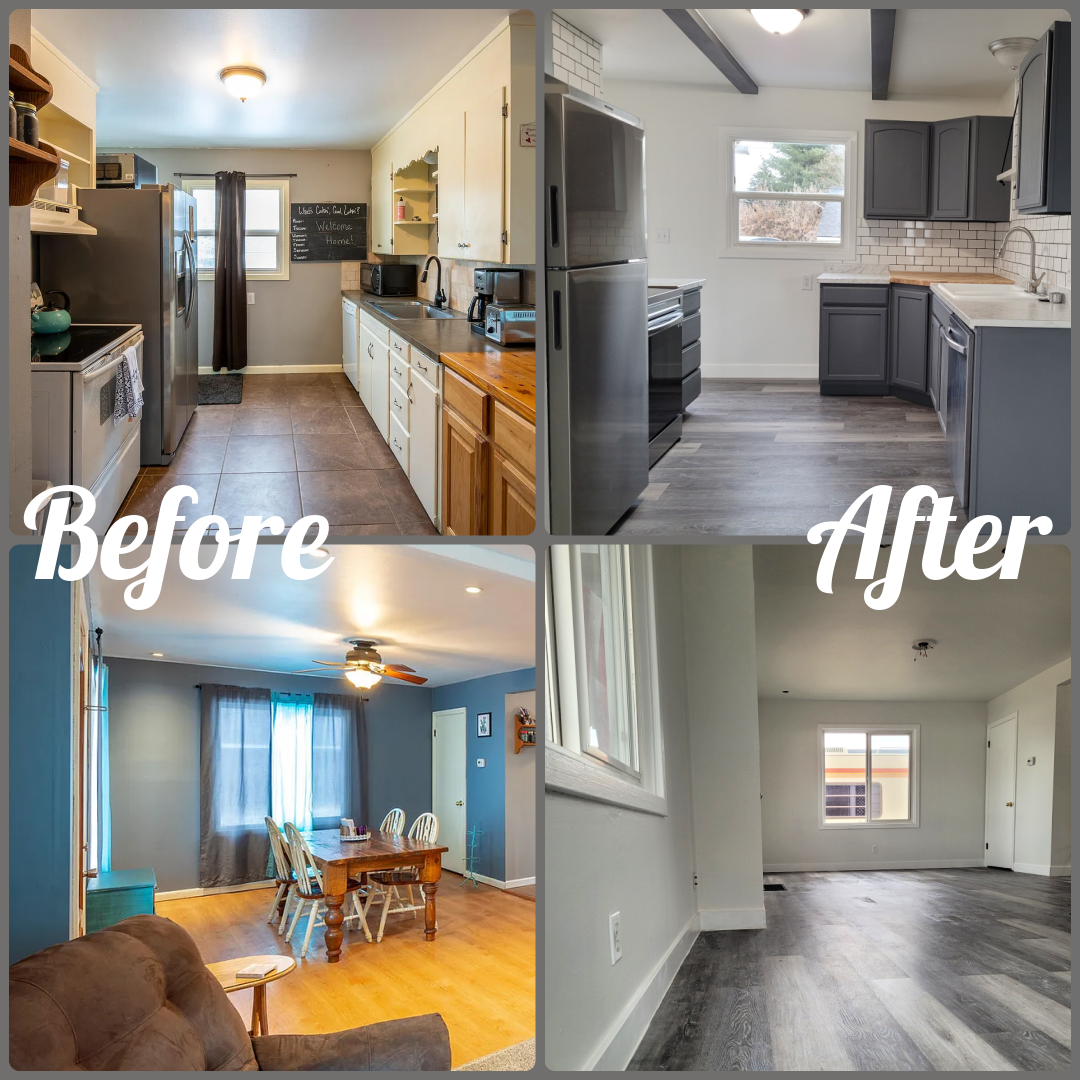
Cosmetic problems are usually the easiest part of a fixer-upper.
Old carpet, outdated cabinets, ugly paint colors, worn flooring and dated fixtures can make a house look like it needs a tremendous amount of work when the underlying house is actually in good shape.
Those things can also make a property look worse than it really is.
The opposite can be true, too.
Fresh paint and new flooring can make a house look great while bigger problems are hiding underneath.
When you're walking through a potential fixer-upper, try to separate what you don't like from what actually needs to be fixed.
You can change paint.
You can change flooring.
You can change cabinets.
Changing the basic structure or layout of the house is a much bigger conversation.
Pay Attention to the Layout
One of the biggest questions to ask is whether the existing layout can realistically become what you want.
Maybe you want a larger kitchen.
Maybe you want to open the main living area.
Maybe you want to add another bathroom, create a primary suite, or turn an unused space into an office.
Before assuming that a wall can come down or a room can be moved, consider what's behind it.
Is it structural?
Are there plumbing lines in the way?
Is electrical work going to be complicated?
Will moving one room create problems somewhere else?
A house with an imperfect layout isn't necessarily a bad investment. In fact, sometimes the layout is exactly what makes a fixer-upper worth considering.
But you want to understand the possibilities before you make an offer—not after you own the house.
Don't Ignore the Major Systems
This is where a little extra caution can save you from a very expensive surprise.
Pay attention to the age and condition of things like:
Roofing
Electrical
Plumbing
Heating and cooling
Water heaters
Windows and exterior doors
Foundation and drainage
Insulation
You don't necessarily need everything to be new.
An older home can still be a fantastic home.
The important thing is knowing what you're working with and what may need attention soon.
If you're planning to spend $50,000 remodeling the kitchen and bathrooms, but the house also needs major electrical, plumbing and structural work, that changes the overall project considerably.
Look for Signs of Structural Problems
Some problems are more concerning than others.
Cracks, uneven floors, doors that don't close properly, water intrusion, significant settling or other unusual conditions are worth investigating before you assume they're just part of an older house.
This doesn't mean every crack is a disaster.
It means you shouldn't build your renovation budget around the assumption that every problem is cosmetic.
If something catches your attention during the walkthrough, find out what it is.
Sometimes the answer is simple.
Sometimes it requires a professional evaluation.
Either way, it's much better to know before you buy.
Think About Permits Before You Make Big Plans
If your dream for the house involves moving walls, adding rooms, changing plumbing or electrical, finishing previously unfinished space, or building an addition, don't assume every idea will automatically be allowed.
Permitting requirements can affect both your budget and your timeline.
Your plans may also be affected by existing conditions, property limitations or local requirements.
That's one reason it's helpful to think about the renovation as a project—not just a collection of individual improvements.
Before you decide that a house is a bargain because you can "just remodel it," make sure the remodel you're imagining is actually realistic.
Calculate the Renovation—Not Just the Purchase Price
This is probably the biggest mistake we see people make when thinking about fixer-uppers.
They look at the purchase price and the finished value, then estimate the renovation based on what they think individual projects should cost.
But major remodels aren't usually just a list of materials.
There can be demolition, preparation, framing, electrical, plumbing, drywall, flooring, cabinetry, countertops, tile, painting, permits, finish work and all of the little things that connect those pieces together.
And once walls start opening up, you may discover conditions that weren't visible during the initial walkthrough.
That's why it's important to leave some room in the budget for the unexpected.
A fixer-upper can still be a great opportunity. You just don't want the entire deal to depend on everything going perfectly.
Think About the House You Want to End Up With
Here's the fun part.
Once you've looked at the problems, look at the potential.
Can you create the kitchen you've always wanted?
Could an awkward floor plan become a great open living space?
Is there room for the bathroom you've been missing?
Could an addition give your family the space you need without leaving the neighborhood you love?
A fixer-upper doesn't have to be perfect when you buy it.
It needs to have potential that makes sense.
The best renovation opportunities aren't necessarily the houses that need the least work. They're the ones where the existing house, property and renovation goals come together in a way that makes sense.
Don't Let the Purchase Happen Before the Plan
If you're seriously considering a fixer-upper, one of the smartest things you can do is start thinking about the renovation before you make the offer.
You don't need a complete set of construction drawings or a finished material list.
But you should have a realistic idea of what you're trying to accomplish, what the house needs, and what kind of investment you're potentially taking on.
Even a conversation with a contractor can help you look at the property differently.
Instead of walking through asking, "Can I live with this?" you can start asking, "What would it take to turn this into the house I actually want?"
Those are two very different questions.
A Fixer-Upper Can Be a Great Opportunity—If the Numbers Work
There is nothing wrong with buying a house that needs work.
Some of the most rewarding homes are the ones that start out a little rough around the edges.
The key is going into it with your eyes open.
Look past the ugly finishes, but don't overlook the expensive problems. Think about the layout, investigate the major systems, understand what your renovation plans could involve, and build a realistic budget before deciding that you've found a bargain.
Because the goal isn't simply to buy a fixer-upper.
The goal is to buy a house where the work required to create the home you want actually makes sense.
Thinking about buying a home that needs some work? Mr. Clean Fix can help you think through the renovation possibilities and what it may take to get the house where you want it to be.
Sometimes a fixer-upper is exactly the opportunity you're looking for.
And sometimes, taking a closer look before making the offer can save you from buying someone else's expensive surprise.
Thinking About a Shower Remodel? What Homeowners Should Know Before Choosing a New Shower Door
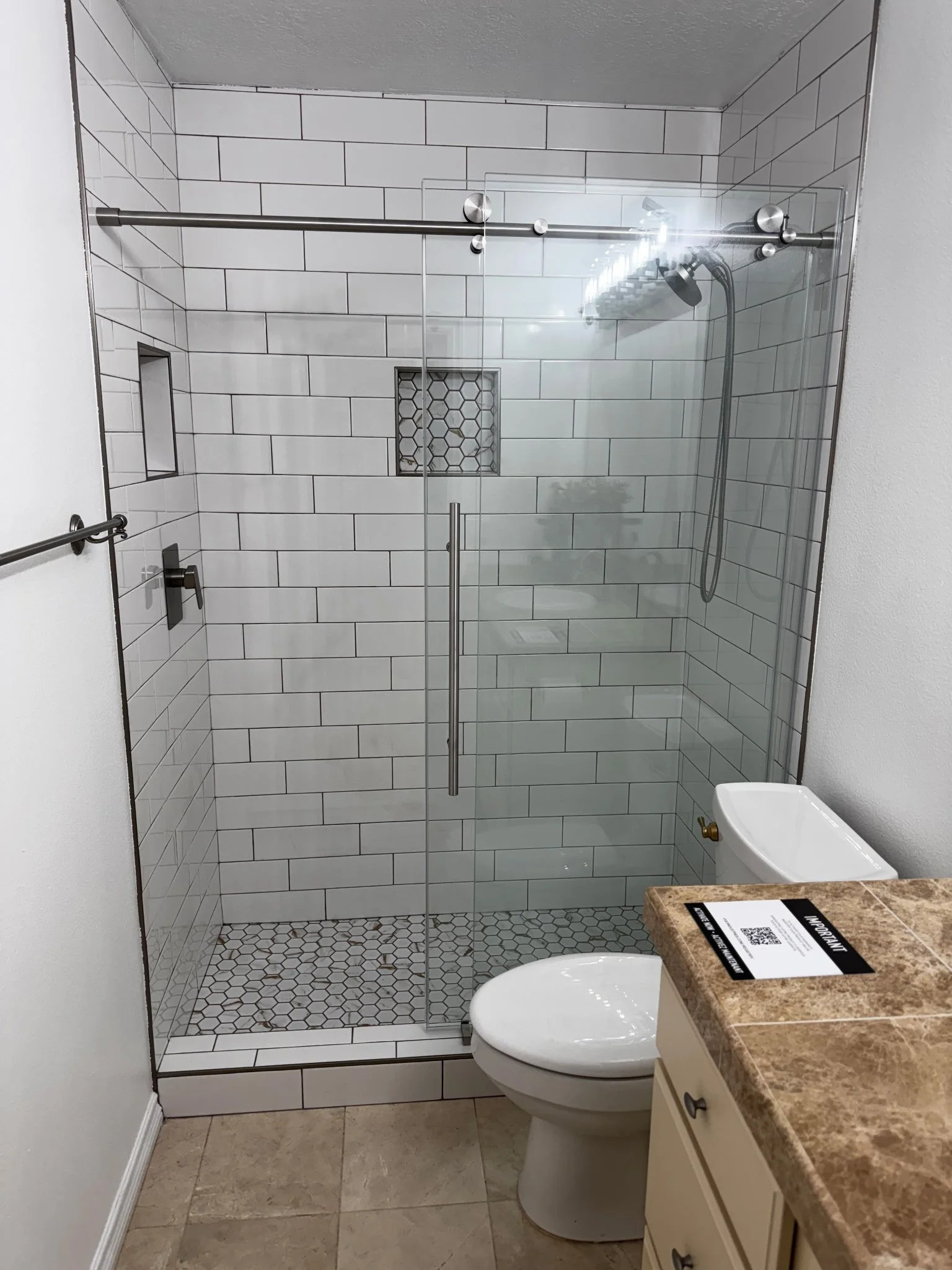
A new shower door can completely change the look and feel of a bathroom.
We were reminded of that this week after installing two new shower doors for local homeowners. While a shower door might seem like a small part of a bathroom remodel, the right door can make the space feel more open, finished, and intentional.
But choosing one isn't always as simple as picking the style you like best.
There are a few things homeowners should think about before ordering a shower door—especially because the existing shower or tub opening can determine what will actually work.
Start With the Shower You Have
The first question is whether you're working with a tub/shower combination, a standard shower enclosure, or a larger walk-in shower.
Each setup has different options.
For a tub/shower combination, a sliding door is often a practical choice because it doesn't require additional clearance into the bathroom. For a larger walk-in shower, homeowners have more flexibility with fixed glass panels, hinged doors, or larger frameless configurations.
The size and shape of the opening matter, too.
That's why it's important to measure the actual opening rather than assuming a particular door will fit because the dimensions seem close.
Framed, Semi-Frameless or Frameless?
Once you know what type of opening you're working with, you can start thinking about the look.
Framed doors have more visible metal around the glass and have been a popular choice for years. They can be a good practical option, particularly when working with certain existing openings.
Semi-frameless doors reduce some of the visible framing while still providing structure where it's needed. They offer a cleaner, more updated appearance without necessarily going all the way to frameless.
Frameless doors have minimal hardware and framing, giving the bathroom a more open, modern look. They're especially popular in contemporary bathroom remodels because they allow more of the tile and shower design to remain visible.
None of these is automatically the "best" choice. The right option depends on the bathroom, the opening, the surrounding tile, the homeowner's style, and the budget.
Don't Forget the Hardware
The glass gets most of the attention, but the hardware matters more than you might think.
The finish you choose for the hinges, handles and other hardware can either tie the bathroom together or look completely out of place.
Black, brushed nickel, chrome and other finishes can all work beautifully depending on the rest of the bathroom.
If you're already remodeling the space, this is a good time to think about the shower door as part of the overall design rather than as a separate decision.
Your plumbing fixtures, cabinet hardware, lighting and shower door don't necessarily have to match perfectly—but they should look like they belong together.
The Existing Opening Can Change Everything
This is one of the biggest things homeowners sometimes don't realize.
A shower door isn't installed into a blank canvas.
The existing walls, tile, tub, shower opening and surrounding surfaces all affect the installation.
An opening that's slightly out of square, walls that aren't perfectly plumb, or an existing tub that isn't level can all affect which door will work and how it needs to be installed.
That's why measurements are so important.
A door that looks perfect online might not be the right choice for your particular bathroom.
And if you're remodeling the shower at the same time, it's even more important to plan the door before all of the surrounding work is finished. The door should be considered when planning the opening, tile and finished surfaces—not as an afterthought once everything else is done.
Think About How You'll Use the Bathroom
Looks are important, but so is everyday life.
Do you want a door that slides open because space is limited? Would a hinged door be easier to use? Is this a bathroom that gets used by kids every day, or a primary bathroom where you're creating more of a spa-like feel?
If you're planning to stay in your home for years, think beyond what looks good in a photo.
Think about what will be comfortable, practical and easy to live with.
A Shower Door Doesn't Have to Mean a Full Bathroom Remodel
One of the other things we've been reminded of lately is that not every bathroom project needs to turn into a complete renovation.
Sometimes the bathroom layout works perfectly well and the homeowner simply wants to update the shower area.
A new shower door can make a noticeable difference without replacing the entire bathroom.
On the other hand, if you're already planning to replace the tile, change the shower layout, update the vanity or make other major changes, that's when it makes sense to look at the bathroom as a whole and coordinate everything together.
The important part is knowing which situation you're dealing with before you start buying materials.
Planning a Bathroom Update?
Whether you're replacing a shower door or planning a larger bathroom remodel, the best place to start is with the existing space.
What works?
What doesn't?
What do you want to change?
And what needs to stay?
From there, you can choose the shower configuration, door style, glass, hardware and other finishes that make sense for both the space and the way you use it.
We've installed everything from smaller bathroom updates to complete bathroom remodels, and sometimes the right improvement is a full renovation. Other times, it's one well-chosen upgrade that makes the entire room feel better.
If you're considering a shower remodel or simply want to talk through your options, Mr. Clean Fix can help you figure out what makes sense for your bathroom before you start ordering materials.
Thinking about updating your bathroom?
Contact Mr. Clean Fix to talk through your project and see what options make sense for your home.
Planning a Major Home Remodel? 7 Decisions to Make Before Construction Begins
A major home remodel is exciting. You're finally getting the kitchen you've wanted, transforming an outdated bathroom, opening up your living space, or making changes that allow your home to work better for your family.
But before the demolition begins, there are some important decisions that need to happen first.
The planning stage of a remodel can have a bigger impact on the final result—and the final cost—than many homeowners realize. Taking the time to establish a clear plan can help prevent delays, unexpected expenses, and changes that become much more difficult once construction is underway.
If you're considering a major renovation, here are seven decisions worth making before construction begins.
1. Establish Your Budget
The first step isn't picking out tile or looking at paint colors. It's establishing a realistic budget for the entire project.
A remodeling budget should account for more than just labor and the obvious materials. Depending on the project, there may also be costs for permits, demolition, disposal, electrical or plumbing upgrades, structural work, fixtures, finishes, and other items that aren't always visible at the beginning.
It's also wise to leave room for the unexpected.
Older homes in particular can reveal surprises once walls, floors, or ceilings are opened up. Having a contingency built into the budget gives you some flexibility if an unforeseen issue comes up.
A good contractor can help you understand where your budget is likely to go and where you may want to prioritize your investment.
2. Clearly Define the Scope of Work
"Remodel the kitchen" sounds straightforward, but what does that actually include?
Are you replacing cabinets and countertops? Moving walls? Changing the flooring? Updating electrical? Adding lighting? Relocating plumbing? Replacing appliances? Painting? Installing new trim?
The more clearly the scope is defined before work begins, the easier it becomes to create an accurate estimate and schedule.
This is also the time to think about what you don't want to do.
If you're already opening walls for one part of the project, it may make sense to address certain related improvements at the same time. On the other hand, adding unrelated projects halfway through construction can quickly affect both the budget and timeline.
A clearly defined scope helps everyone start the project with the same expectations.
3. Think About the Layout Before the Finishes
It's easy to get excited about countertops, flooring, tile, cabinets, fixtures, and paint.
But the layout should come first.
Before choosing finishes, think about how you actually use the space.
Would moving a wall improve the flow? Would relocating a doorway make the room more functional? Does the kitchen have enough workspace? Is there adequate storage? Would changing the bathroom layout create a better shower or more useful vanity area?
These decisions are much easier to make on paper than after construction has started.
A high-quality remodel isn't simply about replacing old materials with new ones. It's an opportunity to make your home function better than it did before.
4. Choose Materials and Finishes Early
Once the scope and layout are established, it's time to start making material selections.
This includes things such as:
Flooring
Cabinets
Countertops
Tile
Plumbing fixtures
Lighting
Doors and trim
Paint colors
Hardware
Appliances
Making these decisions early can help prevent construction delays and allows the different elements of the project to work together.
It also helps with budgeting. A significant difference in price can exist between different materials that may look similar at first glance.
You don't necessarily need to choose the most expensive option. The goal is to select materials that fit your budget, your home, your lifestyle, and the overall design.
5. Understand Permits and Structural Requirements
Depending on the project, permits and inspections may be required.
Projects involving structural changes, electrical work, plumbing, additions, or significant alterations to a home can have requirements that need to be addressed before construction begins.
This is one reason working with an experienced general contractor can be valuable. A contractor can help identify what needs to be addressed during the planning process rather than discovering a permitting or code issue after work is already underway.
The exact requirements will depend on the location and the scope of the project, so it's important to address them early.
Permits aren't the most exciting part of remodeling, but they are an important part of doing the job correctly.
6. Choose the Right Contractor
Perhaps the most important decision you'll make is who will actually manage and perform the work.
For a major remodel, you're not simply hiring someone to complete a list of tasks. You're trusting a contractor with your home, your investment, your schedule, and your expectations.
When evaluating a contractor, look beyond the lowest number.
Ask about experience with projects similar to yours. Look at completed work. Read reviews. Make sure you understand what is included in the scope of work and how changes will be handled.
Communication matters, too.
A major renovation can involve dozens of decisions throughout the process. You want a contractor who will communicate clearly, explain issues when they arise, and keep the project moving forward.
The right contractor should feel like a partner in the project—not simply someone who shows up to perform the work.
7. Plan for Changes Before Construction Starts
Even the best-planned remodel can encounter surprises.
But there's a big difference between a necessary change and a change that could have been avoided with better planning.
Changing your mind about the layout after walls have been framed, ordering materials after construction has already started, or deciding to add another project halfway through can create additional labor, material costs, and delays.
That's why the planning stage is so important.
Walk through the project carefully before construction begins. Think about how you want the space to function. Make your major design and material decisions as early as practical. Ask questions about anything you don't understand.
The more decisions you can make before the first wall comes down, the fewer decisions you'll have to make while the crew is standing there waiting.
Don't Rush the Planning Stage
There can be a temptation to get started as quickly as possible once you've decided you're ready to remodel.
But spending a little more time planning can save significantly more time—and money—during construction.
A well-planned remodel has a clear scope, realistic budget, thoughtful layout, appropriate materials, necessary permits, and a contractor who understands the plan.
And perhaps most importantly, everyone involved knows what the finished project is supposed to look like.
Ready to Start Planning Your Remodel?
At Mr. Clean Fix, we believe a successful remodeling project starts long before construction begins.
Whether you're planning a kitchen or bathroom remodel, an addition, a whole-home renovation, or another major improvement, we're happy to discuss your goals and help you understand what goes into turning that idea into a finished project.
The best time to solve a remodeling problem is before construction begins.
If you're considering a major home remodel in Coeur d'Alene or the surrounding North Idaho area, contact Mr. Clean Fix to schedule a consultation.
The Job Isn’t Finished Until It’s Finished
There’s a version of done a lot of people settle for.
Good enough.
Close enough.
“We’ll come back to it later.”
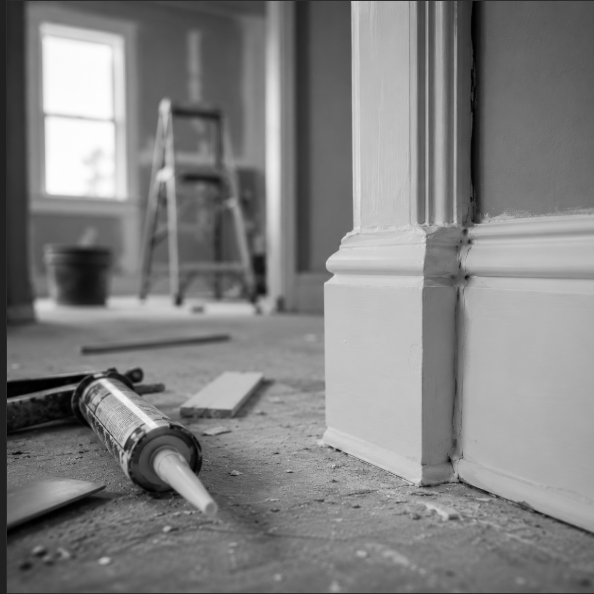
We see it all the time walking into jobs where someone else started the work but never really finished it. Missing trim paint. Crooked caulk lines. A “temporary fix” that somehow became permanent three years ago.
Most of the time it’s not one huge disaster.
It’s just a bunch of little things that got left at 90%.
And honestly, those are usually the things that cause the biggest headaches later.
A skipped detail today turns into water damage later.
A quick shortcut becomes a repair call six months from now.
The thing that was “almost done” keeps hanging around until somebody finally has to deal with it.
That’s true in remodeling, but it’s true in life too.
Everybody has something sitting in almost-done territory.
A house project. A phone call. A decision. Something that keeps taking up space because it never actually got finished.
And the longer it sits there, the heavier it gets.
Finishing Is the Hard Part
Starting a project is exciting.
Demo day is exciting.
Picking materials is exciting.
You know what usually isn’t exciting?
The last 10%.
The detail work.
The punch list.
Fixing the thing that didn’t go as planned.
Staying an extra hour to make something right instead of just calling it good enough.
That’s the part that matters though.
Anybody can start something when motivation is high.
Finishing it when it gets frustrating, expensive, delayed, or inconvenient — that’s where standards show up.
We’ve had jobs fight us before.
Wrong material deliveries. Layout problems. Weather delays. Hidden damage behind walls. All the normal stuff that remodeling likes to throw at you.
You work through it anyway.
Because the goal isn’t “mostly done.”
The goal is done.
The Standard We Hold
We don’t leave jobs half-finished or “good enough.”
Not because someone is standing there checking every little detail.
Most homeowners would never notice half the stuff we notice.
But we would know.
That matters to us.
If something needs another hour to look right, we stay another hour.
If a detail bothers us, we fix it.
If something feels rushed, we redo it.
That’s the difference between getting through a job and actually taking pride in the work.
What This Means for Homeowners
A lot of homeowners call us because they’re tired of looking at something that never got finished properly.
Sometimes it’s a contractor who disappeared.
Sometimes it’s a DIY project that stalled out.
Sometimes it’s just life getting busy.
It happens.
But unfinished projects have a way of constantly reminding you they’re there.
At some point, somebody has to come in and close the loop.
That’s a big part of what we do.
Not just building things.
Finishing things correctly.
Motivation Monday
Motivation isn’t really the point.
Some days you feel motivated.
Some days you don’t.
The important part is doing the work anyway and finishing what you started.
That applies to remodeling, business, goals — all of it.
Most things don’t fall apart in the beginning.
They fall apart in the last 10%.
Finish the thing.

It Always Seems Impossible Until It's Done.
Some months you put your head down and just get through them.
March was that month for us.
We lost a key team member to an unexpected injury mid-month. Two projects were already underway — a bathroom that grew in scope mid-project, and an RV carport with a location that rejected every solution we brought to it.
We're telling you this not because it's a great story — though it is — but because of what it means for you as a homeowner thinking about hiring someone for a project that matters.
When the Plan Stops Working
The RV carport is the one that tested us most.
The location made access nearly impossible. Every piece of equipment we brought in got turned away by the site itself — wrong size, wrong reach, no room to operate. We worked through every reasonable option before we finally brought in a commercial boom lift to get it done.
That's the part of construction that never makes it into before and after photos.
The moment where the straightforward solution doesn't work. Where the backup plan doesn't work either. Where you're standing on a job site that has said no to everything you've tried — and you have to decide what comes next.
We don't walk away from those moments. We go find the next solution.
The carport finished Friday. It's done right and it's not going anywhere.
Resourcefulness Isn't a Skill. It's a Decision.
Every job has a moment where the original plan stops working.
Equipment doesn't fit. Scope changes mid-project. Something nobody could have predicted shows up and the schedule has to bend around it.
The difference between a job that gets finished right and one that doesn't isn't just experience.
It's the decision to keep solving the problem instead of deciding it can't be solved.
Most homeowners never see this part of the job. They see the finished product. But what you're really hiring when you bring on a contractor is how they handle the moment when things get hard.
We kept adapting on that carport until we found what worked. That's not exceptional — that's just the standard we hold ourselves to.
What Happens When a Team Member Goes Down
When you lose a key team member to an unexpected injury mid-project, you have two choices.
You can let it stall everything. Or you can adjust and keep moving.
We adjusted. Redistributed the workload. Made sure progress didn't stop.
That kind of reliability doesn't show up on a contractor's website — but it shows up on your timeline.
The bathroom is 50% done and on track. That's what matters.
Why We're Telling You This
We could post the finished carport photo and call it a win. Leave out the month it took to get there.
But we think honesty about the hard stuff is more useful to you than a highlight reel.
Because when you hire a contractor, you're not just hiring someone for the easy days. You're hiring someone for the day the plan falls apart — and what they do next.
We don't quit on jobs. We don't walk away from problems because they got complicated. We find the solution that works even when it takes longer than expected and costs more in equipment rentals than we planned.
That's not something we decided this month. That's just how we operate.
The Mr. Clean Fix Take
March was hard. April is better.
The carport is done. The bathroom is moving. The team is still standing.
If you've got a project that feels complicated — awkward location, changed scope, details that might make it harder than average — that's exactly the kind of job we're built for.
Bring us the hard one.
We'll figure it out. We always do.
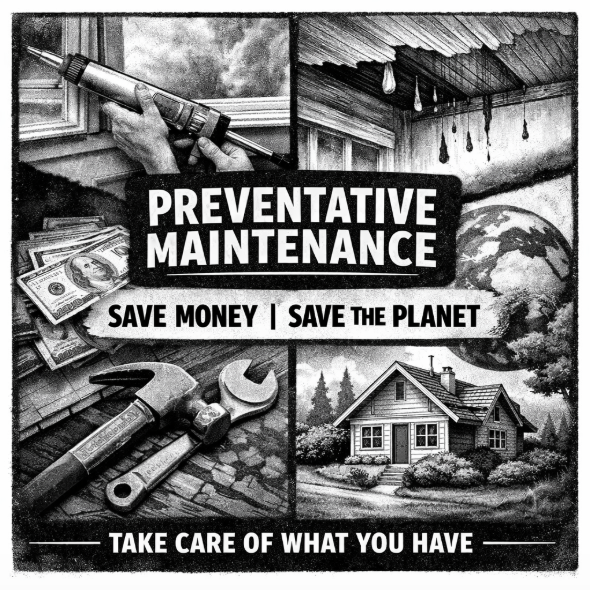
Earth Day: Why Preventative Home Maintenance Saves Thousands Over Time
Earth Day: Why Preventative Home Maintenance Saves Thousands Over Time
Take Care of What You Have. It's Better for Your Wallet and the Planet.
Most homeowners don't have a renovation problem.
They have a maintenance problem they ignored too long.
That’s not an Earth Day talking point. That’s what we see every spring when the snow melts in North Idaho and the calls start—damage that’s been quietly building since October.
Water behind a window frame. Rot under a deck board. A gutter that backed up all winter because it never got cleaned.
None of it started big. None of it had to end up expensive.
And here’s the part most people miss: North Idaho doesn’t slowly wear homes down—it freezes, thaws, and forces water into every weak point twice a year. What starts as a hairline gap doesn’t stay small for long.
That’s the real sustainability conversation worth having. Not just recycling bins and reusable bags—but whether we’re throwing away materials and money that didn’t need to be lost in the first place.
The Most Sustainable Home Is the One That's Already Built
Here’s something the home improvement industry doesn’t say enough:
Manufacturing new materials takes energy. Demolition creates waste. Hauling debris fills landfills. And full remodels that could’ve been avoided with basic maintenance add up fast.
The greenest move isn’t always the new product with the eco-friendly label.
Sometimes it’s:
Caulking a window before water gets behind it
Sealing a deck before boards start to rot
Fixing a small leak before it becomes a subfloor replacement
We’re not guessing on this. These are the calls we get every spring after a North Idaho winter does its work.
Maintain what you have. That’s sustainability with a price tag you can actually see—and control.
Small Neglect. Big Bills.
We’ve walked into homes where a $15 tube of caulk would’ve prevented a $3,000 repair.
That’s not rare. That’s routine.
Here’s how it usually goes: a small gap opens around a window or door. Water finds it—because it always does. It sits through freeze-thaw cycles. By spring, you’ve got rot, possible mold, and damage that’s no longer “small.”
The gap was there for two years. It didn’t feel urgent yet.
And that’s the part we hear almost every time:
“I knew about it… I just didn’t think it mattered yet.”
The frustrating part isn’t the damage.
It’s realizing you saw the warning signs the whole time.
It’s always urgent. It just doesn’t look like it yet.
What Preventative Maintenance Actually Looks Like
Nothing fancy. Just consistent.
Caulking and sealing
Windows, doors, bathrooms, exterior joints—anywhere water can find an edge. Once a year check. Reseal when it cracks or pulls away. This prevents more damage than almost anything else.
Gutters
Clogged gutters push water where it doesn’t belong—rooflines, fascia, soffits, eventually inside walls. Clean them before winter. A few hours of work vs. thousands in repair.
Deck maintenance
North Idaho decks take constant abuse—freeze, thaw, UV, moisture. Seal and stain on schedule and they last decades. Skip it and you’re replacing boards or full structures early.
HVAC filters
Cheap, simple, and overlooked. A clogged filter shortens system life and drives up energy use. One of the highest return maintenance habits there is.
Wet-area grout and caulk
Bathrooms and kitchens hide water damage the longest. By the time you see it, it’s already behind the surface.
The Real Cost of Waiting
A failing shower caulk line: $20 fix vs. $4,000 tile and drywall repair
A small roof leak: $200 patch vs. full ceiling + remediation
A neglected deck: $300 maintenance vs. $8,000–$15,000 rebuild
These aren’t scare tactics. These are the jobs that come through our schedule every year.
And the story is almost always the same:
It started small. It didn’t seem urgent. And then it couldn’t be ignored anymore.
Maintaining Is the Sustainable Choice
Every piece of material you preserve is one that doesn’t end up in a landfill.
Every repair that prevents replacement is energy and resources not wasted.
You don’t need new windows to be sustainable—you need to seal the ones you already have.
You don’t need a new deck to be responsible—you need to protect the one you built.
Maintain what you have. Fix things when they’re small. Stay ahead of damage instead of chasing it after the fact.
That’s Earth Day every day—and it saves thousands along the way.
Where Mr. Clean Fix Comes In
We’re not just here for remodels and big transformations.
Some of the most valuable work we do never makes it into a before-and-after gallery:
Caulk lines
Deck sealing
Small repairs that stop big ones from forming
If you’ve got a list of small things you’ve been putting off, this is exactly the kind of work built for that.
If it’s sitting in the back of your mind right now, that’s usually the best sign it shouldn’t wait much longer.
Because the most expensive repair is always the one that could’ve been avoided.

When Winter Won’t Let Go: Preparing Your Home During That Awkward Almost-Spring Season
If you live in North Idaho, you know this moment well.
The calendar says spring is around the corner. The days are getting a little longer. You might even feel motivated to start planning yard projects.
Then you look outside…and there’s four inches of fresh snow.
Welcome to the not-winter, not-spring season.
This strange in-between time can feel like a pause button for homeowners. It’s too cold for many outdoor projects, but winter is clearly losing its grip. While it may not feel like the perfect time for big changes, it’s actually one of the best windows to finish the winter tasks that got pushed aside and start quietly preparing for spring.
At Mr. Clean Fix, we often see homeowners use this time to catch up on the small things that make a big difference once the weather truly warms up.
Finish the Winter Projects You Meant to Do
Every winter comes with a list of “I’ll get to that later” repairs.
Maybe it was a small leak.
A drafty window.
Loose trim.
A deck that needed sealing before the snow came.
Winter has a way of hiding those projects under layers of snow, holidays, and busy schedules.
Now is the perfect time to wrap those up before spring projects start competing for attention.
Common late-winter fixes include:
Sealing small roof or gutter leaks
Repairing damaged siding or trim
Replacing cracked caulking around windows and doors
Fixing small drywall damage from winter humidity shifts
Addressing minor plumbing or moisture issues
These smaller repairs prevent bigger problems once snow melts and spring rain arrive.
Check the Areas Winter Hits Hardest
Our winters can be beautiful, but they’re not exactly gentle on homes.
This is the time to take a quick look at the places that endure the most stress during the cold months.
Keep an eye on:
Decks and railings – Snow and ice can cause hidden moisture damage.
Gutters and downspouts – Ice buildup often loosens fasteners or causes small separations.
Walkways and steps – Freeze-thaw cycles can shift materials.
Exterior paint and caulking – Winter temperature swings can create cracks.
Catching these issues early helps avoid expensive repairs later in the year.
Start Planning Your Spring Projects Now
Even if the ground is still frozen, your spring project planning shouldn’t be.
In fact, this in-between season is the best time to start thinking about improvements like:
Deck repairs or resurfacing
Fence installation
Pergolas or patio structures
Exterior painting
Walkway upgrades
Outdoor living spaces
Planning early means materials can be ordered, designs finalized, and schedules set before the busy season hits.
Once the weather finally cooperates, you’ll be ready to move forward instead of starting from scratch.
The Hidden Advantage of This “In-Between” Season
While everyone waits for spring to arrive, homeowners who use this time wisely often end up ahead.
They finish the lingering winter repairs.
They plan their warm-weather projects.
And when the snow finally disappears, they’re ready to go.
That awkward moment between winter and spring may not feel exciting—but it’s actually one of the most productive times of the year for home maintenance and project planning.
And here in North Idaho, we all know one thing for sure:
Spring will get here eventually…even if winter throws one last snowstorm at us first.
Ready to Wrap Up Winter and Prepare for Spring?
If you have winter repairs you never got around to—or projects you want ready when spring arrives—Mr. Clean Fix can help.
From small fixes to bigger outdoor improvements, we’re happy to help homeowners get their homes ready for the season ahead.
Because when the snow finally melts, the best projects are the ones that are already planned.

Weathering the Storm: How North Idaho's Weather Can Impact Your Outdoor Home Improvement Projects
Living in North Idaho offers unparalleled beauty and outdoor opportunities, but it also comes with its own set of challenges, especially when it comes to home improvement projects. One of the most unpredictable factors? The weather. Whether you're building a deck, landscaping your yard, or painting the exterior of your home, the weather can throw a wrench into even the best-laid plans.
Take, for example, the deck construction project currently underway. Originally scheduled for completion yesterday, the timeline has been extended due to the whims of Mother Nature. While frustrating, this delay serves as a poignant reminder of the importance of flexibility when tackling outdoor projects in this region.
North Idaho's weather is notorious for its variability. From unexpected rain showers to sudden temperature drops, homeowners must be prepared for anything. Even the best forecasts can't always predict the exact conditions weeks or even days in advance. This unpredictability means that timelines need to be fluid, allowing for adjustments as necessary.
One of the primary challenges posed by North Idaho's weather is its impact on construction materials. Wood, for example, is particularly susceptible to moisture, which can lead to warping, swelling, and other forms of damage. Similarly, extreme temperatures can affect the curing process of concrete and adhesives, potentially compromising the structural integrity of your project.
But it's not just the materials themselves that are affected. Working conditions can also be significantly impacted by the weather. High winds, heavy rain, or icy conditions can pose serious safety risks for construction crews, necessitating temporary halts in work until conditions improve. Additionally, prolonged exposure to cold or wet weather can slow down productivity and make it difficult to achieve quality results.
So, what can homeowners do to mitigate the impact of North Idaho's weather on their outdoor home improvement projects? The key is to plan ahead and build flexibility into your timeline from the outset. Here are a few strategies to consider:
Monitor the weather forecast closely and be prepared to adjust your schedule accordingly. Keep in mind that even a slight change in weather patterns can have a significant impact on your project timeline.
Work with experienced contractors who understand the unique challenges posed by North Idaho's weather. A seasoned professional will be able to anticipate potential issues and develop strategies to address them proactively.
Invest in high-quality materials that are designed to withstand the rigors of the local climate. While these may come at a higher initial cost, they can ultimately save you time and money by reducing the need for repairs and replacements down the line.
Consider building a buffer into your project timeline to account for unexpected delays. This extra time can provide a cushion to absorb any weather-related setbacks without derailing your entire schedule.
Be patient and flexible. Remember that delays are often inevitable when working on outdoor projects, especially in a region as unpredictable as North Idaho. Stay focused on the end goal and trust that your patience will be rewarded with a beautiful and durable finished product.
In the end, while North Idaho's weather may pose challenges for outdoor home improvement projects, with careful planning and flexibility, you can still achieve the results you desire. By embracing the unpredictability of the weather and adapting to its ever-changing conditions, you'll be better equipped to weather any storm that comes your way.