
Big Care for Small Projects: Project Spotlight – The Chicken Coop & Greenhouse Renovation
At Mr. Clean Fix LLC, we believe every project deserves quality workmanship and careful attention to detail—no matter the size. Small projects often make the biggest difference in how a property functions day to day. This recent chicken coop and greenhouse renovation is a perfect example of how thoughtful improvements can create safer, more efficient, and more enjoyable spaces.
Our client wanted to improve the safety of their chicken coop and transform their greenhouse into a more functional area for starting plants and gardening year-round. While these were not large remodels, they required skill, precision, and customized solutions.
🐓 Chicken Coop Safety Renovation
When we arrived on site, the chicken coop presented a serious fire hazard. The existing insulation and electrical wiring were unsafe and needed immediate attention to protect both the animals and the property.
Our team at Mr. Clean Fix LLC focused on improving safety and durability by completing the following work:
Removing old and damaged insulation from the ceiling
Reinsulating the ceiling with proper fire-safe materials
Resheathing the ceiling to create a clean, secure finish
Completing electrical upgrades to eliminate fire risks
Ensuring the structure was safe, functional, and built for long-term use
The result was a clean, secure, and much safer environment for the chickens. The homeowner now has peace of mind knowing their coop is protected from potential hazards and built to last.
🌿 Greenhouse Upgrade & Custom Plant Start Station
The greenhouse renovation focused on increasing functionality and creating the ideal environment for starting plants. We designed and built a custom shelving system specifically for plant starts and installed custom lighting to support healthy growth.
Our greenhouse improvement work included:
Building a custom shelf system for plant starts
Installing specialized grow lighting for optimal plant development
Replacing an existing window to improve ventilation and overall usability
Assisting with plumbing upgrades inside the greenhouse
Organizing the space to be more efficient and gardener-friendly
Now the greenhouse is refreshed, more functional, and ready to support productive growing seasons all year long.
Why Small Projects Matter
Many homeowners believe contractors only focus on large remodeling jobs. At Mr. Clean Fix LLC, we take pride in handling small projects with the same care and professionalism as full renovations. Chicken coops, greenhouses, sheds, and backyard structures are essential parts of how families live and enjoy their homes.
This project highlights our commitment to:
Safety-first workmanship
Custom solutions for unique spaces
Quality craftsmanship
Honest and dependable handyman services
Treating every project with care and respect
Even small upgrades can dramatically improve safety, efficiency, and comfort.
Big Care for Every Project
This chicken coop and greenhouse renovation perfectly represents our mission: Big Care for Small Projects. Whether it’s a custom shelf system, electrical safety upgrades, plumbing assistance, or structural repairs, Mr. Clean Fix LLC is here to help homeowners improve the spaces that support their lifestyle and passions.
If you have a small project that’s been sitting on your to-do list, our team is ready to help turn it into a clean, safe, and functional space you can enjoy for years to come.

Design Trends That Actually Add Value (And Ones That Don’t)
n the world of home remodeling, trends come and go faster than you can say “open concept.” While some updates can make your home more enjoyable—and more valuable—others can leave you with buyer hesitation and buyer’s remorse. Here’s a guide to which design trends truly add value and which are better left in Pinterest boards.
Trends That Actually Add Value
1. Timeless Kitchen Updates
Kitchens are the heart of the home, and investing wisely here pays off. Think neutral countertops (quartz is a favorite for durability), shaker-style cabinets, and modern, energy-efficient appliances. A fresh backsplash or upgraded hardware can make a big visual impact without over-customizing.
2. Functional Bathrooms
Buyers love bathrooms that are practical and modern. Walk-in showers with glass doors, double vanities in master bathrooms, and updated fixtures give a polished look without going overboard. Avoid over-personalized tile patterns or bold colors that might not appeal to the masses.
3. Smart Storage Solutions
Built-in shelving, mudrooms with cubbies, and pantry organizers might not be flashy, but they scream “functional and well thought-out.” Storage upgrades often resonate with buyers, especially in family homes.
4. Outdoor Living Spaces
A usable, low-maintenance deck, patio, or porch can increase your home’s appeal. Think of a space where people can gather comfortably—not necessarily a full-blown outdoor kitchen unless it fits your neighborhood’s market.
5. Energy Efficiency
Smart thermostats, efficient HVAC systems, and double-pane windows can make a home feel modern and responsible. Buyers love the idea of saving money and reducing environmental impact.
Trends That Often Don’t Add Value
1. Over-the-Top Customizations
While a bright purple accent wall or a themed “Star Wars” bathroom might be fun for you, it’s unlikely to resonate with buyers. Stick to neutral palettes for long-term value.
2. Ultra-Luxury Features in Mid-Range Homes
Think home theaters, indoor pools, or extravagant wine cellars in an average neighborhood. These can price a home out of the market and don’t usually give you a dollar-for-dollar return.
3. Niche Flooring Choices
Trendy options like bright-colored epoxy floors or unusual tile patterns may be eye-catching, but they can also turn buyers off. Neutral, durable, and easy-to-clean flooring usually wins.
4. Obscure Materials or Finishes
Exotic woods, neon-colored cabinets, or overly shiny metals might look cool now, but trends fade. Stick with classic finishes that are easier to maintain and appeal to a wider audience.
5. Excessive Open Concept
While open floor plans are popular, completely removing walls in older homes can disrupt the natural flow and feel of the home. Balance openness with functional spaces.
The Bottom Line
Trends aren’t inherently bad—but when it comes to home value, it pays to invest in updates that enhance functionality, longevity, and broad appeal. Think: timeless, practical, and neutral. The trick is knowing the difference between a statement that will wow buyers and one that will make them scroll past your listing.

Remodel Now or Wait? How to Know When It’s Time to Invest in Your Home
One of the most common questions we hear is this:
“Should we remodel now… or wait?”
It’s a fair question. Remodeling is an investment — financially, emotionally, and logistically. And timing matters.
But here’s the truth most homeowners don’t realize:
The right time isn’t just about the market.
It’s about your life.
Let’s break this down in a way that actually helps you decide.
Market Timing vs. Personal Timing
Everyone wants to “time it right.”
Interest rates.
Material costs.
Housing values.
Economic headlines.
Yes — those things matter.
But market timing only tells part of the story.
Market Timing
If:
Home values are strong
Inventory is low
You plan to sell in the near future
Strategic updates can increase resale appeal and ROI.
On the flip side, waiting for the “perfect” market moment can keep you stuck for years. Materials fluctuate. Labor fluctuates. Rates fluctuate. There is rarely a magical window where everything aligns perfectly.
Personal Timing (The One That Matters More)
Ask yourself:
Are you staying in this home 5+ years?
Is your current layout causing daily frustration?
Are you avoiding rooms in your own house?
Is maintenance starting to pile up?
If your home no longer supports your lifestyle, that’s personal timing speaking.
And personal timing usually outweighs market timing.
Because quality of life has value too.
Functional vs. Cosmetic Upgrades
Not all remodels are created equal.
Understanding the difference can clarify whether you should move now or wait.
Functional Upgrades (Usually Shouldn’t Wait)
These impact safety, structure, efficiency, or daily usability:
Failing decks or stairs
Water damage
Drafty windows
Electrical or plumbing issues
Layouts that no longer work for your family
Delaying these can compound problems — and costs.
Functional upgrades often prevent larger expenses later.
Cosmetic Upgrades (Sometimes Can Wait)
These improve aesthetics but not function:
Cabinet color changes
Decorative tile swaps
Trend-driven finishes
Minor trim updates
If your home works well but just feels outdated, you may have flexibility.
But here’s something to consider:
Living in a space you dislike has a cost too. It affects how you host, relax, and enjoy your home.
Sometimes “cosmetic” is actually emotional functionality.
When Waiting Actually Costs More
Waiting feels safe.
But it isn’t always cheaper.
Here’s when delay becomes expensive:
1. Small Issues Turn Into Big Repairs
A minor moisture issue becomes structural damage.
A soft board becomes a rebuild.
A draft becomes long-term energy loss.
Preventative remodeling often costs less than reactive repairs.
2. Phased Projects Cost More Long-Term
Doing a kitchen in three separate waves over five years usually costs more than planning it correctly from the start.
Mobilization, material changes, labor fluctuations — they add up.
3. Material & Labor Rarely Go Backwards
While prices fluctuate, long-term trends generally rise.
Waiting five years hoping costs will drop significantly isn’t typically how the industry behaves.
4. You Lose Years of Enjoyment
This one doesn’t show up on spreadsheets.
If you plan to stay in your home, upgrading sooner means:
More years enjoying it
Less daily frustration
Better functionality for your family now — not someday
Time in a better space has value.
So… Remodel Now or Wait?
Here’s a simple framework:
Remodel now if:
There are functional or structural concerns
Your layout no longer fits your life
You’re staying long-term
Delaying increases repair risk
Consider waiting if:
It’s purely trend-driven
You may sell very soon
The space works fine functionally
You need more financial cushion first
The key is clarity.
A thoughtful consultation and honest evaluation can remove the guesswork.
At Mr. Clean Fix, we don’t push projects. We help homeowners make smart decisions — even if that means waiting.
Because the right time isn’t about pressure.
It’s about readiness.
If you’re unsure where your project falls, we’re happy to talk it through.
Sometimes clarity is the most valuable part of the process.

Monday Musings: Seahawks Champions, Gray Skies & Valentine’s Around the Corner
Monday mornings usually roll in quietly — but not this one.
After the Seattle Seahawks claimed their Super Bowl victory on Sunday, the excitement didn’t stay in Seattle. Even here at home, fireworks lit up the sky, proving once again that Seahawks pride runs deep across the Northwest. The game itself delivered exactly what fans hoped for: a dominant defensive showing, a strong ground game, and a statement win that reminded everyone why Seattle football hits different.
By the time the celebration settled down, reality checked back in — because winter isn’t done with us yet.
This Monday is coming in gray and rainy, with forecasts hinting at possible snow later this week. It’s that familiar stretch of late winter where the weather can’t quite decide what it wants to do, and homeowners start noticing every draft, drip, and creak a little more than usual.
Honestly? It’s not the worst thing.
Rainy days and colder nights have a way of slowing things down. Homes feel cozier, coffee tastes better, and it’s a perfect time to take stock of the spaces we live in — what’s working, what’s not, and what could use a little attention before spring finally shows up.
And speaking of timing, Valentine’s Day lands this Saturday. If the weather doesn’t cooperate (shocking, we know), it’s the perfect excuse to skip the crowds and lean into simple plans: cooking at home, movie nights, or just enjoying a warm, comfortable space together while winter does its thing outside.
Monday Mindset
A Seahawks Super Bowl win, fireworks in the neighborhood, rain on the windows, and snow possibly on the way — it’s a reminder that even in the middle of winter, there’s plenty to celebrate. Big wins, small comforts, and homes that keep us warm through it all.
Here’s to starting the week on a high note — rain or shine.

🏈 Super Bowl Sunday: What Home Projects and Football Have in Common
Super Bowl LX is just days away — the Seattle Seahawks vs. the New England Patriots face off in a historic rematch at Levi’s Stadium in Santa Clara, CA on February 8, 2026 with kickoff at 6:30 p.m. ET / 3:30 p.m. PT.
Whether you bleed blue and green 💙💚 or you’re just here for the snacks, halftime show (Bad Bunny, anyone?), and commercials, there’s something about Super Bowl Sunday that gets everyone rallied up — not unlike a home improvement project.
🏠 Game Plans = Project Plans
Just like a championship-level football game, any remodeling job — whether it’s a kitchen revamp or a new deck build — requires a solid game plan. You wouldn’t call an audible in the biggest moment without practice, and you shouldn’t start demo without a clear plan either.
Here’s how the two line up:
📋 Pre-Game Prep
Football teams watch hours of film; homeowners should walk through every detail of a project before swinging a hammer. Planning saves time and money.
⚙️ The Right Players
Just like a team needs its stars — the QB, the linemen, the defensive backs — your home project needs the right crew. Skilled professionals make the difference between a hail mary and a touchdown.
⏱️ Timing Matters
Nobody wants a game to drag into overtime, and a project stalled by delays can feel just as long. Setting expectations and milestones helps keep everything on track.
🛠️ Huddle Up for Projects This Season
Super Bowl Sunday is a reminder that every win — in football or in home improvement — comes from teamwork, preparation, and commitment to execution.
If you’ve been thinking about that kitchen backsplash, bathroom upgrade, or deck refresh, now is a great time to call your own play and get started. Reach out to us at Mr. Clean Fix and let’s draw up a plan that’s guaranteed to score! 😉

Winter Walkthroughs: What We Look For (and What Homeowners Should Expect)
Winter isn’t just about snow, ice, and cozy nights inside—it’s also one of the most important times of year to evaluate your home. And with Punxsutawney Phil seeing his shadow this Groundhog Day, we’re officially in for six more weeks of winter, which makes winter walkthroughs even more valuable.
At Mr. Clean Fix, winter walkthroughs help us spot issues before they turn into expensive spring surprises. Cold temperatures, snow load, and freeze–thaw cycles can expose weaknesses that stay hidden the rest of the year.
Here’s what we’re looking for—and what you can expect during a winter walkthrough.
Why Winter Is a Smart Time for a Walkthrough
Winter stresses a home in ways no other season does:
Materials contract and expand
Snow and ice test roofs and drainage
Moisture finds every tiny weakness
Heating systems work overtime
If something is going to fail, winter often shows us early warning signs.
Think of a winter walkthrough as preventative maintenance—not doom and gloom, just smart planning.
What We Look For During a Winter Walkthrough
🏠 Roof & Exterior
Winter conditions quickly reveal roof and siding issues. We check for:
Ice dams or uneven snow melt
Missing, cracked, or lifted shingles
Loose or damaged siding
Signs of wind damage
Gutter performance and ice buildup
These clues tell us how your home handles moisture and snow load.
💧 Moisture & Water Intrusion
Water is sneaky—especially in winter. We’re looking for:
Interior water staining on ceilings or walls
Condensation buildup
Drafty windows or doors
Signs of leaks around penetrations and flashing
Catching moisture issues now can prevent mold, rot, and major repairs later.
🔥 Insulation & Heat Loss
If your heating bill feels painful, there’s usually a reason.
We look for:
Cold spots and drafts
Poor attic insulation
Unsealed penetrations
Inefficient windows or doors
Winter walkthroughs help pinpoint where heat is escaping—and where upgrades will give the biggest return.
🧱 Foundations, Decks & Structural Areas
Freeze–thaw cycles can shift and stress structures. We check:
Foundation cracks or movement
Deck posts and footings
Stair stability
Exterior trim and fascia
Small issues now are far easier (and cheaper) to address before spring.
What Homeowners Can Expect
A winter walkthrough isn’t about pressure or panic—it’s about information.
You can expect:
Honest feedback on current conditions
Identification of urgent vs. “plan-for-later” items
Recommendations for temporary winter fixes if needed
Ideas for spring projects based on what we see now
Sometimes the result is peace of mind. Sometimes it’s a smart plan. Either way, you’re ahead of the game.
Groundhog Day & Six More Weeks of Winter 🐿️❄️
With Phil predicting six more weeks of winter, now’s the perfect time to ask:
Is your home ready to handle the rest of the season?
Winter walkthroughs help ensure your home makes it through the cold months safely—and comes out the other side ready for spring projects instead of emergency repairs.
Thinking ahead beats fixing behind.
If winter has taught us anything, it’s that your home always tells a story—we just know how to read the signs.
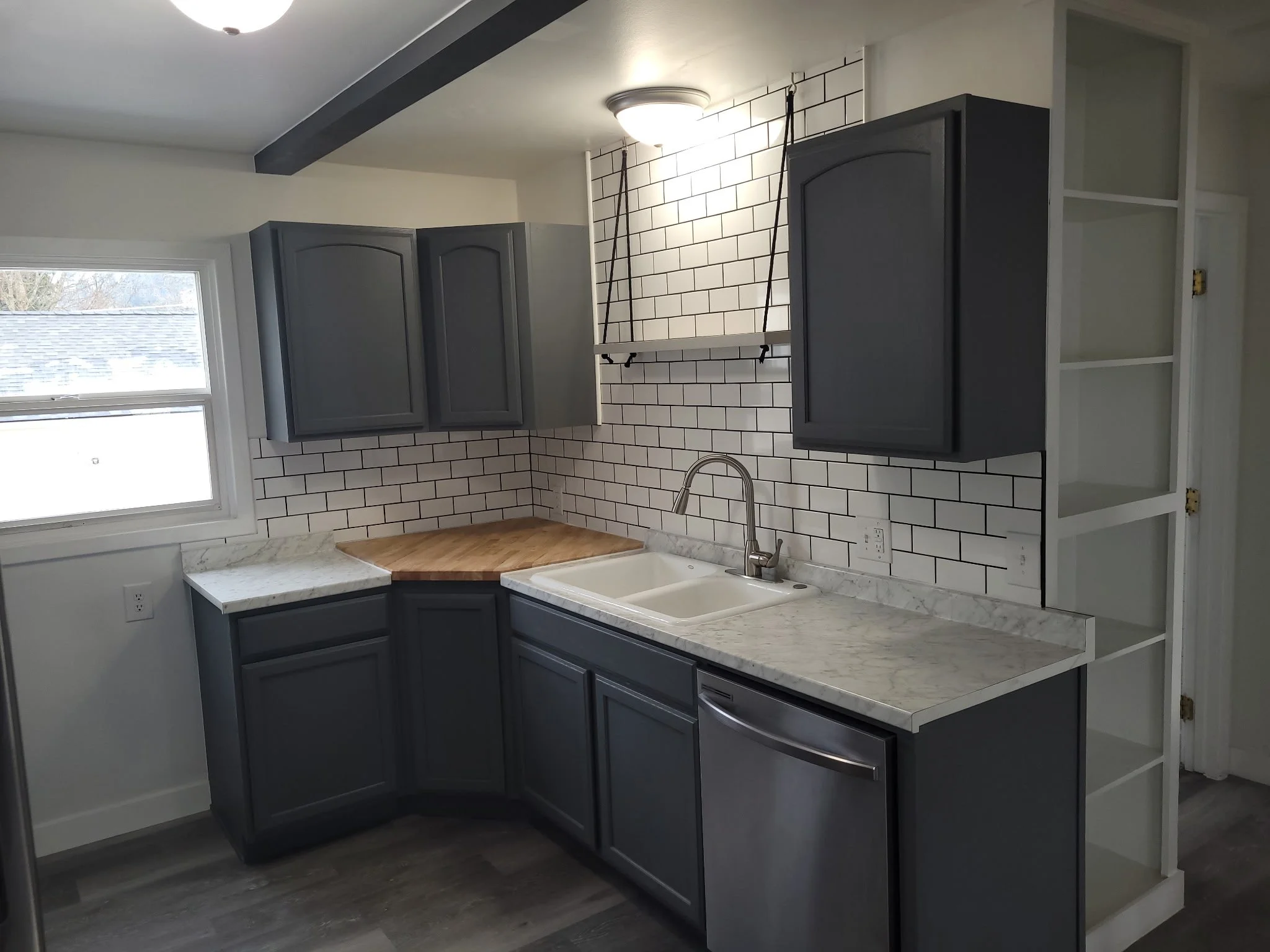
From Water Damage to Fresh Start: A Look Back at One of Our Early Remodels
Some projects stick with you—not because they were flashy, but because they marked a turning point.
This kitchen was part of a water damage insurance claim we handled in late 2022, just as we were wrapping up our first full year in business. At the time, it felt like “just another job.” Looking back now, it’s one of those projects that quietly represents growth—for us and for the homeowner.
What started as damage control quickly turned into a full refresh.
When Repairs Turn Into Opportunity
Water damage has a way of forcing hard decisions. Once walls are opened and materials are removed, homeowners often realize they’re standing at a crossroads:
put it back exactly how it was—or reimagine the space entirely.
In this case, the homeowner chose the second path.
Instead of patching and matching, she leaned into a clean, cohesive update:
Fresh cabinetry in a deep, timeless tone
Classic subway tile for a bright, durable backsplash
Updated countertops and fixtures
Improved layout flow and usable prep space
The result was a kitchen that felt intentional, not “repaired.”
Small Kitchen, Big Impact
This wasn’t a massive house or a sprawling kitchen—but that’s what makes the transformation meaningful. Smart material choices, thoughtful finishes, and solid workmanship can completely change how a space feels, regardless of square footage.
Natural light, contrast, and texture do a lot of the heavy lifting here. The open shelving adds visual breathing room, while the darker cabinets ground the space. It’s practical, durable, and still welcoming—exactly what a working kitchen should be.
Why We Still Love This Project
When we look back at this job now, what stands out isn’t just the finished product—it’s the reminder of where we were as a company.
We were still early, still building systems, still learning how to balance craftsmanship with growing demand. This project reflects the standards we set from the beginning: do it right, even when no one’s watching. Especially then.
It’s also a reminder that sometimes the most impactful remodels start with situations no one wants—like water damage—and end with something better than what was there before.
Looking Back to Move Forward
We don’t always get to revisit older projects from new angles, literally and figuratively. Finding this photo reminded us how far we’ve come—and why we do what we do.
Quality work ages well. And when it’s done thoughtfully, it continues to add value long after the last tool is packed up.

Motivation Monday: Why Waiting Until Spring Can Cost You More (When It’s 20° Outside)
When it’s 20 degrees outside, the last thing anyone wants to think about is home repairs. But here’s the hard truth:
Cold weather doesn’t pause problems—it makes them worse.
If you’re waiting for spring, you may already be paying for it.
Cold Temps Expose Weak Spots ❄️
At 20°, materials contract, seals fail, and moisture finds every tiny opening. That small leak, drafty window, or soft board you’ve been ignoring is under maximum stress right now.
What starts as a minor issue in winter often shows up in spring as:
Rot or water damage
Mold from trapped moisture
Higher-than-normal heating bills
Freeze–Thaw Damage Adds Up 🧊➡️💧
When temperatures swing above and below freezing, water expands and contracts inside cracks and gaps. Over time, that means bigger cracks, loosened fasteners, and accelerated wear—especially on decks, siding, and exterior trim.
Spring Repairs Cost More 🌷
Once the weather warms up, everyone calls at once. Crews book out fast, material costs fluctuate, and projects get rushed. Waiting until spring often means paying more and waiting longer.
Emergency Repairs Don’t Care About the Weather 🚨
When something fails in freezing temps, it’s rarely convenient—or cheap. Emergency calls, temporary fixes, and cold-weather damage control add stress and cost that could’ve been avoided.
Motivation Monday Takeaway 💡
When it’s 20° outside, the smartest move isn’t ignoring the problem—it’s getting ahead of it.
Progress sometimes looks like handling things before they become urgent.
Your home—and your wallet—will thank you come spring.
Small Home Projects That Make a Big Difference (Without Breaking the Bank)
When people think of home improvement, they often picture major remodels, blown budgets, and weeks of disruption. But some of the most noticeable upgrades don’t require a renovation loan—or even a full weekend.
Here are smart, often-overlooked home projects that deliver big visual and functional wins without draining your wallet.
1. Swap Builder-Grade Trim (Selectively)
You don’t need to replace all your trim. Focus on:
Front entry door
One high-visibility room (living room or hallway)
Baseboards on a single main wall
Upgrading just these areas with slightly taller or more detailed trim instantly makes a home feel more custom—without the cost of whole-house replacement.
Why it works: Your eye reads detail, not square footage.
2. Upgrade Interior Doors—Without Replacing Them
Instead of buying new doors:
Add panel molding to flat doors
Replace hinges and knobs with matte black or brushed brass
Paint doors a contrasting color (soft black, warm greige, deep green)
This gives you a custom door look for a fraction of the price.
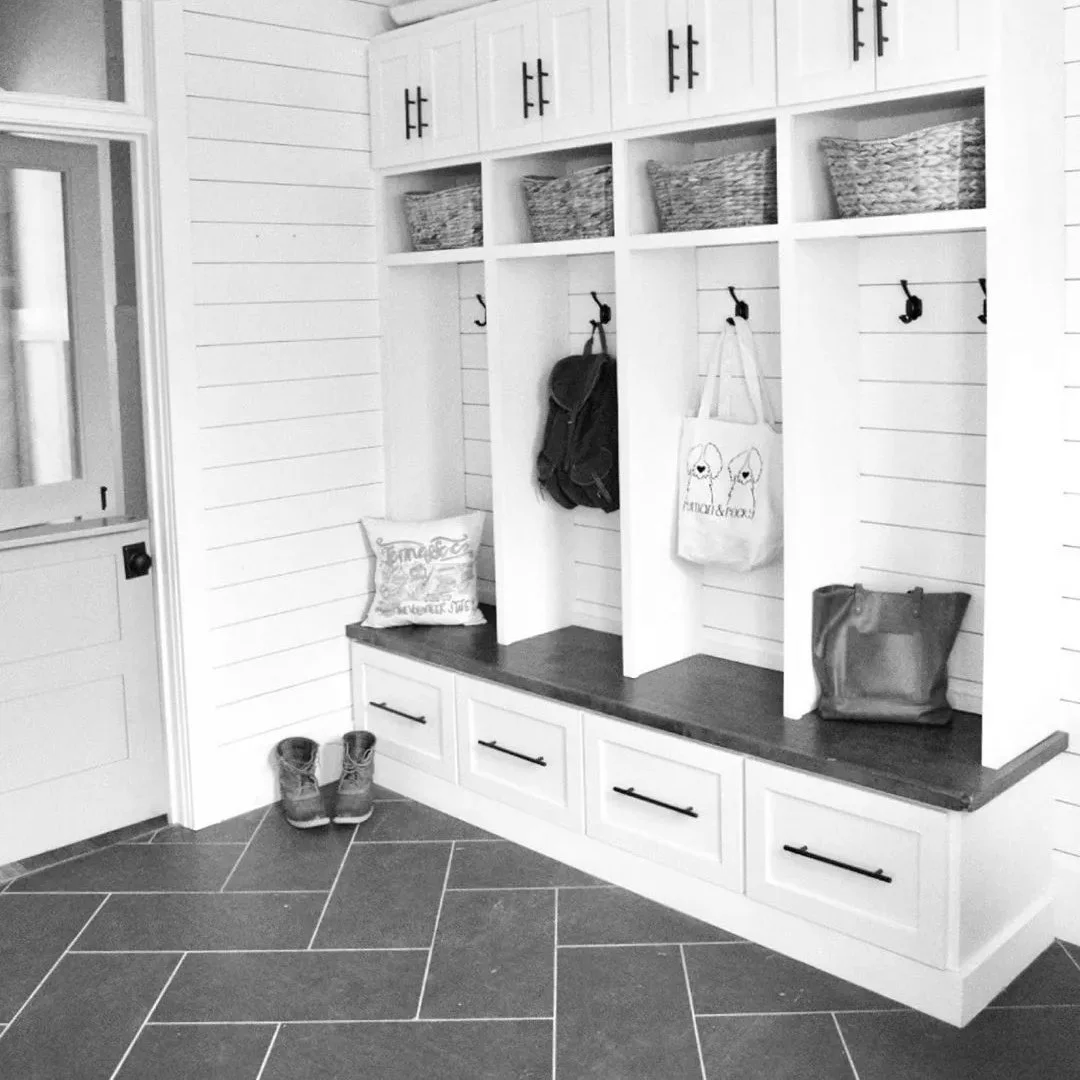
3. Add a “Drop Zone” Where Chaos Lives
Most homes lack a proper landing spot for keys, bags, and mail.
A simple combo of:
Wall hooks
A narrow shelf
Small bench or shoe tray
…can completely change how an entryway functions.
Bonus: It makes your house feel instantly more organized—even if the rest of it isn’t (yet).
4. Replace Just the Faucet (Not the Whole Fixture)
In kitchens and bathrooms, swapping:
Sink faucet
Showerhead
Tub spout
can modernize the entire space without touching tile, counters, or cabinets.
This is one of the highest ROI upgrades per dollar spent.
5. Add Soft-Close Where You Least Expect It
Soft-close hinges and drawer slides aren’t just for kitchens.
Try them in:
Bathroom vanities
Linen closets
Pantry cabinets
It’s a small luxury detail that people feel every day—even if they can’t put their finger on why the space feels better.
6. Exterior Focus: One Small Area, Fully Finished
Instead of spreading money thin across the yard, pick one exterior feature and finish it well:
Pressure wash + seal a small deck
Paint just the front door and trim
Add lighting to one walkway
A single polished exterior feature boosts curb appeal more than multiple half-done projects.
7. Replace Vent Covers, Switch Plates & Registers
Old plastic covers age a house fast.
Swapping these for:
Metal vent covers
Matching switch plates
Low-profile designs
is inexpensive, fast, and surprisingly impactful.
Think of it as jewelry for your walls.
8. Fix the “Almost Broken” Things
These are the things homeowners live with far too long:
Doors that don’t latch properly
Loose railings
Cabinets that sag
Fence panels that lean
They don’t scream “renovation,” but fixing them makes a home feel solid, cared for, and safe.
9. Add Lighting Where There Is None
Instead of rewiring:
Install plug-in sconces
Add under-cabinet lighting
Use motion-sensor lights in closets or hallways
Good lighting changes how a space feels more than almost anything else.
10. Refresh One Room’s “Finish Palette”
Pick one room and unify:
Hardware finishes
Paint tones
Light temperature (warm vs cool bulbs)
When finishes match intentionally, the room feels designed—even if everything else stayed the same.
Small Projects. Smart Impact.
Home improvement doesn’t have to be all-or-nothing. Strategic, well-chosen small projects can:
Improve daily function
Increase resale appeal
Make your home feel more “you”
And most importantly—they don’t require tearing your house apart.
If you’re not sure which small upgrades will give your home the biggest return, that’s where we come in.

Community First: Our New Referral Approach
Referrals are changing.
People don’t make decisions the same way they used to — and honestly, that’s not a bad thing. Homeowners want time to think, space to plan, and zero pressure along the way.
At Mr. Clean Fix, we believe a referral shouldn’t come with expectations or awkward follow-ups. It should simply be about trust — and that trust deserves to be appreciated, whether a project moves forward immediately or not.
That’s why we redesigned our referral program to reward effort, not just signed contracts.
Why We Rethought Referrals
Word-of-mouth has always been the backbone of local businesses like ours. When someone shares our name with a friend or neighbor, they’re putting their trust on the line — and that matters.
But not every referral turns into a project right away. Some homeowners are still gathering ideas, comparing options, or waiting for the right time. We don’t believe that makes the referral any less valuable.
So instead of a traditional referral program that only rewards completed jobs, we built something more realistic, flexible, and fair.
Introducing Our Community Appreciation Drawing
Twice a year, we hold a Community Appreciation Drawing to thank the people who help keep our business growing — even in small ways.
🏆 Grand Prize (1 Winner)
$250 gift card to a local small business
$250 credit toward a future Mr. Clean Fix project
🎁 Secondary Winners (3–5 Winners)
Two $50 gas cards
Additional gift cards ranging from $15–$50
(local restaurants, shops, and everyday essentials)
The number of secondary winners depends on total participation — the more entries, the more winners we draw.
How to Earn Entries (No Pressure, Ever)
We keep this simple and transparent.
✅ 1 Entry — Pass Along Our Name
Earn one entry when:
You share our name with someone who may need our services
OR you send us their name and contact information with permission
No obligation. No follow-ups required.
🤝 2 Entries — Scheduled Consultation
Earn two entries when:
Your referral schedules and completes a consultation or estimate
This rewards real intent — even if they decide to wait or go another direction.
🛠️ 3 Entries — Project on the Books
Earn three entries when:
Your referral books a project and gets on the schedule
Entries stack, meaning one referral can earn up to six total entries if they move through each step.
Why This Approach Works
This program was designed to respect everyone involved.
It removes pressure from the person making the referral
It honors trust, not just transactions
It gives more people a chance to win
It supports other local small businesses
It allows us to give back in a way we can sustain long-term
Most importantly, it keeps relationships front and center.
When Are the Drawings Held?
We hold the drawings twice a year:
June
December
Winners are announced publicly (with permission), and prizes are awarded shortly after each drawing.
Want to Participate?
If you’ve ever:
Shared our name
Encouraged someone to reach out
Talked about a project we helped with
…you’re already doing what this program is built around.
To earn entries, you can:
Message us directly
Submit a referral through our website
Have your referral mention your name when they contact us
That’s it.
Thank You for Being Part of Our Community
We’re grateful for the trust our customers and neighbors place in us. This referral program is just one small way we can say thank you — thoughtfully, intentionally, and community-first.

The Hidden Damage Winter Reveals Inside Your Home
Winter has a way of exposing things we don’t always notice the rest of the year. When the temperatures drop and your home is sealed up tight, small issues that were easy to ignore in summer suddenly make themselves known.
Sometimes winter damage isn’t loud or dramatic. It’s quiet. Subtle. And if left unchecked, it can turn into costly repairs by spring.
Here’s what winter often reveals inside your home—and why now is the right time to pay attention.
1. Drafts You Didn’t Know You Had
Cold air has a talent for finding the smallest gaps. Windows, doors, baseboards, and even electrical outlets can become entry points.
Signs to watch for:
Cold spots near walls or floors
Curtains moving when windows are closed
Higher-than-normal heating bills
What feels like “just winter” is often lost energy—and money—leaking out of your home.
2. Moisture Where It Doesn’t Belong
Winter creates condensation, especially in bathrooms, kitchens, basements, and poorly ventilated areas. Over time, that moisture can lead to:
Peeling paint
Soft drywall
Hidden mold growth
Swollen trim or flooring
Moisture problems rarely fix themselves—and winter is usually when they first show up.
3. Cracks That Grow Under Pressure
Your home expands and contracts with temperature changes. That movement can make existing cracks worse or create new ones.
Common areas:
Ceiling seams
Door and window frames
Tile grout or caulk lines
What starts as cosmetic can eventually affect structural integrity if ignored long enough.
4. Flooring That Tells a Story
Cold air and dry heat can wreak havoc on flooring.
You may notice:
LVP or laminate separating
Hardwood gaps widening
Tile grout cracking
These signs often point to subfloor movement, moisture imbalance, or installation issues that winter makes impossible to hide.
5. Slow Drains & Plumbing Red Flags
Winter puts extra stress on plumbing systems. Cold temperatures can reveal:
Partial clogs
Venting issues
Pipes that weren’t properly insulated
If drains are slower than usual or you’re noticing new smells, it’s worth addressing before spring thaw makes things worse.
Why Winter Is the Best Time to Catch These Issues
When life slows down and projects aren’t stacked back-to-back, winter becomes the perfect season to:
Identify small problems early
Plan smart repairs or remodels
Avoid emergency fixes later
By the time spring hits, contractors are booked—and minor issues have a habit of turning major.
What to Do Next
You don’t need to panic or tackle everything at once. Start by:
Walking through your home with fresh eyes
Noting anything that changed this winter
Asking questions before damage spreads
And if you’re not sure what you’re looking at, that’s where we come in.
One Last Thing…
We’ve been working on something new behind the scenes—something designed to reward the people who already support and refer us. 👀
We’ll be sharing details this Monday, and if you’ve ever passed our name along (or thought about it), you’ll want to keep an eye out.
Winter reveals a lot. Sometimes it even reveals opportunities.

Winter Is the Best Time to Plan (and Sometimes Start) Your Remodel
Winter Is the Best Time to Plan (and Sometimes Start) Your Remodel
Winter has a reputation for being the off-season for home improvement. The weather slows things down, holidays drain budgets, and many homeowners decide to “wait until spring.” But in reality, winter can be one of the smartest times to plan — and in some cases even begin — a remodel.
If you’ve been thinking about a project but haven’t taken the first step yet, January might actually be working in your favor.
Planning Doesn’t Have a Season
Even if construction waits for warmer weather, planning never should. Winter is ideal for:
Talking through ideas and options
Reviewing layouts and functionality
Creating realistic scopes of work
Identifying hidden issues before they worsen
Locking in timelines before spring schedules fill
By the time spring arrives, homeowners who waited are just starting the conversation — while those who planned during winter are already on the schedule.
Interior Projects Don’t Stop for Cold Weather
Many of the most impactful remodels are interior projects, which are largely unaffected by winter conditions.
Winter-friendly projects include:
Bathroom remodels
Kitchen updates
Basement finishing or repairs
Flooring installation
Trim, doors, and carpentry work
Drywall, paint, and layout changes
These projects can move forward now, helping you actually enjoy the results instead of waiting another season.
Winter Reveals Problems You Can’t See in Summer
Cold weather has a way of exposing issues that often go unnoticed:
Moisture intrusion and leaks
Drafts and insulation failures
Condensation and ventilation problems
Water damage that shows up after snow or ice
Addressing these issues early can prevent more expensive repairs later — and often changes the scope of future remodeling plans for the better.
More Availability, Better Conversations
Spring and summer schedules fill quickly. Winter allows for:
More flexible scheduling
Better communication and planning time
Thoughtful decision-making instead of rushed choices
Instead of scrambling to book during peak season, winter gives you space to make decisions that truly fit your home and your budget.
Planning Now Means Building Forward
Even if your project doesn’t start tomorrow, planning now means:
Clear expectations
Fewer surprises
Smoother timelines
A stronger outcome overall
A remodel shouldn’t feel rushed or reactive. Winter planning puts you in control.
A Smarter Way to Start the Year
If improving your home is part of your 2026 goals, winter is not a setback — it’s an advantage.
Whether you’re ready to start an interior project or simply want to plan for warmer months, this is the time to start the conversation.
Thinking about a remodel this year? Let’s talk through your ideas, timelines, and options — and build a plan that moves you forward.

A Resolution for Your Home: Building Spaces That Inspire in 2026
A Resolution for Your Home: Building Spaces That Inspire in 2026
It’s January 9th, 2026. The gym is still crowded, planners are still fresh, and conversations about New Year’s resolutions are everywhere. Most of those goals revolve around health, routines, and personal growth—but there’s one resolution that often gets overlooked:
Your home.
Your home is where your resolutions live. It’s where mornings begin, evenings unwind, and everyday life unfolds. If you’re committing to growth in 2026, your space should support that journey—not work against it.
Big Goals Don’t Stop With You
We often think of resolutions as internal changes: eat better, move more, slow down, save money. But your environment has a powerful influence on how well those goals stick.
A cramped kitchen makes healthy cooking harder
Poor lighting affects mood and motivation
Worn-out bathrooms or cluttered layouts add daily stress
Spaces that don’t function for your life quietly drain energy
Remodeling isn’t about indulgence—it’s about alignment. When your home matches how you live (or how you want to live), everything else becomes easier.
A New Kind of Resolution: Intentional Spaces
Instead of saying, “This year I’ll finally remodel someday,” try reframing it:
“In 2026, I will build spaces that support the life I’m creating.”
That could mean:
A kitchen that invites cooking instead of takeout
A bathroom that feels calming, not chaotic
A basement that becomes usable space instead of storage
A deck or outdoor area that reconnects you with fresh air
A layout that finally works for your family’s flow
These aren’t just projects. They’re quality-of-life upgrades.
Remodeling as Self-Investment
We see it all the time—homeowners wait until something breaks before taking action. But the most impactful renovations aren’t emergency fixes; they’re proactive decisions.
Investing in your home can:
Reduce daily friction
Increase comfort and efficiency
Improve mental well-being
Support healthier routines
Add long-term value
Just like fitness or personal growth, meaningful home improvements happen step by step. You don’t need to do everything at once—start with what affects you most.
Start Small. Think Long-Term.
Not every resolution needs to be a full-scale remodel. Sometimes it’s about starting the conversation or creating a plan.
Ask yourself:
What space frustrates me the most right now?
Where do we spend the most time—and does it work?
What would make daily life feel easier?
What project could move us forward this year?
Even small upgrades—better lighting, improved storage, updated finishes—can change how a space feels and functions.
2026 Is About Forward Momentum
A new year carries momentum. Don’t let it pass without considering how your home supports your goals.
Your resolution doesn’t have to be perfection. It just needs intention.
This year, let your home grow with you.
If you’re ready to talk through ideas, explore possibilities, or plan a project for 2026, we’re here to help you take that first step.
Thinking about a renovation this year? Let’s turn your goals into spaces that inspire—one project at a time.

New Year, New Projects: 2026 Remodeling Trends to Watch
As we kick off 2026, homeowners are feeling energized and ready to invest in spaces that not only look great — but truly work for how they live. Whether you’re planning small upgrades or whole-home transformations, this year’s remodeling trends are all about functionality, sustainability, and personalization.
Here’s what we’re seeing take center stage in 2026 remodeling projects:
1. Flexible Spaces for Dynamic Lifestyles
Today’s homes need to adapt. With hybrid work and flexible family routines, multifunctional rooms are must-haves. Think:
Home offices that double as guest suites
Playrooms that convert to media rooms
Open areas with sliding partitions
Flexibility isn’t just smart — it’s essential.
2. Wellness-Forward Design
Healthy living isn’t a trend — it’s a lifestyle. Homeowners are prioritizing features that support physical and mental well-being:
Air and water purification systems
Spa-style bathrooms and steam showers
Natural lighting and biophilic design
Remodeling for wellness enhances comfort and quality of life.
3. Sustainable Materials & Eco-Conscious Builds
2026 homeowners are more eco-aware than ever. Green choices are influencing remodels across the board:
Reclaimed wood and recycled tiles
Low-VOC paints and finishes
Energy-efficient windows, doors, and appliances
Sustainability isn’t just stylish — it pays off long-term.
4. Bold Kitchen Statements
Kitchens continue to be the heart of the home — and in 2026, they’re getting bolder:
Two-tone cabinets and textured finishes
Statement ranges and oversized islands
Hidden storage solutions that actually hide
Function meets personality in every corner.
5. Outdoor Living Upgrades
Backyards are evolving into everyday extensions of the home:
Covered patios with outdoor kitchens
Fire features and year-round seating
Built-in planters and smart lighting
Outdoor spaces are no longer extras — they’re essentials.
6. Smart Home Integration
Home tech isn’t optional anymore — it’s expected. In 2026, we’re installing:
Voice-activated systems
Smart HVAC, lighting, and security
Integrated home health sensors
Convenience and safety, all at your fingertips.
7. Textures, Warmth & Contrast
Aesthetic trends in 2026 focus on depth and richness:
Matte black and brass hardware
Rich wood tones paired with soft neutrals
Artisan tile and mixed materials
Design trends favor character and thoughtful detail.
Ready to Bring Your 2026 Project to Life?
If you’re feeling inspired and ready to transform your space this year, Mr Clean Fix LLC is here to guide you through every step — from initial concept to flawless finish.
Let’s make 2026 the year your home truly reflects your lifestyle.
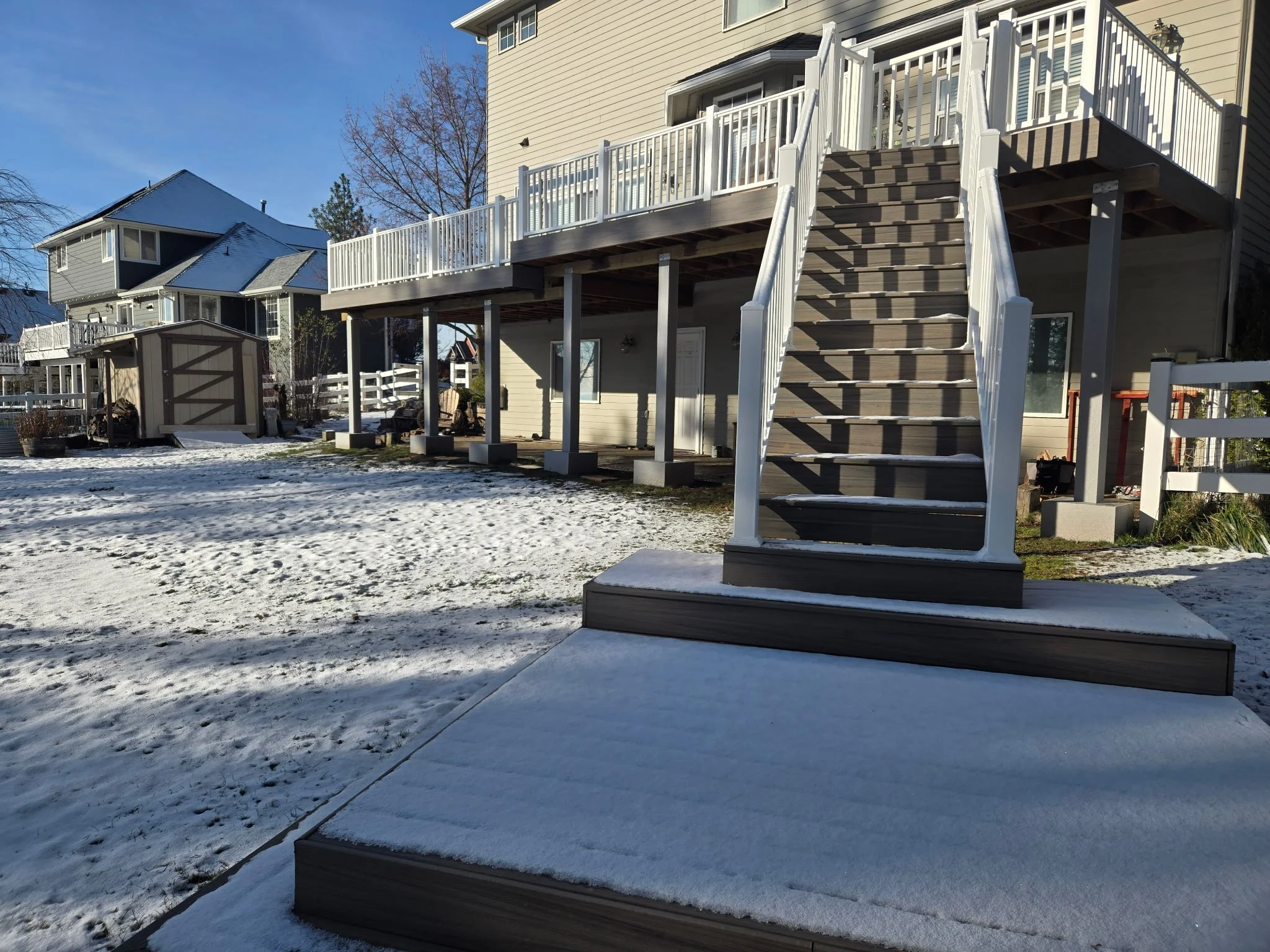
Project Spotlight: A Bigger, Better Deck—Built Right, Even in Winter
Not every project wraps up under blue skies and summer sunshine.
This one finished in winter—snow on the ground, cold air in the trees—and that’s okay. Because what matters most isn’t how a project photographs, but how it’s built.
This deck replacement was about more than new boards and railings. It was about correcting damage, improving flow, and creating a structure that will last for years to come.
The Starting Point: An Aging Deck with Hidden Issues
The original deck had reached the end of its lifespan.
Beyond surface wear, there were underlying problems that couldn’t be ignored—water damage, compromised areas near the house, and a layout that no longer served the homeowners well.
Before anything new could go in, the old deck had to come down.
Tear Down & Repair: Fixing What Water Left Behind
Once demolition began, water damage around the home became fully visible.
This allowed us to:
Remove damaged materials
Repair affected areas properly
Install custom siding to protect and seal the home correctly
Skipping this step would have meant building new over old problems—and that’s never an option. Fixing the structure first ensures the new deck performs the way it should.
The Build: A Rocky Harbor Deck Designed to Improve the Space
With repairs complete, construction began on the new deck system.
The homeowners chose a Rocky Harbor deck with matching rails, creating a clean, durable finish that works beautifully with the home’s exterior.
Key upgrades included:
A deck three feet wider than the original, increasing usable space
A center step-down, improving flow and accessibility
New railings for safety and visual balance
The expanded footprint alone made a noticeable difference in how the deck feels and functions.
Stairs & Lower Deck: Completing the Connection to the Yard
The project didn’t stop at the upper deck.
We also built:
New stairs, designed for comfort and safe use
A bottom deck, creating a natural transition between the home and the yard
These additions transformed the deck from a single platform into a connected outdoor space that works from top to bottom.
Finished in Snow, Built for All Seasons
Yes—by the time the project wrapped up, snow had arrived.
While the winter setting may hide some details, it also highlights something important: this deck was built to withstand real conditions. Cold, moisture, and seasonal changes were all considered in the materials and construction.
Come spring, this space will truly shine—but it’s already doing exactly what it was built to do.
Why This Project Matters
This deck replacement is a great example of what we believe in:
Tear it down when it’s time
Fix hidden damage the right way
Build bigger, better, and smarter
Never rush craftsmanship—even when the weather changes
We’re proud of how this project came together, snow and all.

A Room You’d Never Expect: The 6-Month Transformation of the Secret Room
Some of the most meaningful spaces in a home aren’t visible at first glance.
This one is hidden—accessed through a concealed door in the master walk-in closet, leading to a private room tucked above the garage. What began as an unfinished, poorly executed DIY space slowly became one of the most intentional and thoughtfully crafted rooms we’ve ever worked on.
This transformation took six months, deep problem-solving, and over 100 hours of custom woodworking alone—and the result speaks for itself.
The Beginning: A Hidden Room That Never Reached Its Potential
Behind the closet door was a room that felt forgotten.
The drywall had been installed by a previous owner, but nothing about it was right—uneven seams, incorrect fastening, inconsistent framing, and surfaces that would never finish cleanly without intervention. The flooring was temporary. The window was outdated. Electrical was minimal. The space had no real identity or function.
Before this room could become something special, it had to be corrected, stabilized, and reimagined from the inside out.
Fixing What Was Done Wrong
This project wasn’t about covering flaws—it was about addressing them properly.
Work included:
Correcting improperly installed drywall and uneven surfaces
Adjusting framing where needed
Installing proper outlets and a new light fixture
Adding a new window, which required new exterior siding and repainting the outside of the garage
Every step was handled carefully to ensure the finished space wouldn’t just look good—but would last.
The Showpiece: A Fully Custom Desk Built Into the Room Itself
The heart of this hidden room is the 100% custom desk and built-in shelving, designed specifically for this space and nowhere else.
There are no filler panels, no standard sizing, and no prefab shortcuts. The desk was built to exactly match the walls, becoming part of the architecture rather than something placed inside it.
This portion of the project alone represents over 100 hours of craftsmanship, and it truly highlights Dave’s custom woodworking abilities—from layout and proportion to flawless execution.
This isn’t furniture.
It’s functional architecture.
Stone by Stone: A Fireplace Built to Belong
Adding warmth and character, the custom stone fireplace was built one stone at a time.
Each piece was carefully selected and placed to create a natural, grounded focal point—something that makes the room feel finished, inviting, and intentional. It transformed the space from “hidden” to special.
Details That Quietly Matter
As the room came together, the finishing touches elevated everything:
Hardwood flooring to bring warmth and continuity
Clean, intentional trim throughout
A custom wood casing built to conceal the gas pipe running the length of the room
A custom-built step, designed specifically for this space
Thoughtful electrical placement and lighting
Nothing was rushed. Every detail had a reason.
The Result: A Secret Worth Keeping
Six months later, the transformation is complete—and the homeowners love it.
What was once an awkward, unfinished room above the garage is now a refined, functional retreat—quietly hidden behind a closet door, yet fully finished in every sense of the word.
This project is a reminder that some spaces don’t need to be obvious to be valuable.
Why This Project Matters to Us
This build perfectly represents what happens when:
Time is respected
Craftsmanship leads the process
Custom work is done without compromise
It also stands as a clear example of Dave’s woodworking talent, patience, and attention to detail.
Some rooms are built fast.
Some rooms are built right.
This one was worth the wait.

Between Christmas and the New Year: A Quiet Moment to Notice Your Home
There’s a unique calm that settles in after Christmas.
The decorations are still up. The leftovers are in the fridge. Guests have gone home. The house exhales.
This in-between week—after the holiday rush and before the new year begins—is one of the best times to simply notice your home.
You start to see which spaces worked hard and which struggled. Where people naturally gathered. Where clutter collected. Which rooms felt cozy and which felt cramped. There’s no pressure right now—just awareness.
Maybe the entryway felt overwhelmed with coats and shoes. Maybe the kitchen handled everything beautifully, or maybe you wished for more counter space when everyone was helping cook. Maybe the living room felt just right, or maybe you noticed how lighting or layout affected how people connected.
These observations matter—not as criticism, but as information.
Our homes quietly tell us what we need. More storage. Better flow. A space to slow down. A place to gather. A little less chaos in everyday routines.
This isn’t about resolutions or trends. It’s about paying attention. About appreciating what carried you through the year and gently noticing what could support you better moving forward.
At Mr. Clean Fix, we believe the best projects start with understanding how a home is truly lived in. That understanding often comes during moments like this—when life pauses just long enough to reflect.
So as this year winds down, take a moment. Sit in your space. Notice what you love. Notice what feels hard. Your home has been there for it all—and it’s still showing you what’s possible.

Homes Hold the Holidays: What This Season Reminds Us About the Spaces We Live In
The holidays have a way of making us see our homes differently.
Suddenly, every space is working overtime. The front door opens and closes constantly. Boots pile up. Coats get tossed over chairs. The kitchen becomes the heart of everything—food, conversation, late-night snacks, and early-morning coffee. Living rooms fill with people, laughter, wrapping paper, and memories.
This season reminds us that homes aren’t just places we live—they’re places where life happens.
At Mr. Clean Fix, we see it all year long, but especially during the holidays. Homes become gathering spaces, safe places, and sometimes chaotic places. And that’s okay. A lived-in home is a loved home.
Christmas has a way of highlighting what works well and what could use a little help. Drafty doors feel colder. Tight entryways feel tighter. Storage suddenly feels non-existent. But at the same time, warmth shows up in unexpected ways—in shared meals, in people squeezed onto couches, in the quiet moments once the house finally settles.
Your home doesn’t have to be perfect to be meaningful. It just has to support the way you live.
Thoughtful spaces make a difference—not because they’re trendy, but because they make room for connection. A welcoming entryway, a kitchen that flows, a living room that invites people to stay a little longer. These aren’t luxuries; they’re the backdrop to your traditions.
As the year comes to a close, we’re grateful. Grateful for the homes we’ve worked in, the families we’ve met, and the trust our clients place in us. We’re grateful for spaces that tell stories—especially this time of year.
From our family to yours, we hope your home is filled with warmth, comfort, and moments worth remembering this Christmas.

Warm Welcome: Entryway, Mudroom, and Front Door Upgrades for Winter
Winter has a way of making first impressions count even more. Snowy boots, dripping coats, cold drafts, and early sunsets all meet right at your front door. That’s why upgrading your entryway, mudroom, and front door isn’t just about looks—it’s about comfort, function, and sanity during the coldest months of the year.
If your home feels chaotic the moment you step inside, these winter-focused upgrades can transform that space into a warm, welcoming buffer between the outdoors and your living space.
Start at the Front Door: Seal, Style, and Security
Your front door is your home’s handshake—and in winter, it’s also a major energy gatekeeper.
Winter-smart front door upgrades include:
Replacing worn weather stripping to block cold drafts
Installing an insulated or steel door for better heat retention
Adding a storm door for extra protection and energy efficiency
Updating hardware for better security and smoother operation
Refinishing or repainting for instant curb appeal, even in gray weather
A properly sealed door keeps warm air in, cold air out, and heating costs down—while also making your home feel immediately more inviting.
Entryway Functionality: Small Space, Big Impact
Even the smallest entryway can work harder with the right layout and storage.
Simple winter upgrades that make a big difference:
Wall-mounted coat hooks to keep bulky jackets off furniture
Bench seating with storage for boots and bags
Shoe trays or recessed mats to contain snow and salt
Improved lighting to brighten dark winter evenings
Durable flooring that can handle moisture and grit
When everything has a place, winter clutter stays contained instead of spreading through the house.
Mudrooms: Your Winter Control Center
If you have a mudroom—or the potential to create one—it’s one of the smartest upgrades for colder climates.
A well-designed mudroom can include:
Built-in cubbies for each family member
Closed cabinetry to hide winter gear
Tile or luxury vinyl flooring for easy cleanup
Drainable boot trays or floor mats
Space for pet gear, towels, and wet items
Mudrooms protect the rest of your home from mess and moisture while making daily routines smoother and less stressful.
Warmth Is in the Details
Winter comfort often comes down to the little things:
Draft-proofing around doors and trim
Soft rugs that add warmth underfoot
Coordinated finishes that create a cozy, intentional feel
Fresh paint in warm, welcoming tones
These details don’t just improve function—they create a space that feels good to come home to after a long, cold day.
A Welcoming Home Starts at the Door
Your entryway sets the tone for the entire house. With thoughtful upgrades, it can shift from a problem area to one of the most useful and welcoming spaces in your home—especially during winter.
Whether it’s a simple door upgrade or a full mudroom refresh, investing in these areas now pays off in comfort, efficiency, and peace of mind all season long.

From Chaos to Calm: Creating Functional Spaces Before Family Arrives
When family is on the way—whether for a holiday, a long weekend, or an unexpected visit—our homes suddenly feel smaller, messier, and louder than usual. That’s because most homes aren’t designed for “extra people mode”… but with a few smart updates, they can be.
The goal isn’t perfection. It’s functionality—spaces that work better, feel calmer, and reduce stress for everyone under your roof.
Here’s how to move your home from chaos to calm before guests arrive.
Start With the High-Traffic Zones
Focus your energy where it matters most:
Entryways
Kitchens
Bathrooms
Living rooms
These are the spaces guests use constantly, and even small improvements here make a big difference.
Quick wins:
Add hooks or a small bench in the entryway
Clear kitchen counters (appliance clutter adds visual chaos)
Make sure bathroom storage actually works (not just looks nice)
Create “Drop Zones” to Control the Mess
Shoes, bags, coats, purses, kids’ stuff—it piles up fast.
A functional drop zone keeps clutter from spreading:
Wall hooks or peg rails
Storage benches with hidden compartments
Baskets or cubbies labeled by person or purpose
This is one of the simplest upgrades that instantly makes a home feel calmer.
Make the Bathroom Guest-Ready (Without a Full Remodel)
You don’t need a total renovation to improve bathroom flow.
Small upgrades that matter:
Replace outdated or loose fixtures
Install shelving or a vanity with real storage
Improve lighting (especially over mirrors)
Re-caulk tubs and showers for a clean, fresh look
A functional bathroom = fewer bottlenecks and happier guests.
Open Up the Living Space
Family gatherings usually center around one room. If that space feels cramped, everything feels chaotic.
Consider:
Removing unnecessary furniture
Improving lighting to make the room feel larger
Updating flooring for easier cleanup
Creating flexible seating (ottomans, benches, stools)
Function comes before décor—always.
Think Beyond the Visit
The best part about functional upgrades?
They keep working long after the family leaves.
Projects like:
Better storage
Smarter layouts
Easy-to-clean surfaces
Durable flooring
These upgrades reduce daily stress and make your home easier to live in year-round.
From Overwhelmed to Ready
If your home feels overwhelming before guests arrive, it’s usually not about clutter—it’s about layout and function.
At Mr. Clean Fix, we help homeowners create spaces that work with their lives, not against them. Whether it’s a quick refresh or a bigger update, functional improvements bring lasting calm.
Because hosting family should feel welcoming—not exhausting.