
The True Cost of a Home Remodel: Why Estimates Can Vary So Much
Getting estimates for a home remodel can sometimes leave homeowners wondering how the numbers could possibly be so different.
You might talk to three contractors and receive three very different prices for what seems like the same project.
Before assuming one contractor is simply charging too much, it's worth taking a closer look at what each estimate actually includes.
A remodel estimate isn't just a number for labor and materials. It's the result of everything the contractor believes will be required to complete the project.
And sometimes, those details are very different from one estimate to another.
Start With the Scope
The first thing to compare is the scope of work.
If one contractor is replacing cabinets, flooring, drywall, electrical, and trim while another is only including the cabinets and flooring, those estimates aren't really for the same project.
This can happen even when the initial conversations sound identical.
A homeowner may say, "We're remodeling the kitchen," while each contractor has a different understanding of what that means.
A detailed scope helps eliminate that confusion.
Look at what is being removed, what is being installed, what surfaces are being prepared, what gets finished, and what is specifically excluded.
Materials Can Change the Number Quickly
There can be a huge range in the cost of materials and finishes.
Cabinetry, countertops, flooring, tile, plumbing fixtures, lighting, doors, windows, and hardware can all have multiple price points.
Two contractors could be estimating the same kitchen layout but using very different assumptions about the products going into it.
That's why it's important to know whether the estimate includes specific materials, a budget allowance, or simply assumes the homeowner will purchase them separately.
A lower estimate isn't necessarily using the same materials as a higher one.
Labor Isn't Just the Time Spent Installing Something
Labor is another major part of a remodel, and it's more complicated than simply counting hours.
A contractor has to account for demolition, preparation, installation, cleanup, coordination, material handling, and the work required to get each part of the project ready for the next trade.
For example, installing new flooring isn't necessarily just the cost of putting down the new flooring.
What happens to the existing flooring? Does the subfloor need preparation? Are there transitions to deal with? Does trim need to be removed and reinstalled? Are there areas that need leveling?
The finished product depends on all of those steps.
Prep Work Can Be Easy to Overlook
Preparation is one of the biggest reasons estimates can vary.
Two kitchens might look similar on the surface, but once demolition begins, one could require significantly more preparation.
Walls may need to be repaired. Floors may need leveling. Old materials may need additional removal. Plumbing or electrical may need to be brought up to current requirements.
Some of that can be identified during the estimating process. Some things simply can't be known until the existing construction is opened up.
A good estimate should account for the work that can reasonably be anticipated while also making it clear where unknown conditions could affect the final cost.
Existing Homes Come With Unknowns
Remodeling an existing home is different from building something new.
Once walls, ceilings, cabinets, or flooring are removed, you may discover conditions that weren't visible during the initial walkthrough.
Old wiring, plumbing problems, water damage, structural issues, inadequate framing, or previous work that wasn't completed properly can all change what is required.
That's why a responsible contractor shouldn't promise that there will never be additional costs on a renovation.
Instead, they should explain what is known, what is uncertain, and how unexpected conditions will be handled if they come up.
Permits and Inspections Are Part of the Project
Depending on the project and location, permits and inspections may be required.
Those costs — along with the work needed to meet applicable requirements — should be considered when comparing estimates.
If one estimate includes permit-related work and another doesn't, the numbers may look very different even though both contractors are approaching the same renovation.
Ask what's included rather than assuming every estimate covers the same requirements.
Allowances Can Make Estimates Look Lower
You may also see allowances in a remodel estimate.
An allowance is essentially a budget amount set aside for something that hasn't been selected yet.
For example, a contractor might include an allowance for tile, plumbing fixtures, or lighting.
That's useful when selections haven't been made, but homeowners need to understand what happens if the actual product costs more or less than the allowance.
A $5,000 allowance doesn't mean you have unlimited choices for $5,000.
It means the estimate currently includes $5,000 toward that particular item.
Compare Estimates Line by Line
When you receive multiple estimates, don't just compare the final numbers.
Put them next to each other and ask:
Is the scope the same?
Are the same materials included?
Is demolition included?
Is preparation included?
Are permits included?
Are subcontractors included?
Are cleanup and disposal included?
Are there allowances?
What is excluded?
How are unexpected conditions handled?
Once you start comparing the details, you may discover that the estimates aren't nearly as different as they initially appeared — or you may discover that they really are pricing different projects.
The Cheapest Estimate Isn't Always the Cheapest Project
A lower estimate can certainly be a legitimate lower-cost approach.
But if important work is missing from the scope, you may eventually end up paying for that work anyway.
The goal shouldn't be to find the lowest number on a piece of paper.
The goal should be to understand what you're actually getting for that number.
A thorough estimate may initially look more expensive simply because it accounts for more of the work required to complete the project properly.
Ask Questions Before You Compare Prices
If you aren't sure why one estimate is higher than another, ask.
A good contractor should be able to walk you through the scope and explain what is included.
You don't need to know every construction term or understand every line item. You just need enough information to make a fair comparison.
When you're investing a significant amount of money into your home, understanding the estimate is just as important as looking at the final price.
A remodel estimate is more than a number. It's a plan for what the contractor believes it will take to turn your existing space into the finished project you're expecting.
The better you understand what's behind that number, the easier it is to compare your options and make an informed decision.

How to Choose a General Contractor for a Major Home Renovation
Choosing a contractor for a major home renovation is a little different from hiring someone for a small project.
When you're replacing a faucet, painting a room, or tackling a simple home improvement project, you may be able to focus primarily on the specific task. A major renovation is different. There are more moving parts, more decisions, more people involved, and usually a much larger investment.
That's why choosing the right general contractor is about more than finding someone who can do the work.
You want someone who can see the entire project.
Look for Experience With the Type of Project You're Planning
Start by looking at the contractor's experience with projects similar to yours.
A contractor who primarily handles small repairs may not have the same experience managing a whole-home renovation, addition, or major kitchen and bathroom remodel.
Ask about projects they've completed that are similar in size and complexity to yours. Look at their work, read reviews, and ask questions about how they approach larger projects.
You're not just looking for someone who can complete individual tasks. You're looking for someone who understands how all those tasks fit together.
Pay Attention to Communication
Communication becomes much more important as a project gets bigger.
Before hiring someone, pay attention to how they communicate with you during the estimating process.
Do they answer your questions? Do they explain things clearly? Do they listen to what you actually want? Are they upfront when something needs to change?
A major renovation will involve decisions and unexpected situations along the way. You want to know how those conversations will work before construction starts.
Make Sure the Scope Is Clear
A good estimate should make it clear what you're actually paying for.
The scope should outline the work being completed, the materials or finishes being provided when applicable, and anything that is specifically excluded.
This doesn't mean every detail of a major renovation can be predicted perfectly. Existing homes can always reveal surprises once walls or floors are opened.
But the more clearly the project is defined from the beginning, the easier it is for everyone to understand what is included and how changes will be handled.
Don't Choose a Contractor Based Only on the Lowest Estimate
Price matters. It's a major part of any renovation decision.
But comparing contractors based solely on the bottom-line number can be misleading.
Two estimates can look very different because the scopes are different. One may include more labor, better materials, additional preparation, project management, or work that another contractor left out.
Instead of simply asking, "Who is cheapest?", compare what you're actually getting for the price.
You want to understand the project behind the number.
Ask Who Will Actually Be Doing the Work
General contractors often coordinate multiple trades and subcontractors during a renovation.
Ask who will be working on your project and how those different trades will be managed.
You don't necessarily need one person doing every part of the renovation. In fact, larger projects often require specialized skills.
What matters is having someone responsible for coordinating those pieces so the project doesn't become a collection of unrelated jobs.
Project Management Matters
A major renovation isn't just a list of tasks.
Someone has to coordinate scheduling, materials, trades, inspections, deliveries, changes, and the order in which everything happens.
For example, electrical work may need to happen before drywall. Plumbing may need to be completed before walls are closed. Cabinets can affect countertop measurements, and flooring can affect trim and transitions.
The order matters.
A good general contractor is thinking about those connections throughout the project rather than simply checking off one task at a time.
Don't Forget Permits and Inspections
Depending on the scope and location of your project, permits and inspections may be required.
Ask your contractor how permitting will be handled and who is responsible for coordinating required inspections.
You don't want to discover halfway through a renovation that an important part of the project wasn't planned correctly from the beginning.
Look for Someone Who Understands the Whole House
This may be the most important consideration of all.
If you're planning a major renovation, think beyond the individual room.
Maybe you're remodeling the kitchen now but eventually want to update the living room and flooring. Maybe you're finishing an addition that will eventually connect to an existing space. Maybe you're remodeling one bathroom now and another later.
A contractor who understands the bigger picture can help you make decisions today that won't create problems tomorrow.
That doesn't necessarily mean you need to complete the entire project at once.
It means the entire project should be considered before the first phase begins.
The Right Questions to Ask
Before hiring a general contractor for a major renovation, consider asking:
Have you completed projects similar to mine?
Who will be working on the project?
How do you coordinate subcontractors and specialty trades?
What exactly is included in the estimate?
How are changes handled?
Who handles permits and inspections?
How will the project schedule be managed?
How will we communicate during construction?
What happens if something unexpected is discovered?
Can you help me plan the project if I'm completing it in phases?
You don't need a contractor who promises that everything will go perfectly.
You need someone who has a plan for managing the project when things don't go exactly as expected.
A Major Renovation Requires More Than a Skilled Hand
A large remodel involves design decisions, estimating, scheduling, materials, trades, permits, communication, and hundreds of smaller decisions along the way.
That's why choosing a general contractor shouldn't come down to finding the person who can perform the most individual tasks.
Look for someone who can put all of the pieces together.
The goal isn't simply to get through construction. It's to have a renovation that was properly planned from the beginning and comes together as one cohesive project.
If you're considering a major renovation in North Idaho, start by defining what you ultimately want your home to look and function like. From there, you can determine what needs to happen now, what can wait, and what should be planned for the future.
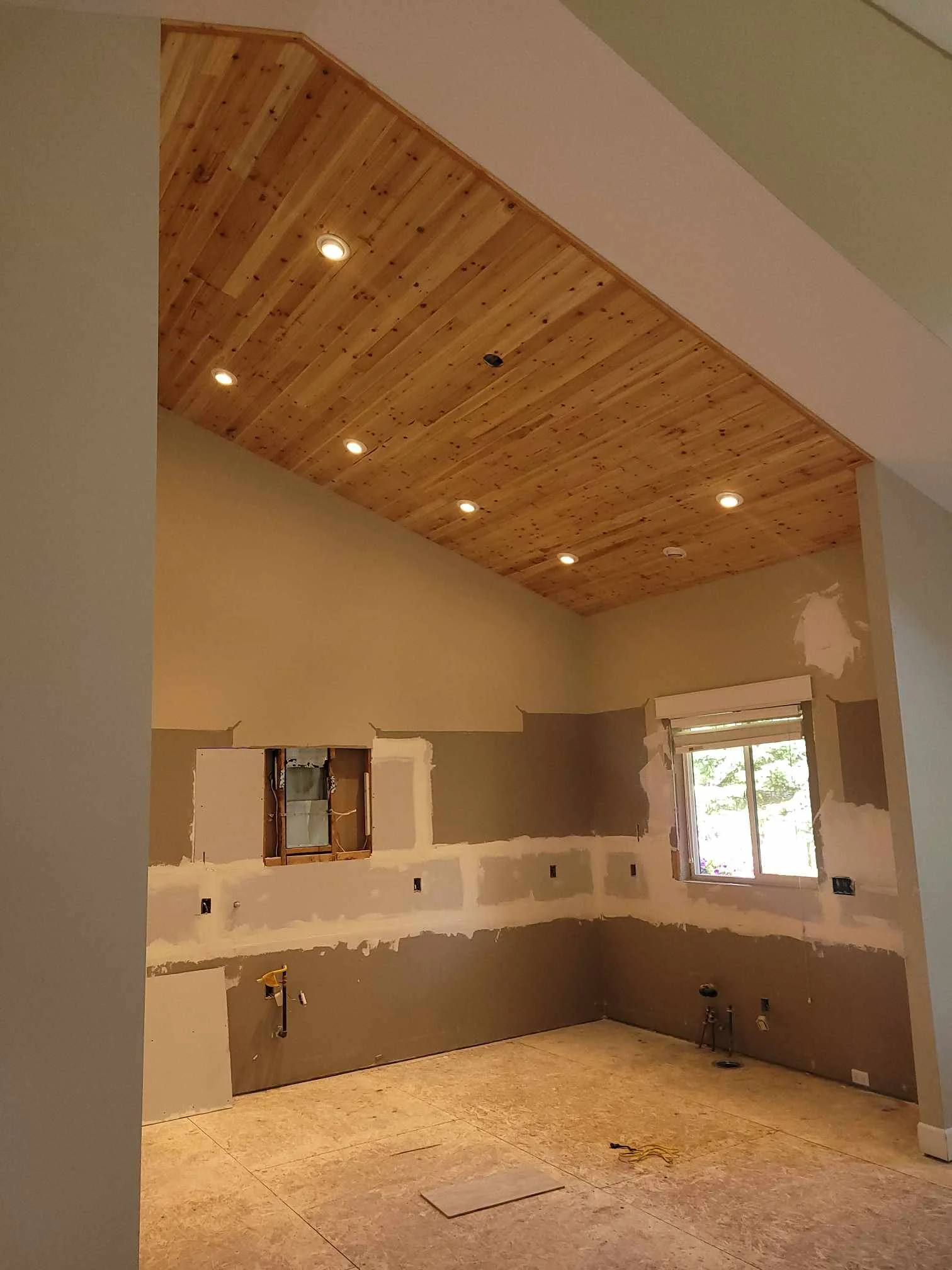
Should You Remodel in Phases or Complete Everything at Once?
When you’re looking at a major home renovation, one of the first questions to answer isn’t necessarily what you want to remodel. It’s how you want to tackle it.
Do you renovate the kitchen, bathrooms, living spaces, and other areas all at once? Or do you break the project into phases and work through the house over time?
Both approaches can make sense. The right choice depends on your budget, how much disruption you’re comfortable with, the condition of your home, and how well the different parts of the project connect to each other.
The important thing is to make that decision before the first phase begins.
Remodeling Everything at Once
There are some real advantages to completing a larger renovation as one project.
For one, you only have to go through the major disruption once. If your kitchen, flooring, walls, lighting, and adjacent living spaces all need work, doing everything together can mean fewer rounds of demolition, dust, moving furniture, and living around construction.
There can also be some efficiency in keeping the project moving as one coordinated renovation. Trades can work together, materials can be ordered at the same time, and decisions about finishes can be made with the entire home in mind.
That continuity matters more than people sometimes realize.
If you know you eventually want the kitchen, hallway, living room, and dining area to have the same flooring, paint colors, trim, or design style, planning those spaces together helps keep the finished home cohesive.
It can also prevent the frustrating situation of completing one room now, only to discover that the next phase requires tearing into something you just finished.
When Phasing Makes More Sense
Of course, completing everything at once isn't realistic for every homeowner.
A phased remodel can make a larger renovation more manageable financially and logistically. Instead of taking on a $100,000 renovation all at once, for example, you may decide to complete the primary bathroom first, then the kitchen, followed by other living spaces or exterior improvements.
Phasing can also make sense when certain areas of the home are more urgent than others.
Maybe the bathroom needs attention now, while the kitchen is functional but outdated. Or perhaps you're preparing to move into the home and want to address the most important areas first.
The key is making sure Phase 1 is planned with Phase 2 in mind.
Don't Let Phase 1 Create a Problem for Phase 2
This is one of the biggest things homeowners should think about before starting a phased renovation.
If you know you're eventually replacing the flooring throughout the main level, for example, it may not make sense to install new flooring in one room without considering how it will transition into the future work.
The same goes for electrical, plumbing, drywall, cabinetry, trim, paint, lighting, and even wall layouts.
Sometimes spending a little more during the first phase to prepare for future work can save you from paying to undo completed work later.
A good renovation plan should look at the whole picture, even if you're only building one piece of it right now.
Budgeting Is About More Than the Price of Phase 1
Phasing a project doesn't necessarily mean the overall renovation will cost exactly the same as doing everything together.
Each phase can involve its own setup, protection, demolition, cleanup, material ordering, and mobilization. Some efficiencies that come from keeping a project moving may be lost when a contractor has to return months or years later.
That doesn't mean phasing is a bad idea. It simply means you should look at the long-term plan, not just the price of the first phase.
If financing is part of the decision, it can also be helpful to understand what you can comfortably take on now versus what you'll realistically be able to budget for later.
Materials and Finishes Should Be Considered Early
One of the easiest things to overlook when phasing a remodel is material continuity.
Paint colors can change. Flooring can be discontinued. Tile collections can sell out. Cabinet styles and hardware can become unavailable.
If you know you're eventually going to continue the renovation, keep records of the materials, colors, manufacturers, product numbers, and finishes used in the first phase.
Better yet, discuss the future phases with your contractor before the first phase begins. That gives everyone a chance to think through transitions and identify anything that should be purchased or prepared ahead of time.
So Which Approach Is Right for You?
Sometimes completing everything at once makes the most sense.
Sometimes breaking the project into manageable phases is the better fit.
The important part isn't choosing one approach simply because it sounds cheaper or faster. It's understanding what the entire renovation is going to look like and then deciding how to get there.
If you're considering a larger remodel but aren't sure whether it should be one project or several, start with the end goal.
What do you ultimately want your home to look and function like?
Once you know that, you can work backward and decide which projects need to happen together, which can wait, and what needs to be planned now so future work doesn't undo the work you've already paid for.
A phased remodel can absolutely work. So can a whole-home renovation. The difference is in the planning.
At Mr Clean Fix, we help North Idaho homeowners look at the bigger picture of a renovation so the work can be planned around the home, the budget, and the way you actually want to live in it.
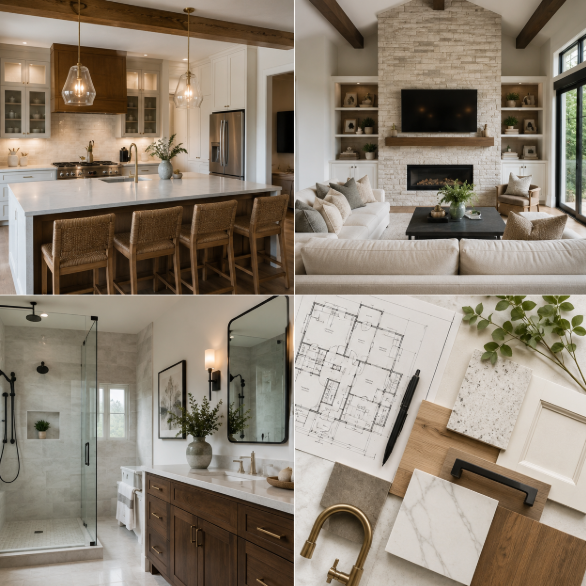
What Makes a High-End Home Remodel Worth the Investment?
What Makes a High-End Home Remodel Worth the Investment?
A home remodel is a significant investment. Whether you're updating a kitchen, transforming a bathroom, opening up your living space, or taking on a larger whole-home renovation, the goal shouldn't simply be to make your home look newer.
A well-executed remodel should make your home work better, feel better, and hold its value for years to come.
That's what separates a high-end remodel from a basic renovation.
At Mr. Clean Fix, we believe the difference isn't necessarily about choosing the most expensive materials or creating a space that looks like it belongs in a magazine. It's about making smart decisions throughout the entire project—from the initial layout to the final details.
It Starts With the Layout
One of the biggest advantages of a well-planned remodel is the opportunity to improve how your home actually functions.
A beautiful kitchen can still be frustrating if the refrigerator, sink, and cooking area aren't positioned well. A bathroom can have beautiful finishes but still feel cramped. A living space may have plenty of square footage but an awkward layout that doesn't fit the way your family uses the room.
High-end remodeling starts by looking at the whole space, not just the finishes.
Sometimes that means moving walls, changing the location of a doorway, reconfiguring a kitchen, improving storage, or creating better connections between rooms. The goal is to make the finished space feel intentional rather than simply renovated.
Quality Materials Make a Difference
Materials are another major part of what makes a remodel worthwhile.
That doesn't mean every project needs the most expensive countertop, flooring, fixture, or cabinet available. It means choosing materials that make sense for the space, the way it will be used, and the overall goals of the homeowner.
Durability matters.
So does appearance.
And just as importantly, materials need to work together.
A cohesive combination of flooring, cabinetry, countertops, tile, fixtures, trim, paint, and lighting can make an entire home feel more polished. Choosing each item independently because you like it can produce a very different result than designing the space as a whole.
Craftsmanship Is Where the Difference Shows
Even the best materials can't make up for poor installation.
The details matter in a high-end remodel.
Clean tile lines. Properly installed trim. Consistent reveals. Carefully finished transitions. Doors and cabinets that operate correctly. Flooring that flows naturally from one space to another. Fixtures installed with attention to detail.
These things may not always be the first things you notice when you walk into a finished room, but they contribute to the feeling that everything belongs exactly where it should.
Quality craftsmanship is what turns good materials into a finished project that feels truly finished.
Think Beyond the Current Trend
It's easy to get caught up in what's popular right now.
But a remodel is an investment in your home—not just in what happens to be trending this year.
That doesn't mean your home needs to be boring or completely traditional. It means choosing finishes and design elements thoughtfully so that the space still feels appealing years down the road.
A high-end remodel should balance current style with timeless elements.
The best projects don't necessarily scream, "This house was remodeled in 2026."
Instead, they simply feel well designed.
Longevity Matters
One of the biggest reasons to invest in quality during a remodel is that you don't want to do the same project twice.
A lower-cost renovation may look good initially, but if materials wear quickly, installation problems develop, or the layout doesn't actually solve the problems you started with, you may find yourself spending more money later.
A quality remodel considers what happens after the project is complete.
How will the space hold up to everyday use?
Will the materials remain practical?
Does the layout make sense for how the homeowners live?
Are the improvements likely to remain useful if the home is eventually sold?
Those questions are part of the investment.
A Remodel Should Feel Like It Belongs in Your Home
One of our favorite parts of remodeling is taking an existing home and making it feel like a better version of itself.
That doesn't always mean starting over.
Sometimes the best result comes from preserving the things that work while improving the things that don't.
A successful remodel should feel connected to the home rather than like a completely separate space that was dropped into it. Finishes should complement one another, proportions should make sense, and the improvements should feel intentional from room to room.
That's where cohesive design becomes especially important.
Is a High-End Remodel Worth It?
For the right homeowner and the right project, absolutely.
But "high-end" shouldn't simply mean spending the most money possible.
It should mean spending intentionally.
Investing in the areas that matter. Choosing materials that will last. Improving the layout. Hiring experienced professionals. Paying attention to the details that are easy to overlook. And creating a finished space that works for your life today while still making sense years from now.
That's the kind of remodeling investment that can make a real difference—not just in the appearance of your home, but in how you experience it every day.
Ready to Talk About Your Remodel?
If you're considering a kitchen remodel, bathroom renovation, addition, or larger home improvement project in the Coeur d'Alene and North Idaho area, Mr. Clean Fix can help you look at the project from the big picture down to the finishing details.
A great remodel isn't just about making a house look better. It's about making the investment count.
Contact Mr. Clean Fix to start planning your next home renovation.
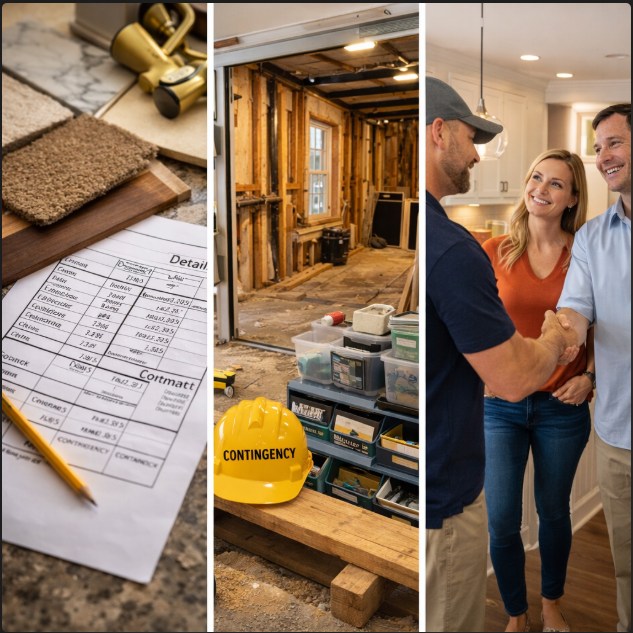
How to Budget for a Remodel Without the Stress
Let’s be honest.
Budgeting for a remodel can feel overwhelming. Numbers everywhere. Pinterest inspiration that keeps growing. Surprises hiding behind drywall. And that little voice that whispers, “What if we can’t afford this?”
At Mr. Clean Fix, we’ve seen it time and time again — the stress doesn’t usually come from the remodel itself.
It comes from not having a clear plan.
Here’s how to budget for your remodel the smart way… without losing sleep over it.
1. Start With Your “Why” (Not the Numbers)
Before you crunch a single number, ask yourself:
Are we remodeling to increase home value?
Improve function?
Fix something failing?
Or create a space we actually love being in?
Your “why” determines your spending strategy.
If you're remodeling to sell, you may focus on ROI.
If you’re remodeling to stay, comfort and quality might matter more than short-term resale value.
Clarity reduces stress. Every time.
2. Set a Realistic Range — Not a Perfect Number
One of the biggest stress triggers is locking yourself into a hard number too early.
Instead, create:
A comfortable range
A ceiling number you absolutely won’t exceed
Example:
“We’d like to stay around $25k, but we’re comfortable up to $30k if it truly improves the project.”
Ranges give breathing room.
Breathing room lowers anxiety.
3. Break the Budget Into Categories
Instead of looking at one big scary number, break it down:
Labor
Materials
Fixtures
Finishes
Permits
Contingency
When clients see how a remodel is built piece by piece, it stops feeling mysterious — and starts feeling manageable.
Transparency removes fear.
4. Always Plan for a Contingency
We say this with love:
If you don’t plan for surprises… they will plan for you.
In remodeling, especially in older homes, there are unknowns behind walls.
Industry standard recommendation:
10% contingency for newer homes
15–20% for older homes
If you don’t use it? Great.
If you need it? You’re calm instead of scrambling.
That’s the difference.
5. Decide Where to Splurge and Where to Save
Every project has “anchor items” — the pieces that matter most.
In a kitchen, that might be:
Cabinets
Countertops
Appliances
You can save on:
Lighting upgrades later
Decorative hardware
Some finish selections
Choose 2–3 elements to prioritize.
Be flexible on the rest.
Stress usually comes from trying to max out everything.
6. Phase It If Needed
Not everything has to happen at once.
If budget feels tight:
Complete structural or functional work first
Upgrade finishes later
Spread projects over seasons
A phased plan is still a plan.
And a plan is power.
7. Work With a Contractor Who Talks Numbers Clearly
A good contractor won’t avoid money conversations.
They’ll:
Explain labor vs material costs
Help you adjust selections to stay within range
Offer options without pressure
Communicate when changes affect pricing
Remodel stress often isn’t about cost — it’s about uncertainty.
Clear communication eliminates that.
8. Focus on Long-Term Value, Not Just Price
Cheaper isn’t always less stressful.
Redoing something twice?
Very stressful.
Paying for quality work that lasts?
Peace of mind.
A remodel should improve your daily life — not create financial regret.
Final Thought
Budgeting doesn’t have to be intimidating.
It’s just a roadmap.
And like any good roadmap, it works best when:
You know your destination
You understand the terrain
And you have the right team guiding you
If you're considering a remodel and want real numbers without pressure or confusion — we’re always happy to walk through it with you.
Clear plan. Clear communication. No chaos.

Big Care for Small Projects: Project Spotlight – The Chicken Coop & Greenhouse Renovation
At Mr. Clean Fix LLC, we believe every project deserves quality workmanship and careful attention to detail—no matter the size. Small projects often make the biggest difference in how a property functions day to day. This recent chicken coop and greenhouse renovation is a perfect example of how thoughtful improvements can create safer, more efficient, and more enjoyable spaces.
Our client wanted to improve the safety of their chicken coop and transform their greenhouse into a more functional area for starting plants and gardening year-round. While these were not large remodels, they required skill, precision, and customized solutions.
🐓 Chicken Coop Safety Renovation
When we arrived on site, the chicken coop presented a serious fire hazard. The existing insulation and electrical wiring were unsafe and needed immediate attention to protect both the animals and the property.
Our team at Mr. Clean Fix LLC focused on improving safety and durability by completing the following work:
Removing old and damaged insulation from the ceiling
Reinsulating the ceiling with proper fire-safe materials
Resheathing the ceiling to create a clean, secure finish
Completing electrical upgrades to eliminate fire risks
Ensuring the structure was safe, functional, and built for long-term use
The result was a clean, secure, and much safer environment for the chickens. The homeowner now has peace of mind knowing their coop is protected from potential hazards and built to last.
🌿 Greenhouse Upgrade & Custom Plant Start Station
The greenhouse renovation focused on increasing functionality and creating the ideal environment for starting plants. We designed and built a custom shelving system specifically for plant starts and installed custom lighting to support healthy growth.
Our greenhouse improvement work included:
Building a custom shelf system for plant starts
Installing specialized grow lighting for optimal plant development
Replacing an existing window to improve ventilation and overall usability
Assisting with plumbing upgrades inside the greenhouse
Organizing the space to be more efficient and gardener-friendly
Now the greenhouse is refreshed, more functional, and ready to support productive growing seasons all year long.
Why Small Projects Matter
Many homeowners believe contractors only focus on large remodeling jobs. At Mr. Clean Fix LLC, we take pride in handling small projects with the same care and professionalism as full renovations. Chicken coops, greenhouses, sheds, and backyard structures are essential parts of how families live and enjoy their homes.
This project highlights our commitment to:
Safety-first workmanship
Custom solutions for unique spaces
Quality craftsmanship
Honest and dependable handyman services
Treating every project with care and respect
Even small upgrades can dramatically improve safety, efficiency, and comfort.
Big Care for Every Project
This chicken coop and greenhouse renovation perfectly represents our mission: Big Care for Small Projects. Whether it’s a custom shelf system, electrical safety upgrades, plumbing assistance, or structural repairs, Mr. Clean Fix LLC is here to help homeowners improve the spaces that support their lifestyle and passions.
If you have a small project that’s been sitting on your to-do list, our team is ready to help turn it into a clean, safe, and functional space you can enjoy for years to come.