
Do You Actually Need an Island?
Because More Cabinets Doesn’t Always Mean a Better Kitchen
Kitchen islands are one of the most requested features we get.
Everyone wants one.
And sometimes… they absolutely should have one.
But a lot of times?
It’s the wrong move for the space—and nobody says it out loud.
The Island Obsession (and Where It Goes Wrong)
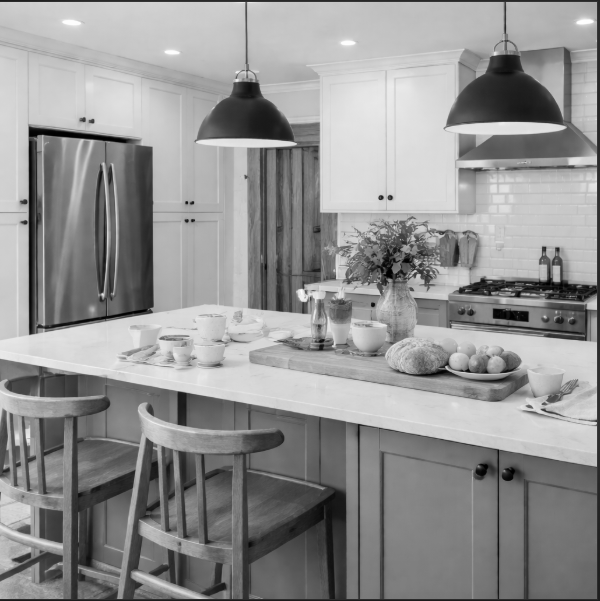
We’ve walked into a lot of kitchens where an island was clearly added because it felt like the thing to do.
Not because the layout actually supported it.
What you end up with:
Tight walkways
Appliances that can’t fully open
Two people trying to cook and constantly bumping into each other
It looks good in photos.
It doesn’t work in real life.
The Clearance Rule Nobody Talks About
Here’s where most island plans fall apart:
You need space around it.
Not “just enough to squeeze by.”
Actual working room.
General rule:
36 inches minimum (and that’s tight)
42–48 inches is where it actually starts to feel right
Anything less and your kitchen starts feeling cramped fast—especially once cabinets, handles, and appliances come into play.
If adding an island means shrinking your walkways below that, it’s probably not worth it.
Function First — Not Just a Flat Surface
Before adding an island, ask:
What is it actually doing?
Because “extra counter space” sounds good… but it’s vague.
A good island usually has a clear purpose:
Prep space near the sink or stove
Seating that actually gets used
Storage that replaces something missing elsewhere
A place to gather without blocking the work area
If it’s just sitting there in the middle of the room with no real job, it turns into a traffic problem more than an upgrade.
When an Island Does Make Sense
There are plenty of kitchens where an island is the right call.
Usually when:
The kitchen is open and has room to support it
You need separation between kitchen and living space
You want seating without a separate dining setup
The layout allows for clean workflow between sink, stove, and fridge
In those cases, an island can be one of the best features in the house.
When It’s the Wrong Move
We talk people out of islands more than you’d think.
Biggest red flags:
Narrow kitchens where space is already tight
Layouts where appliances end up fighting each other
Walkways that drop below comfortable spacing
Islands that block natural movement through the space
Sometimes removing the idea of an island actually makes the kitchen feel bigger, not smaller.
Better Alternatives Most People Don’t Consider
If an island doesn’t work, you’re not out of options.
Some better fits depending on the space:
Peninsula layouts (attached counter that still gives seating)
Extended countertops with overhang for stools
Built-in storage walls instead of crowding the center
Mobile islands if you want flexibility without committing
A lot of these end up being more functional than forcing an island into a space that can’t handle it.
The Mr. Clean Fix Take
Not every kitchen needs an island.
And forcing one in just because it’s popular usually makes the space worse, not better.
A good kitchen isn’t about checking boxes—it’s about how it actually works when you’re in it.
If there’s room, and it has a purpose, an island can be a great addition.
If not, there are better ways to use the space.
Most kitchens we walk into don’t have the wrong features.
They just have the wrong layout.
If you want to run your kitchen layout by us before making changes, we’re always happy to take a look.
Because it’s a lot easier to plan it right than fix it later.
5 Kitchen Layout Mistakes We See All the Time
Kitchen Reality Check — Part 2 of 3
This is Part 2 of our Kitchen Reality Check series — three blogs breaking down what actually makes a kitchen work, from a contractor who's seen the good, the bad, and the "why did anyone think that was a good idea."
We walk into a lot of kitchens.
Some are beautiful. Some are functional. Some are both.
And then there are the ones where you open the dishwasher and can't get to the sink. Where the fridge is marooned at the end of a counter with nowhere to set anything down. Where one overhead light casts a shadow directly onto the one place you're trying to work.
These aren't rare. They're not one-offs. They're the same five mistakes — over and over — in kitchens all across North Idaho, from older homes to brand-new remodels that were finished just a few years ago.
Here they are — and more importantly, why they happen and how to avoid them.
Mistake #1: The Fridge in the Wild
You know this one when you see it.
The refrigerator shoved to the end of a cabinet run with zero counter space on the handle side. No landing zone. No place to set anything down.
So every time someone opens that fridge and pulls out groceries — raw chicken, a gallon of milk, whatever — they're turning around, dripping, hunting for a surface that isn't there.
This isn't a budget problem. It's not a space problem.
It's a two-foot planning mistake that affects daily life forever.
Counter space on the handle side of the fridge isn't optional. It's how kitchens are supposed to work. When that gets skipped — usually to squeeze in one more cabinet — you feel it every single day.
Mistake #2: The Walkway That Became a Traffic Jam
This one shows up constantly in remodels where someone really wanted an island.
The island goes in. It looks great. And then you realize the walkway on one side is 32 inches wide.
Thirty-two inches sounds fine until the dishwasher is open. Or two people are cooking at the same time. Or someone is trying to get to the pantry while another person is standing at the stove.
Now you've got shoulder bumping, blocked paths, and a kitchen that fights you at exactly the moment you need it to cooperate.
Here's what makes this particularly frustrating in North Idaho: the space is usually there. Most of these homes have room to do it right. The mistake isn't square footage — it's forcing a Pinterest layout into a kitchen that needed something different.
Minimum 42 inches in a working aisle. 48 if two people cook together regularly. That's not a luxury. That's just math.
Mistake #3: The Dishwasher Door Trap
This one is so specific it almost feels personal.
A dishwasher placed so that when the door drops open it either blocks the sink, pins someone against the island, or swings directly into the main walkway.
The result: you literally cannot load dishes while another person is at the sink. You can't have the dishwasher open and move freely through the kitchen at the same time.
We've literally seen it where someone has to step back and just wait to rinse a plate because the dishwasher door is down. Every single day. In a kitchen that was supposedly designed.
It sounds like a small thing. It isn't.
You load that dishwasher every single day. And every single day it's going to remind you that nobody thought this through.
The worst part? This one almost never gets caught until install day. By then the plumbing is roughed in and moving it is a whole different conversation. This is exactly why layout decisions need to happen on paper — not on the jobsite.
Mistake #4: The Corner Cabinet Black Hole
Somewhere in almost every kitchen there's a corner cabinet that became a graveyard.
The opening is too small for what's behind it. The lazy Susan spins but nothing useful actually comes out. Half the cabinet hasn't been touched in three years because whatever's in there requires a minor excavation to retrieve.
That corner had options. Blind corner pull-outs. Deep drawers. Even intentional dead space used smarter.
Instead it got a lazy Susan that isn't lazy — and definitely isn't useful.
Corner storage is one of the most solvable problems in kitchen design. It just requires someone to actually think about it instead of defaulting to whatever's easiest to order.
Mistake #5: Lighting That Pretends to Be Enough
One overhead fixture in the center of the ceiling.
That's it. That's the whole lighting plan.
Here's the problem: the moment you stand at the counter to prep food, your body blocks that light. You're working in your own shadow. Every single time.
No under-cabinet lighting. No task lighting over the sink. Just one light behind you pretending to illuminate a whole kitchen.
This one stings a little more in North Idaho because our winters are dark. Long dark mornings, early dark evenings — your kitchen lighting isn't just a design choice, it's a quality of life choice for about five months of the year.
And here's the thing that makes this mistake so avoidable: lighting is cheap compared to everything else in a kitchen remodel. Cabinets, countertops, appliances — those are where the budget goes. Under-cabinet lighting is a fraction of that cost and it completely changes how the kitchen feels and functions.
There's no good reason to skip it.
The Bonus Mistake Nobody Talks About: The Microwave in No-Man's Land
Mounted too high for anyone under six feet to use safely. Shoved in a corner nowhere near where food is actually prepped. Tucked above the stove where you're reaching over hot burners to pull out a bowl of something hot.
The microwave gets treated like an afterthought in almost every kitchen we walk into.
It shouldn't be. Most people use it multiple times a day. It deserves a real spot in the layout — at counter height, near the prep zone, accessible without a circus act.
The Common Thread
Every single one of these mistakes has the same root cause.
Someone made a decision that looked fine on paper — or looked good in a showroom — without thinking through how a real family actually uses a kitchen on a real Tuesday night.
That's the whole game. Not what looks good. What works.
Next time you're in your kitchen, open the dishwasher. Check the fridge landing zone. Stand at the counter and notice where the light actually falls.
Your kitchen will tell you exactly where the planning stopped — you just have to look at how it fights you.
Next up — the final installment of Kitchen Reality Check: "Do You Actually Need an Island?" We're settling this one for good. Publishing next Friday.
The Kitchen Triangle Is Dead. Here's What Actually Matters Now.
Kitchen Reality Check — Part 1 of 3
This is Part 1 of our Kitchen Reality Check series — three blogs breaking down what actually makes a kitchen work, from a contractor who's seen the good, the bad, and the "why did anyone think that was a good idea."
For decades, kitchen design lived and died by one rule.
The kitchen triangle — the invisible line connecting your sink, stove, and refrigerator — was supposed to be the golden formula for a functional kitchen. Keep those three points close, keep traffic out, boom. Efficient kitchen.
It made sense. In 1948.
The problem? Nobody told your kitchen it was living in 2026.
At Mr. Clean Fix, we've remodeled a lot of kitchens across North Idaho. And we can tell you firsthand — the triangle isn't what's making people's kitchens fail. It's that nobody designed them around how the family actually lives in them.
That's the real conversation. So let's have it.
Why the Triangle Stopped Working
The triangle was built for one cook, one task, one small closed-off room. That was the kitchen of mid-century America.
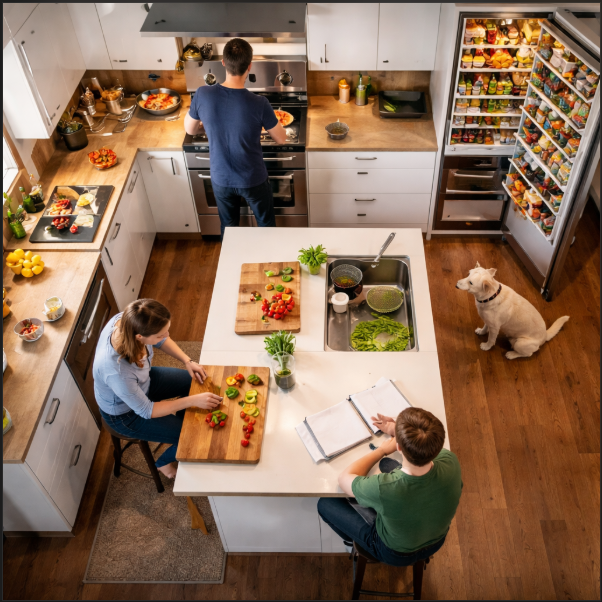
Today's kitchens are open. They're loud. They've got two people cooking, a kid doing homework, someone digging through the fridge, and a dog parked right where you need to stand — all at the same time.
A three-point triangle doesn't solve any of that. Not even close.
What Actually Works: Zones
Around here in North Idaho, most kitchens we walk into were built for a different era and a different family. When zones are laid out right, everything just works. When they're not — you feel it every single night.
A zone is a dedicated area for a specific task. Here's what a well-designed kitchen actually looks like:
The Prep Zone — Where the real work happens. Counter space, cutting board, easy access to tools, close to the sink. If you're walking across the kitchen every time you need to rinse something, this zone is broken.
The Cooking Zone — Your range and everything that belongs with it. Spices, oils, pots and pans within arm's reach. Not across the room. Not in a lower cabinet you have to dig through while something's boiling over.
The Cleanup Zone — Sink and dishwasher. These two should always be next to each other. Always. We still walk into kitchens where they're separated and wonder what the original designer was thinking.
The Consumables Zone — Fridge and pantry. Ideally accessible from the edge of the kitchen so someone can grab a snack without walking through the middle of everything and derailing whoever's cooking.
The Non-Cook Zone — This one's underrated and most kitchens don't have it. A spot where people can hang out, help with homework, pour a drink — without being in the way. A well-placed island with seating usually handles this. A poorly placed one makes it worse.
Let's Talk Islands — Honestly
Almost every kitchen remodel conversation gets to the island eventually. And we love islands. But only when they actually make sense.
We've also seen plenty that had no business being where they were — crammed into spaces too small, blocking traffic, creating a pinch point that makes the kitchen harder to use than before. That's not an upgrade. That's an obstacle with a countertop.
Before committing to an island, answer these honestly:
Is there at least 42 inches of clearance on every side? 48 is better.
Does it add real counter space and storage — or just eat up floor space?
Does it create that non-cook zone, or does it just push everyone into the same tight path?
If it doesn't improve how you actually move through the kitchen on a busy Tuesday night, it's not worth it.
Most "Storage Problems" Aren't Storage Problems
This comes up constantly. Homeowners feel like they don't have enough storage — so they want more cabinets, more drawers, more pull-outs.
Sometimes that's true. But more often? It's a layout problem wearing a storage costume.
Your pots live across the kitchen from your stove. Your spices are in a cabinet behind you while you're cooking. Your prep area is nowhere near your most-used tools. That's not a storage issue — that's everything living in the wrong place.
Fix the layout first. Then see how much storage you actually still need.
The Honest Contractor Take
No formula replaces a real conversation about how you actually cook and live.
Before we ever talk cabinets or countertops or finishes, we want to know: what drives you crazy about your kitchen right now? Where does it break down? What works?
Those answers tell us more about the right design than any rule ever will.
Because a kitchen that looks incredible in photos but fights you every night isn't a win. A kitchen that just works — for your family, your routine, your real life — that's the goal.
If it doesn't work on a busy Tuesday night, it's not a good kitchen. Period.
That's what we design for. Every time.
Next up in the Kitchen Reality Check series: the 5 kitchen layout mistakes we see over and over in North Idaho homes — and how to avoid every single one of them. Publishing next Friday.

Budget-Friendly Kitchen Upgrades: How to Get a Fresh Look Without Breaking the Bank at Mr. Clean Fix
The kitchen is the heart of the home, but a full-blown renovation can feel out of reach. Here at Mr. Clean Fix, we understand that you want a beautiful and functional kitchen, but you also want to be mindful of your budget. That's why we've put together a list of our favorite budget-friendly upgrades that can make a big impact in your kitchen!
1. Paint It Up!
A fresh coat of paint is one of the most affordable ways to completely transform your kitchen. Consider a light and airy color to open up the space, or go bold with a statement wall. Don't forget about your cabinets! Painting your cabinets is a more involved project, but it can save you thousands compared to replacing them entirely.
2. Upgrade Your Hardware
New cabinet hardware can add a touch of polish and personality to your kitchen. There are a wide variety of styles and finishes to choose from, so you can find something that matches your taste and budget. Even a simple swap from outdated knobs to sleek pulls can make a big difference. אמרוק Nature's Splendor BP1580R2 Pull: shopping result for Amerock Nature's Splendor BP1580R2 Pull is a popular option that is both stylish and affordable (typically around $15).
3. Shine a Light
Good lighting is essential in any kitchen. Update your old fixtures with something more modern and stylish. Pendant lights over your sink or island can add a touch of personality, while under-cabinet lighting can brighten up your workspace.
4. Backsplash Bliss
A backsplash is a great way to add color, pattern, and texture to your kitchen. There are a variety of affordable backsplash materials available, such as tile, laminate, and even peel-and-stick options.
5. Let There Be Faucets
A new faucet can instantly elevate your kitchen sink. There are many stylish and functional options available at reasonable prices. For instance, the Peerless Single Handle Kitchen Faucet P110LF: shopping result for Peerless Single Handle Kitchen Faucet P110LF is a popular choice with a traditional look and easy installation (typically between $41.96 and $75.68).
6. Clever Storage Solutions
Maximize your storage space with clever organizers and shelving. Install pot racks, hooks, or under-shelf baskets to keep your cabinets clutter-free and make the most of every inch of space.
7. The Power of Plants
Bring life to your kitchen with a touch of greenery! Houseplants not only add a decorative touch, but they can also help to purify the air.
8. Countertop Fix
While new countertops can be a big investment, there are a few ways to refresh your existing ones. Consider painting laminate countertops or applying a concrete overlay. These options can give your countertops a whole new look for a fraction of the price of replacement.
9. Revitalize Your Appliances
Stainless steel appliances can give your kitchen a modern and upscale look. If your current appliances are still in good working order, you can save money by giving them a stainless steel makeover with appliance paint or appliance covers.
10. Don't Forget the Floor
New flooring can dramatically change the look of your kitchen. There are many affordable options available, such as vinyl plank flooring or laminate. These materials are easy to care for and can withstand the wear and tear of a busy kitchen.
Bonus Tip! Declutter your countertops! Keeping your surfaces clear will instantly make your kitchen look more spacious and organized.
By following these tips, you can give your kitchen a fresh look without breaking the bank. Remember, a little creativity and elbow grease can go a long way! If you're looking for professional help with your kitchen upgrade, contact Mr. Clean Fix today for a free consultation