
Good Enough Isn't Good Enough
We've all said it.
"It's fine for now."
"Nobody will notice."
"We'll deal with it later."
Later has a way of becoming never. And "fine for now" has a way of becoming a bigger problem than it ever needed to be.
We walk into homes every week where good enough became the standard. A small deck repair that was put off for another season. A bathroom caulk line that failed and let water get behind the wall. A loose handrail that stayed loose because it wasn't causing a problem yet.
Until it was.
Most of those issues didn't start out expensive. They started out small. They started with a decision to wait one more month, one more season, one more year.
You can feel it in a house. The difference between a home that was done right and one that was done enough.
The trim that's finished instead of rushed. The repair that's actually repaired instead of patched. The details that nobody notices individually but everyone notices collectively.
We've never been able to leave a job at good enough.
Not because someone's checking.
Because we'd know.
That's the standard that matters.
Whatever's on your list this Monday—the project, the repair, the phone call you've been putting off—good enough isn't the goal.
Done right is.
Not perfect. Not extravagant. Just done the way you'd want it done if it were your own home.
📞 (208) 292-7204
🌐 mrcleanfix.com

Why the Second Half of the Year Is When Smart Homeowners Make Their Move
June isn’t the middle of the year. In contracting, it’s the last calm window before everything stacks up again.
Most homeowners think spring is the planning season. In reality, it’s already the bottleneck.
By the time June shows up, the projects that were “going to happen this spring” are now competing with vacations, school schedules, heat, smoke, and the general speed of life in summer.
And that’s exactly where the opportunity is.
Because the homeowners who actually get things done aren’t the ones who planned perfectly in January.
They’re the ones who move when there’s still room to move.
Summer Is the Window Everyone Underestimates
Spring gets all the attention. That’s when motivation kicks in, the weather turns, and every contractor’s phone starts ringing at once.
And that’s the problem.
By late spring, schedules are already tightening. Lead times stretch. Small jobs get pushed. Big jobs get reshuffled. The “quick project” you wanted done early can easily drift into mid or late summer without much effort.
Summer is different.
The weather stabilizes. Days are longer. Work moves cleaner and faster. And most importantly—projects actually finish instead of sitting half-started waiting for a break in the schedule.
The homeowners who book early summer aren’t just starting projects.
They’re finishing them while everyone else is still waiting for availability.
The Projects That Belong in Summer
Some work doesn’t care when you start it. Other work absolutely does.
Exterior projects like decks, fences, siding, paint—these depend on dry, stable conditions. Summer is the real working window for getting them done right, without weather interruptions slowing everything down.
Structural work and additions also move better this time of year. Materials stay dry, concrete cures properly, and crews can keep momentum instead of stopping and starting with weather delays.
And then there’s the biggest category:
The project that’s been sitting in the background for too long.
The bathroom that’s 80% decided.
The basement that’s been “almost finished” for two years.
The deck that got pushed from last fall into this spring… and is now circling back again.
Summer is when those stop being “someday” projects and become finished space.
Because fall doesn’t wait for unfinished work. It just shows up.
And once it does in North Idaho, everything slows down fast.
The Honest Contractor Math
Here’s the part most people don’t like hearing, but always recognize later:
Waiting doesn’t reduce cost.
Materials don’t get cheaper. Labor doesn’t get cheaper. And the scope usually doesn’t stay the same—it tends to grow.
A small issue ignored for six months usually turns into a slightly bigger scope when it finally gets addressed.
So the idea that waiting saves money sounds reasonable… until you’ve lived through a few projects.
The reality is simpler:
The people who call in June get on the schedule in June.
The people who wait until September are planning around October—or next year.
The Mr. Clean Fix Take
We’re not trying to force urgency where it doesn’t exist.
This one actually does.
Summer in North Idaho is the best working window we get all year. The weather cooperates. Projects move faster. And there’s still enough schedule flexibility right now that won’t exist in another 60–90 days.
If you’ve got something sitting on your list, this is the point where it either starts moving—or rolls into next season again.
Send it over. We’ll look at it, tell you what’s realistic this summer, what it takes, and whether it makes sense to move forward now or wait.
No pressure. Just straight answers.
Because the second half of the year isn’t about planning anymore.
It’s about finishing.

May the Force Be With Your Home This Spring
May the 4th be with you.
And with your to-do list.
Look — we're contractors, not Jedi. But after enough years in this industry we've started to notice some similarities. The force that holds a well-built home together isn't magic. It's the same thing that holds everything worth having together — attention, skill, and not cutting corners when nobody's watching.
So in honor of the day, here's what Star Wars taught us about home improvement. Whether you realize it or not.
The Dark Side of Deferred Maintenance
Every homeowner has a dark side.
It's the list. The one that lives on the fridge or in the back of your mind. The caulk that needs replacing. The deck that needs sealing. The paint that's been telling you something is wrong for two seasons.
The dark side whispers: it can wait.
And it can. For a while. Until it can't — and suddenly a $10 tube of caulk has become a $5,000 water damage repair. Rot behind the wall. Subfloor that didn't make it. Problems that were completely avoidable if someone had just made the call sooner.
Darth Vader didn't start out as the bad guy. He just made a series of small decisions that seemed reasonable at the time.
Don't let your home maintenance be Anakin Skywalker.
Use the Force — Read the Signs
The force, as Obi-Wan described it, surrounds us and binds us.
Your house is talking to you constantly. Most homeowners just aren't listening.
Doors that stick in winter but not summer — that's your house telling you about moisture and movement. Caulk that cracks every spring — that's your house telling you about temperature swings and age. A deck board that flexes a little more than it used to — that's your house telling you the substructure deserves a closer look.
You don't need to be a contractor to feel it.
You just have to pay attention.
That's the force. And it's more useful than ignoring it until something breaks.
Every Home Needs a Rebel Alliance
Even Luke needed help.
Han Solo. Leia. Chewie. R2. The whole crew.
A well-maintained home works the same way.
At Mr. Clean Fix we show up when we say we will. We tell you straight what needs doing now, what can wait, and what's going to get expensive if you keep ignoring it — even when that's not what you were hoping to hear.
We don't disappear mid-job. We don't pad the scope. We finish what we start.
Han shot first. We give you the honest answer first.
The Yoda Principle of Home Improvement
"Do or do not. There is no try."
Yoda said it. We believe it.
There's no "kind of" sealing a deck. No "mostly" flashing a roof. No "sort of" setting a fence post correctly.
Either the work is done right or it isn't. Either the prep happened or it didn't. Either the material was right for the application or it was the cheaper option that's going to cause problems in eighteen months.
We don't try to do good work. We do it.
Every time. On every job. Whether it's a $500 repair or a full exterior renovation.
Do or do not. There is no try.
A New Hope for Your Spring Project List
Here's the good news.
If your home has been crying out for attention through a long North Idaho winter — this is your new hope.
The weather is finally cooperating. The schedule still has room. And the projects that felt impossible to start in February are very possible right now.
Exterior paint. Decks. Fences. Patios. The bathroom that's been half-finished in your head for a year.
May the 4th is as good a day as any to make the call — before the schedule fills up, before the warm weather window closes, and before the small problems on your list get the chance to become expensive ones.
The empire of deferred maintenance doesn't have to win. But it will if you wait long enough.
The Mr. Clean Fix Take
We're not Jedi.
We don't use the force — we use experience, the right tools, and honesty. We'll tell you straight — even if it's not what you were hoping to hear. Better that conversation now than a bigger one later.
But if the force is real? It's probably just what happens when skilled people care about their work and don't cut corners.
May the 4th be with you.
And may your home finally get that project done.
📞 (208) 292-7204 | mrcleanfix.com

It Always Seems Impossible Until It's Done.
Some months you put your head down and just get through them.
March was that month for us.
We lost a key team member to an unexpected injury mid-month. Two projects were already underway — a bathroom that grew in scope mid-project, and an RV carport with a location that rejected every solution we brought to it.
We're telling you this not because it's a great story — though it is — but because of what it means for you as a homeowner thinking about hiring someone for a project that matters.
When the Plan Stops Working
The RV carport is the one that tested us most.
The location made access nearly impossible. Every piece of equipment we brought in got turned away by the site itself — wrong size, wrong reach, no room to operate. We worked through every reasonable option before we finally brought in a commercial boom lift to get it done.
That's the part of construction that never makes it into before and after photos.
The moment where the straightforward solution doesn't work. Where the backup plan doesn't work either. Where you're standing on a job site that has said no to everything you've tried — and you have to decide what comes next.
We don't walk away from those moments. We go find the next solution.
The carport finished Friday. It's done right and it's not going anywhere.
Resourcefulness Isn't a Skill. It's a Decision.
Every job has a moment where the original plan stops working.
Equipment doesn't fit. Scope changes mid-project. Something nobody could have predicted shows up and the schedule has to bend around it.
The difference between a job that gets finished right and one that doesn't isn't just experience.
It's the decision to keep solving the problem instead of deciding it can't be solved.
Most homeowners never see this part of the job. They see the finished product. But what you're really hiring when you bring on a contractor is how they handle the moment when things get hard.
We kept adapting on that carport until we found what worked. That's not exceptional — that's just the standard we hold ourselves to.
What Happens When a Team Member Goes Down
When you lose a key team member to an unexpected injury mid-project, you have two choices.
You can let it stall everything. Or you can adjust and keep moving.
We adjusted. Redistributed the workload. Made sure progress didn't stop.
That kind of reliability doesn't show up on a contractor's website — but it shows up on your timeline.
The bathroom is 50% done and on track. That's what matters.
Why We're Telling You This
We could post the finished carport photo and call it a win. Leave out the month it took to get there.
But we think honesty about the hard stuff is more useful to you than a highlight reel.
Because when you hire a contractor, you're not just hiring someone for the easy days. You're hiring someone for the day the plan falls apart — and what they do next.
We don't quit on jobs. We don't walk away from problems because they got complicated. We find the solution that works even when it takes longer than expected and costs more in equipment rentals than we planned.
That's not something we decided this month. That's just how we operate.
The Mr. Clean Fix Take
March was hard. April is better.
The carport is done. The bathroom is moving. The team is still standing.
If you've got a project that feels complicated — awkward location, changed scope, details that might make it harder than average — that's exactly the kind of job we're built for.
Bring us the hard one.
We'll figure it out. We always do.
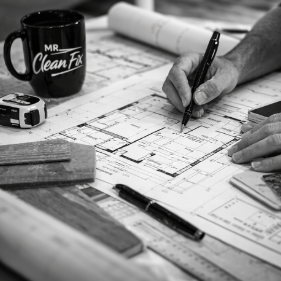
What Happens Behind the Scenes of a Remodeling Project
When homeowners picture a remodeling project, they usually imagine the exciting parts — demolition day, new cabinets arriving, fresh paint going on the walls, and the final reveal.
But what most people don’t see is everything happening behind the scenes to make that transformation possible.
At Mr. Clean Fix, a huge portion of our work happens before a single tool even comes out of the trailer. A successful remodel isn't just construction — it's planning, coordination, and problem-solving every step of the way.
Let’s pull back the curtain and show you what really goes on behind the scenes of a remodeling project.
1. The Planning Phase
Before we start building, we spend time making sure everyone is on the same page.
This includes:
• Meeting with the homeowner
• Understanding goals and budget
• Measuring and documenting the space
• Discussing materials and layout
• Identifying potential structural or layout challenges
This phase helps prevent surprises later. A good contractor doesn’t just start swinging a hammer — we make sure there’s a clear plan first.
2. Material Selection and Ordering
Many materials have lead times that homeowners don’t always expect.
Cabinets, flooring, tile, fixtures, and specialty items often need to be ordered weeks in advance. Part of our job is helping schedule the project around when those materials will arrive.
Behind the scenes we are:
• Checking product availability
• Coordinating deliveries
• Confirming measurements
• Making sure everything will fit and install properly
Getting this right keeps the project moving forward without unnecessary delays.
3. Scheduling and Coordination
A remodeling project is a bit like a puzzle. Different pieces need to happen in the right order.
For example:
Demo
Framing or structural changes
Plumbing and electrical
Insulation and drywall
Flooring and cabinets
Trim, paint, and finishes
If one step is delayed, it can affect everything that follows. Behind the scenes we’re constantly adjusting schedules and coordinating the next phase of work so the project stays on track.
4. Problem Solving (Because Every Remodel Has Surprises)
One thing we’ve learned from years in the field is that every house has a story.
Sometimes we open a wall and find:
• Old plumbing that needs replacement
• Wiring that isn’t up to code
• Hidden water damage
• Structural framing that needs correction
These aren’t things homeowners see during the planning stage, but they’re common in remodeling work. A big part of our job is solving these problems quickly while keeping you informed about the best path forward.
5. Communication with the Homeowner
Good communication is what keeps remodeling projects stress-free.
Behind the scenes we’re often:
• Updating homeowners on progress
• Discussing decisions that come up during construction
• Adjusting timelines if needed
• Making sure expectations stay clear on both sides
A remodel works best when the contractor and homeowner operate as a team.
6. The Final Details
The last stage of a project often takes the most patience.
This is when we focus on:
• Final trim work
• Touch-up paint
• Fixture installation
• Adjustments and fine-tuning
These details are what turn a construction site into a finished space you can enjoy every day.
The Truth About Remodeling
From the outside, a remodel can look like a fast transformation. But behind every successful project is a lot of planning, coordination, and experience.
When done right, the behind-the-scenes work is what keeps the project running smoothly and delivers a finished result that lasts for years.
At Mr. Clean Fix, we believe the best remodeling projects are built on clear communication, careful planning, and quality workmanship from start to finish.
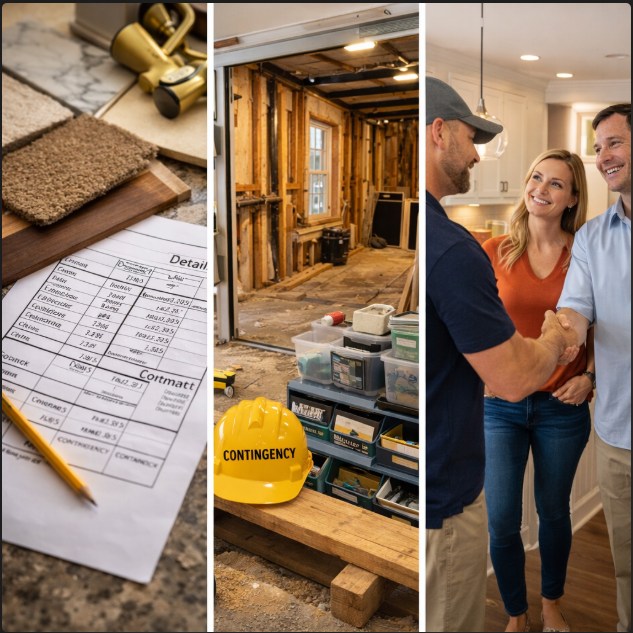
How to Budget for a Remodel Without the Stress
Let’s be honest.
Budgeting for a remodel can feel overwhelming. Numbers everywhere. Pinterest inspiration that keeps growing. Surprises hiding behind drywall. And that little voice that whispers, “What if we can’t afford this?”
At Mr. Clean Fix, we’ve seen it time and time again — the stress doesn’t usually come from the remodel itself.
It comes from not having a clear plan.
Here’s how to budget for your remodel the smart way… without losing sleep over it.
1. Start With Your “Why” (Not the Numbers)
Before you crunch a single number, ask yourself:
Are we remodeling to increase home value?
Improve function?
Fix something failing?
Or create a space we actually love being in?
Your “why” determines your spending strategy.
If you're remodeling to sell, you may focus on ROI.
If you’re remodeling to stay, comfort and quality might matter more than short-term resale value.
Clarity reduces stress. Every time.
2. Set a Realistic Range — Not a Perfect Number
One of the biggest stress triggers is locking yourself into a hard number too early.
Instead, create:
A comfortable range
A ceiling number you absolutely won’t exceed
Example:
“We’d like to stay around $25k, but we’re comfortable up to $30k if it truly improves the project.”
Ranges give breathing room.
Breathing room lowers anxiety.
3. Break the Budget Into Categories
Instead of looking at one big scary number, break it down:
Labor
Materials
Fixtures
Finishes
Permits
Contingency
When clients see how a remodel is built piece by piece, it stops feeling mysterious — and starts feeling manageable.
Transparency removes fear.
4. Always Plan for a Contingency
We say this with love:
If you don’t plan for surprises… they will plan for you.
In remodeling, especially in older homes, there are unknowns behind walls.
Industry standard recommendation:
10% contingency for newer homes
15–20% for older homes
If you don’t use it? Great.
If you need it? You’re calm instead of scrambling.
That’s the difference.
5. Decide Where to Splurge and Where to Save
Every project has “anchor items” — the pieces that matter most.
In a kitchen, that might be:
Cabinets
Countertops
Appliances
You can save on:
Lighting upgrades later
Decorative hardware
Some finish selections
Choose 2–3 elements to prioritize.
Be flexible on the rest.
Stress usually comes from trying to max out everything.
6. Phase It If Needed
Not everything has to happen at once.
If budget feels tight:
Complete structural or functional work first
Upgrade finishes later
Spread projects over seasons
A phased plan is still a plan.
And a plan is power.
7. Work With a Contractor Who Talks Numbers Clearly
A good contractor won’t avoid money conversations.
They’ll:
Explain labor vs material costs
Help you adjust selections to stay within range
Offer options without pressure
Communicate when changes affect pricing
Remodel stress often isn’t about cost — it’s about uncertainty.
Clear communication eliminates that.
8. Focus on Long-Term Value, Not Just Price
Cheaper isn’t always less stressful.
Redoing something twice?
Very stressful.
Paying for quality work that lasts?
Peace of mind.
A remodel should improve your daily life — not create financial regret.
Final Thought
Budgeting doesn’t have to be intimidating.
It’s just a roadmap.
And like any good roadmap, it works best when:
You know your destination
You understand the terrain
And you have the right team guiding you
If you're considering a remodel and want real numbers without pressure or confusion — we’re always happy to walk through it with you.
Clear plan. Clear communication. No chaos.

Remodel Now or Wait? How to Know When It’s Time to Invest in Your Home
One of the most common questions we hear is this:
“Should we remodel now… or wait?”
It’s a fair question. Remodeling is an investment — financially, emotionally, and logistically. And timing matters.
But here’s the truth most homeowners don’t realize:
The right time isn’t just about the market.
It’s about your life.
Let’s break this down in a way that actually helps you decide.
Market Timing vs. Personal Timing
Everyone wants to “time it right.”
Interest rates.
Material costs.
Housing values.
Economic headlines.
Yes — those things matter.
But market timing only tells part of the story.
Market Timing
If:
Home values are strong
Inventory is low
You plan to sell in the near future
Strategic updates can increase resale appeal and ROI.
On the flip side, waiting for the “perfect” market moment can keep you stuck for years. Materials fluctuate. Labor fluctuates. Rates fluctuate. There is rarely a magical window where everything aligns perfectly.
Personal Timing (The One That Matters More)
Ask yourself:
Are you staying in this home 5+ years?
Is your current layout causing daily frustration?
Are you avoiding rooms in your own house?
Is maintenance starting to pile up?
If your home no longer supports your lifestyle, that’s personal timing speaking.
And personal timing usually outweighs market timing.
Because quality of life has value too.
Functional vs. Cosmetic Upgrades
Not all remodels are created equal.
Understanding the difference can clarify whether you should move now or wait.
Functional Upgrades (Usually Shouldn’t Wait)
These impact safety, structure, efficiency, or daily usability:
Failing decks or stairs
Water damage
Drafty windows
Electrical or plumbing issues
Layouts that no longer work for your family
Delaying these can compound problems — and costs.
Functional upgrades often prevent larger expenses later.
Cosmetic Upgrades (Sometimes Can Wait)
These improve aesthetics but not function:
Cabinet color changes
Decorative tile swaps
Trend-driven finishes
Minor trim updates
If your home works well but just feels outdated, you may have flexibility.
But here’s something to consider:
Living in a space you dislike has a cost too. It affects how you host, relax, and enjoy your home.
Sometimes “cosmetic” is actually emotional functionality.
When Waiting Actually Costs More
Waiting feels safe.
But it isn’t always cheaper.
Here’s when delay becomes expensive:
1. Small Issues Turn Into Big Repairs
A minor moisture issue becomes structural damage.
A soft board becomes a rebuild.
A draft becomes long-term energy loss.
Preventative remodeling often costs less than reactive repairs.
2. Phased Projects Cost More Long-Term
Doing a kitchen in three separate waves over five years usually costs more than planning it correctly from the start.
Mobilization, material changes, labor fluctuations — they add up.
3. Material & Labor Rarely Go Backwards
While prices fluctuate, long-term trends generally rise.
Waiting five years hoping costs will drop significantly isn’t typically how the industry behaves.
4. You Lose Years of Enjoyment
This one doesn’t show up on spreadsheets.
If you plan to stay in your home, upgrading sooner means:
More years enjoying it
Less daily frustration
Better functionality for your family now — not someday
Time in a better space has value.
So… Remodel Now or Wait?
Here’s a simple framework:
Remodel now if:
There are functional or structural concerns
Your layout no longer fits your life
You’re staying long-term
Delaying increases repair risk
Consider waiting if:
It’s purely trend-driven
You may sell very soon
The space works fine functionally
You need more financial cushion first
The key is clarity.
A thoughtful consultation and honest evaluation can remove the guesswork.
At Mr. Clean Fix, we don’t push projects. We help homeowners make smart decisions — even if that means waiting.
Because the right time isn’t about pressure.
It’s about readiness.
If you’re unsure where your project falls, we’re happy to talk it through.
Sometimes clarity is the most valuable part of the process.