Why Good Pre-Sale Work Takes Longer Than Expected — And Why That's Actually a Good Sign
If you've been following along with our Turnkey Transformation series, you know we expected this project to be wrapped up by now.
As often happens during renovation work, the homeowner decided to add a few more improvements once they saw the progress. That's one of the biggest advantages of working room by room—it's easier to spot opportunities that will make the home even more appealing to future buyers.
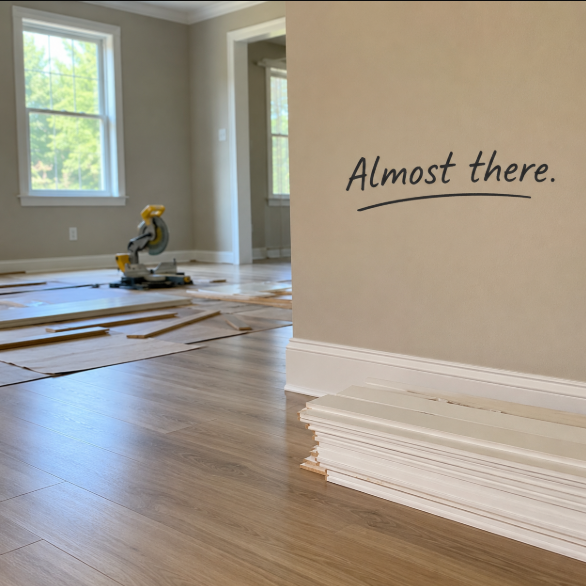
This week, the new flooring is complete and we're about 75% finished installing new baseboards throughout the home. Every improvement adds another layer of value, but it also reinforces an important lesson that applies to almost every home being prepared for sale.
The Best Projects Rarely Go Exactly According to Schedule
Television renovation shows make remodeling look predictable. In reality, every home has its own surprises, changing priorities, and decisions that happen along the way.
Sometimes homeowners choose to:
Upgrade additional finishes.
Replace trim that wasn't originally planned.
Add repairs after seeing how much cleaner and newer the home is becoming.
Those decisions can add a little time to the schedule, but they often produce a much better finished product.
Rushing Can Cost More Than Waiting
When a home is being prepared for the market, there's often pressure to finish as quickly as possible.
The problem is that rushed work usually shows.
Uneven trim, skipped repairs, mismatched flooring transitions, and unfinished details are exactly the kinds of things buyers notice during showings. They may not know why a house feels unfinished—but they know when it does.
Taking an extra week to finish the details is almost always a better investment than trying to save a few days.
Details Matter
Fresh flooring makes a huge difference, but it's the finishing touches that make a home feel complete.
Clean baseboards, consistent trim, repaired walls, fresh paint, and quality installation all work together to create the impression that the home has been well cared for.
Those details help buyers focus on the home—not on a list of repairs they'll need to make after closing.
One More Week...
We're in the home stretch now.
The flooring is finished, the trim is coming together, and we're excited to show you the completed transformation very soon.
Sometimes the best projects take a little longer than expected—and we're perfectly okay with that if it means delivering quality work our customers can be proud of.
Stay tuned next week as we share the finished results of this Turnkey Transformation!

The Contractor–Client Relationship: What Makes a Project Go Smoothly
Let’s be honest — remodeling isn’t just about lumber, tile, or paint colors.
It’s about people.
At Mr. Clean Fix, we’ve learned that the difference between a stressful project and a smooth one almost always comes down to one thing:
The relationship between contractor and client.
You can have the best materials in the world, but if communication breaks down or expectations aren’t aligned, the experience suffers. When the relationship is strong, though? Projects flow. Decisions get made faster. Problems get solved easier. And everyone walks away proud of the result.
Here’s what truly makes a contractor–client relationship work.
1. Clear Expectations From Day One
Smooth projects start before demo even begins.
That means:
Clear scope of work
Transparent pricing
Honest timelines
Defined responsibilities
When both sides understand exactly what’s included (and what’s not), there are fewer surprises later. Surprises are what derail budgets and moods.
We believe in putting everything in writing and walking through it together. It’s not about paperwork — it’s about clarity.
2. Communication That Goes Both Ways
The best projects feel like teamwork.
Clients should feel comfortable asking questions. Contractors should provide updates before they’re asked for them. If something changes — whether it’s material availability or an unexpected framing issue — it needs to be communicated quickly and clearly.
Silence creates stress.
Transparency builds trust.
Even tough conversations are easier when the foundation is strong.
3. Flexibility Without Chaos
Here’s the reality of remodeling:
Once walls open up, sometimes we find things.
Old wiring. Hidden water damage. Framing that doesn’t meet code. It happens.
A smooth project isn’t one without hiccups — it’s one where both contractor and client approach those hiccups with problem-solving energy instead of panic.
Flexibility matters. So does trust that your contractor is recommending solutions in your best interest, not upselling you.
4. Respect on Both Sides
This one is big.
Contractors are working in your home — that’s personal space. We respect that by:
Keeping work areas clean
Protecting flooring and furniture
Showing up when we say we will
Treating your home like it’s our own
On the flip side, smooth projects happen when clients respect:
Working hours
The process
The expertise they hired
Mutual respect changes everything.
5. Realistic Timelines & Decision-Making
One of the biggest project slowdowns? Delayed decisions.
Tile not picked.
Fixture undecided.
Paint color still “thinking about it.”
When selections are made on time, work keeps moving.
A good contractor will guide you through decision points ahead of schedule so you’re never rushed — but staying engaged on your end keeps momentum strong.
6. Trust the Process (and the Professionals)
There’s a reason you hired a contractor.
You don’t have to know how to sister joists or float drywall. That’s our job. What makes projects smooth is when clients trust the craftsmanship and the sequencing of the work.
And trust is earned — not assumed.
It’s built through communication, consistency, and integrity.
7. Shared Vision
The most satisfying projects happen when everyone is working toward the same outcome.
When contractor and client both care about the finished product — not just “getting it done” — the quality shows.
We love when clients are excited. That energy fuels the work.
The Bottom Line
A smooth project isn’t just about skill.
It’s about partnership.
At Mr. Clean Fix, we don’t see projects as transactions. We see them as collaborations. When expectations are clear, communication is open, and respect flows both ways, remodeling can actually be an enjoyable process.
And that’s always the goal.