
From Outdated to Market-Ready: The Final Reveal of Our Turnkey Home Renovation
From Outdated to Market-Ready: The Final Reveal of Our Turnkey Home Renovation
There’s something especially satisfying about seeing a renovation finally come together.
For the past several weeks, we’ve been sharing our Turnkey Renovation Series, walking through the process of taking a home that needed some serious attention and transforming it into a finished, market-ready property.
Today, that project is officially complete — and it’s going on the market.
So, for the final installment in our series, we thought we’d step back from the individual projects and show you what all of that work looks like when it comes together.
From a House That Needed Work to a Home Ready for Its Next Owner
A turnkey renovation is about more than making a house look good.
The goal is to create a home that feels finished, functional, cohesive and ready for someone to move in without immediately creating a list of projects they need to tackle.
That means looking at the big picture.
Throughout this renovation, we addressed the types of updates that can make a major difference in how a home looks, feels and functions — from the larger renovation work down to the finishing details.
Each individual improvement matters, but the real transformation happens when everything is finished at the same time and works together.
That’s what we mean by turnkey.
The Finished Home
One of the best ways to appreciate the transformation is simply to see it.
We put together a quick one-minute video tour so you can get a look at the finished renovation and see how all of the pieces came together.
Watch the 1-minute tour:
[EMBED YOUTUBE VIDEO HERE]
If you're viewing this on our website, the video gives you a quick walk-through of the finished home and a better feel for the overall transformation than photographs alone can provide.
Why We Took This Approach
When renovating a home for resale, it's easy to focus too heavily on individual upgrades.
But a successful renovation isn't necessarily about putting the most expensive material in every room or making every design decision as dramatic as possible.
It's about making smart improvements that appeal to today's buyers while creating a home that feels intentional from one room to the next.
For this project, that meant focusing on quality workmanship, updated finishes, functionality and a cohesive overall look.
The result is a home where the next owner can walk in, unpack their belongings and enjoy the space — rather than immediately wondering what needs to be fixed or remodeled next.
The Difference a Complete Renovation Makes
We've talked throughout this series about individual aspects of the renovation, but the finished project really demonstrates why a comprehensive approach can make such a difference.
A new finish here.
An updated room there.
Better functionality in another area.
Individually, those projects improve a home.
Together, they can completely change the way the home feels.
And that's one of the things we enjoy most about remodeling — taking something that feels dated, worn or unfinished and giving it a completely different future.
And Now It's Ready for Its Next Chapter
After all the planning, demolition, construction, finishing work and those inevitable little surprises that come with remodeling an existing home, this project has officially reached the finish line.
It's done.
It's cleaned up.
It's ready for the market.
And most importantly, it's ready for someone to call it home.
We're excited to finally see this one leave the jobsite and make its way onto the market.
Thank You for Following the Series
This project has been a fun one to document, and we hope our Turnkey Renovation Series has given you a better look at what actually goes into transforming a home from outdated to move-in ready.
If you're considering selling a home that needs work, purchasing a home that needs updating, or you're simply wondering what could be done with the home you already own, we'd be happy to talk through the possibilities.
At Mr. Clean Fix, we don't just look at what's there. We look at what it could become.
And this one is officially ready for its next owner.
Why Good Pre-Sale Work Takes Longer Than Expected — And Why That's Actually a Good Sign
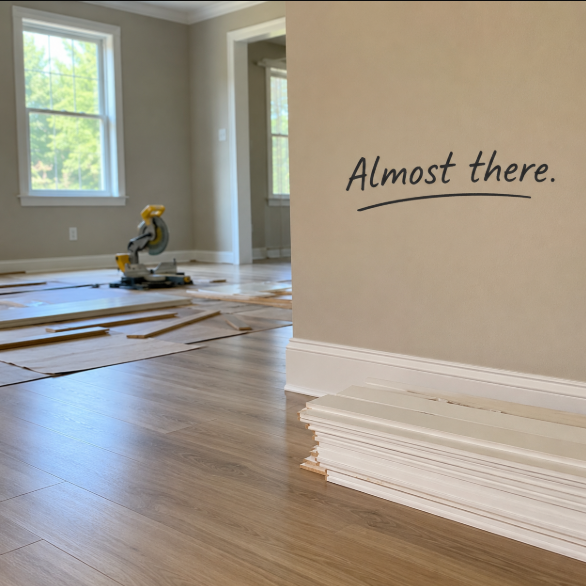
If you've been following along with our Turnkey Transformation series, you know we expected this project to be wrapped up by now.
As often happens during renovation work, the homeowner decided to add a few more improvements once they saw the progress. That's one of the biggest advantages of working room by room—it's easier to spot opportunities that will make the home even more appealing to future buyers.
This week, the new flooring is complete and we're about 75% finished installing new baseboards throughout the home. Every improvement adds another layer of value, but it also reinforces an important lesson that applies to almost every home being prepared for sale.
The Best Projects Rarely Go Exactly According to Schedule
Television renovation shows make remodeling look predictable. In reality, every home has its own surprises, changing priorities, and decisions that happen along the way.
Sometimes homeowners choose to:
Upgrade additional finishes.
Replace trim that wasn't originally planned.
Add repairs after seeing how much cleaner and newer the home is becoming.
Those decisions can add a little time to the schedule, but they often produce a much better finished product.
Rushing Can Cost More Than Waiting
When a home is being prepared for the market, there's often pressure to finish as quickly as possible.
The problem is that rushed work usually shows.
Uneven trim, skipped repairs, mismatched flooring transitions, and unfinished details are exactly the kinds of things buyers notice during showings. They may not know why a house feels unfinished—but they know when it does.
Taking an extra week to finish the details is almost always a better investment than trying to save a few days.
Details Matter
Fresh flooring makes a huge difference, but it's the finishing touches that make a home feel complete.
Clean baseboards, consistent trim, repaired walls, fresh paint, and quality installation all work together to create the impression that the home has been well cared for.
Those details help buyers focus on the home—not on a list of repairs they'll need to make after closing.
One More Week...
We're in the home stretch now.
The flooring is finished, the trim is coming together, and we're excited to show you the completed transformation very soon.
Sometimes the best projects take a little longer than expected—and we're perfectly okay with that if it means delivering quality work our customers can be proud of.
Stay tuned next week as we share the finished results of this Turnkey Transformation!
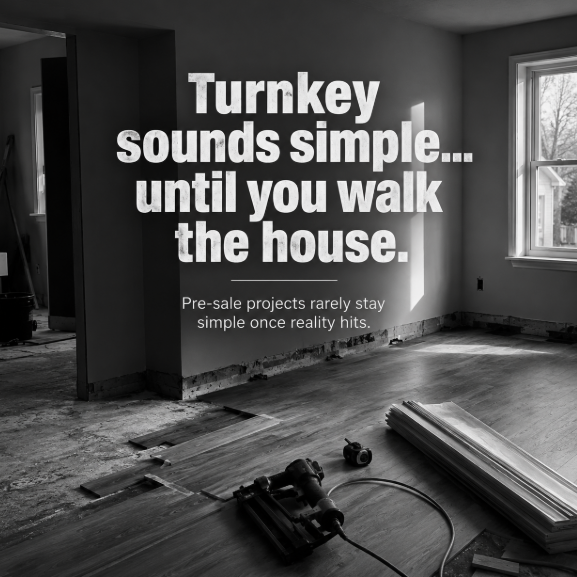
Week 2: When Pre-Sale Prep Turns Into the Actual Remodel
Most pre-sale projects start with a simple idea:
Clean it up. Freshen it up. Get it ready to list.
That was the original scope on this one.
Interior paint. Exterior curb appeal cleanup. Pressure washing. Dump runs. Remove baseboards so Home Depot could come in later for flooring, then reinstall them.
Straightforward prep work before the “real work” happens.
But once the timeline came into play, the project shifted.
The original plan
At the start, this was a classic lite pre-sale prep job:
Interior painting throughout
Exterior pressure wash and curb appeal cleanup
Dump runs and general haul-off
Baseboard removal to prep for flooring install (by Home Depot)
Reinstallation after flooring was complete
The goal was simple—get the home cleaned up and ready for other trades to come in and finish their pieces.
We weren’t supposed to be the flooring contractor.
We were strictly prep.
Where things changed
Once the homeowner got back into town and we started lining up the schedule, the flooring timeline became the deciding factor.
Home Depot was more than a month out on install.
And at that point, the decision was simple:
Waiting that long didn’t make sense for a pre-sale property.
So the project shifted.
Not because the plan was wrong—but because the market timeline didn’t match the construction timeline.
What we became in real time
Instead of waiting on a delayed install, the scope naturally expanded into:
Full flooring installation instead of prep for it
Expanded interior finish and repair work
Replacing baseboards instead of reinstalling old ones
Coordinating transitions as flooring went in
Evaluating exterior fence repairs and potential repaint
This is where pre-sale work stops being “prep” and becomes “finish.”
Not by design—by necessity.
Why this happens on jobs like this
Pre-sale projects are always time-sensitive.
You’re not just trying to improve a house.
You’re trying to hit a listing window.
So when one piece of the plan slows everything down—like a month-long flooring delay—you either wait…
Or you adjust the scope so the project keeps moving.
In this case, waiting wasn’t the right answer.
The part people don’t always see
Most homeowners don’t think about how tightly connected these decisions are.
But once you start a pre-sale project, everything is linked:
flooring affects baseboards
baseboards affect paint touch-ups
interior finish affects how “done” the house feels
exterior curb appeal affects first impression before they even walk in
You can’t isolate one trade without affecting the rest.
So when the flooring schedule changed, everything else naturally followed.
Where we’re at now
We’re currently:
installing flooring in-house
completing interior finish updates tied to that work
replacing baseboards as part of the full system
continuing exterior cleanup and evaluating fence repair/repaint
What started as prep work is now a full pre-sale renovation path.
Not heavy remodel—but definitely not just “clean and list” anymore.
Final thought
Most pre-sale projects don’t expand because someone overcomplicates them.
They expand because the timeline and reality of the house don’t line up with the original plan.
And when that happens, the goal shifts from:
“get it ready”
to
“make sure nothing slows the sale once it hits the market”
That’s where this one landed.

The ROI of Remodeling: Why It Pays to Invest in Your Home
When it comes to homeownership, your house isn’t just a place to live—it’s also one of your most significant financial assets. Whether you plan to sell in the near future or stay for years to come, remodeling is one of the smartest ways to increase your home's value. Kitchen and bathroom upgrades, in particular, consistently yield some of the highest returns on investment (ROI). Let’s explore why remodeling pays off and how you can make strategic improvements that benefit both your lifestyle and your bottom line.
Why Remodeling is a Smart Investment
1. Increases Property Value
Certain home renovations significantly boost your home’s market value. According to Remodeling Magazine’s Cost vs. Value Report, kitchen and bathroom remodels often yield an ROI of 60-80%, depending on the scope of the project and the local housing market. Even minor updates, such as painting, new fixtures, and updated countertops, can make a home more appealing to potential buyers.
2. Helps Your Home Sell Faster
If you’re thinking about selling, a remodeled home is more likely to attract buyers. Many buyers are willing to pay more for move-in-ready properties rather than taking on renovation projects themselves. A modern kitchen with new appliances and a stylish bathroom with updated finishes can make all the difference in a competitive real estate market.
3. Enhances Functionality & Comfort
Not all remodeling projects are about resale value—some are simply about improving your daily life. A well-planned kitchen renovation can make cooking and entertaining more enjoyable, while a bathroom upgrade can turn an outdated space into a spa-like retreat. These changes add value to your life, whether you plan to stay or sell.
4. Energy Efficiency Pays Off
Updating appliances, lighting, windows, and insulation as part of a remodel can significantly reduce your utility bills. Energy-efficient upgrades not only save you money but also make your home more attractive to buyers who prioritize sustainability.
5. Keeps Your Home Competitive in the Market
In neighborhoods where home values are rising, remodeling helps your property stay competitive. If nearby homes are being updated, an outdated home could struggle to sell at top dollar. Renovating ensures that your home remains desirable and in line with current market trends.
Top Remodeling Projects with High ROI
Kitchen Remodel (ROI: 60-80%)
Upgrade countertops to quartz or granite
Install modern cabinets or refinish existing ones
Replace outdated appliances with energy-efficient models
Add a stylish backsplash and updated lighting
Bathroom Remodel (ROI: 60-70%)
Install a walk-in shower or freestanding tub
Upgrade vanity with new countertops and storage
Improve lighting and add modern fixtures
Use neutral, high-end finishes for timeless appeal
Basement Finishing (ROI: 60-75%)
Convert an unfinished basement into a living space
Add a home office, gym, or extra bedroom
Improve insulation and lighting for a cozy feel
Deck Addition (ROI: 50-75%)
Expand your outdoor living space
Use durable, low-maintenance materials
Add seating, lighting, and an outdoor kitchen for appeal
Curb Appeal Enhancements (ROI: 70-100%)
Repaint the exterior
Update landscaping with fresh plants and walkways
Install a new front door and updated lighting
Ready to Invest in Your Home?
At Mr Clean Fix, we specialize in home remodels that enhance both your home’s value and your quality of life. Whether you’re looking for a full-scale renovation or simple updates, our expert team can help you make the most of your investment.
👉 Contact us today to start planning your home remodel!

Maximizing Your ROI with LVP Flooring: A Smart Choice for Modern Homes
When it comes to home improvement, flooring is one of the most impactful upgrades you can make. At Mr. Clean Fix, we’ve been busy transforming two families' homes this month with Luxury Vinyl Plank (LVP) flooring, and we’re excited to share why this choice is not just a design upgrade but also a smart financial decision.
Why Choose LVP Flooring?
LVP flooring is a top contender in today’s market for several reasons. It offers the perfect blend of durability, affordability, and aesthetics, making it a popular choice for homeowners looking to elevate their spaces without breaking the bank. But beyond its immediate benefits, LVP flooring is a great investment that can significantly boost your home's resale value.
ROI: What to Expect
When you invest in LVP flooring, you’re not just paying for a new look; you’re enhancing the value of your property. According to various real estate experts, the ROI on LVP flooring can be as high as 70-80%. This means that if you spend $5,000 on LVP flooring, you could see up to $4,000 added to your home’s resale value.
To get a clear picture of the potential ROI, you can explore the following resources:
Remodeling Magazine’s Cost vs. Value Report: This report provides detailed ROI estimates for various home improvements, including flooring.
HomeLight’s Return on Investment Guide: A comprehensive guide on the ROI of different home projects.
Zillow’s Home Renovation ROI: Analyzes how specific upgrades can affect your home’s market value.
Comparing LVP to Other Flooring Options
Hardwood: While hardwood flooring has a classic appeal and offers a higher ROI (around 80-90%), it’s also significantly more expensive and requires more maintenance.
Carpet: Carpet is cheaper upfront but has a lower ROI (about 25-50%). It also wears out faster, meaning you might need to replace it sooner than other flooring types.
Tile: Tile flooring is durable and offers a decent ROI (about 70-75%), but it can be cold underfoot and expensive to install.
LVP stands out because it provides the look of hardwood or tile without the high cost or maintenance. Plus, it's waterproof, making it ideal for areas like kitchens, bathrooms, and basements.