Earth Day: Why Preventative Home Maintenance Saves Thousands Over Time
Earth Day: Why Preventative Home Maintenance Saves Thousands Over Time
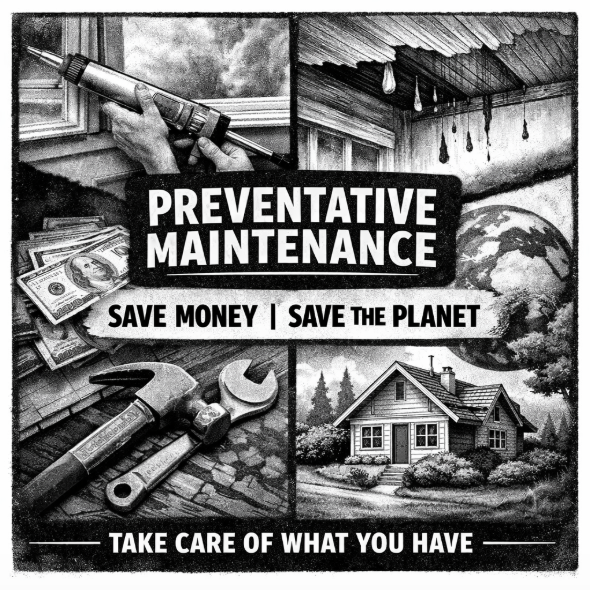
Take Care of What You Have. It's Better for Your Wallet and the Planet.
Most homeowners don't have a renovation problem.
They have a maintenance problem they ignored too long.
That’s not an Earth Day talking point. That’s what we see every spring when the snow melts in North Idaho and the calls start—damage that’s been quietly building since October.
Water behind a window frame. Rot under a deck board. A gutter that backed up all winter because it never got cleaned.
None of it started big. None of it had to end up expensive.
And here’s the part most people miss: North Idaho doesn’t slowly wear homes down—it freezes, thaws, and forces water into every weak point twice a year. What starts as a hairline gap doesn’t stay small for long.
That’s the real sustainability conversation worth having. Not just recycling bins and reusable bags—but whether we’re throwing away materials and money that didn’t need to be lost in the first place.
The Most Sustainable Home Is the One That's Already Built
Here’s something the home improvement industry doesn’t say enough:
Manufacturing new materials takes energy. Demolition creates waste. Hauling debris fills landfills. And full remodels that could’ve been avoided with basic maintenance add up fast.
The greenest move isn’t always the new product with the eco-friendly label.
Sometimes it’s:
Caulking a window before water gets behind it
Sealing a deck before boards start to rot
Fixing a small leak before it becomes a subfloor replacement
We’re not guessing on this. These are the calls we get every spring after a North Idaho winter does its work.
Maintain what you have. That’s sustainability with a price tag you can actually see—and control.
Small Neglect. Big Bills.
We’ve walked into homes where a $15 tube of caulk would’ve prevented a $3,000 repair.
That’s not rare. That’s routine.
Here’s how it usually goes: a small gap opens around a window or door. Water finds it—because it always does. It sits through freeze-thaw cycles. By spring, you’ve got rot, possible mold, and damage that’s no longer “small.”
The gap was there for two years. It didn’t feel urgent yet.
And that’s the part we hear almost every time:
“I knew about it… I just didn’t think it mattered yet.”
The frustrating part isn’t the damage.
It’s realizing you saw the warning signs the whole time.
It’s always urgent. It just doesn’t look like it yet.
What Preventative Maintenance Actually Looks Like
Nothing fancy. Just consistent.
Caulking and sealing
Windows, doors, bathrooms, exterior joints—anywhere water can find an edge. Once a year check. Reseal when it cracks or pulls away. This prevents more damage than almost anything else.
Gutters
Clogged gutters push water where it doesn’t belong—rooflines, fascia, soffits, eventually inside walls. Clean them before winter. A few hours of work vs. thousands in repair.
Deck maintenance
North Idaho decks take constant abuse—freeze, thaw, UV, moisture. Seal and stain on schedule and they last decades. Skip it and you’re replacing boards or full structures early.
HVAC filters
Cheap, simple, and overlooked. A clogged filter shortens system life and drives up energy use. One of the highest return maintenance habits there is.
Wet-area grout and caulk
Bathrooms and kitchens hide water damage the longest. By the time you see it, it’s already behind the surface.
The Real Cost of Waiting
A failing shower caulk line: $20 fix vs. $4,000 tile and drywall repair
A small roof leak: $200 patch vs. full ceiling + remediation
A neglected deck: $300 maintenance vs. $8,000–$15,000 rebuild
These aren’t scare tactics. These are the jobs that come through our schedule every year.
And the story is almost always the same:
It started small. It didn’t seem urgent. And then it couldn’t be ignored anymore.
Maintaining Is the Sustainable Choice
Every piece of material you preserve is one that doesn’t end up in a landfill.
Every repair that prevents replacement is energy and resources not wasted.
You don’t need new windows to be sustainable—you need to seal the ones you already have.
You don’t need a new deck to be responsible—you need to protect the one you built.
Maintain what you have. Fix things when they’re small. Stay ahead of damage instead of chasing it after the fact.
That’s Earth Day every day—and it saves thousands along the way.
Where Mr. Clean Fix Comes In
We’re not just here for remodels and big transformations.
Some of the most valuable work we do never makes it into a before-and-after gallery:
Caulk lines
Deck sealing
Small repairs that stop big ones from forming
If you’ve got a list of small things you’ve been putting off, this is exactly the kind of work built for that.
If it’s sitting in the back of your mind right now, that’s usually the best sign it shouldn’t wait much longer.
Because the most expensive repair is always the one that could’ve been avoided.

Motivation Monday: Why Waiting Until Spring Can Cost You More (When It’s 20° Outside)
When it’s 20 degrees outside, the last thing anyone wants to think about is home repairs. But here’s the hard truth:
Cold weather doesn’t pause problems—it makes them worse.
If you’re waiting for spring, you may already be paying for it.
Cold Temps Expose Weak Spots ❄️
At 20°, materials contract, seals fail, and moisture finds every tiny opening. That small leak, drafty window, or soft board you’ve been ignoring is under maximum stress right now.
What starts as a minor issue in winter often shows up in spring as:
Rot or water damage
Mold from trapped moisture
Higher-than-normal heating bills
Freeze–Thaw Damage Adds Up 🧊➡️💧
When temperatures swing above and below freezing, water expands and contracts inside cracks and gaps. Over time, that means bigger cracks, loosened fasteners, and accelerated wear—especially on decks, siding, and exterior trim.
Spring Repairs Cost More 🌷
Once the weather warms up, everyone calls at once. Crews book out fast, material costs fluctuate, and projects get rushed. Waiting until spring often means paying more and waiting longer.
Emergency Repairs Don’t Care About the Weather 🚨
When something fails in freezing temps, it’s rarely convenient—or cheap. Emergency calls, temporary fixes, and cold-weather damage control add stress and cost that could’ve been avoided.
Motivation Monday Takeaway 💡
When it’s 20° outside, the smartest move isn’t ignoring the problem—it’s getting ahead of it.
Progress sometimes looks like handling things before they become urgent.
Your home—and your wallet—will thank you come spring.