
Renovating Before Selling: Which Home Improvements Are Actually Worth It?
If you're thinking about selling your home, it's natural to look around and start making a list.
The kitchen could use an update. The bathroom feels dated. Maybe the walls need fresh paint, the flooring has seen better days, or there are a handful of repairs you've been putting off.
But here's the important question:
Which improvements are actually worth doing before you put your home on the market?
Not every renovation will give you a return that makes sense. And spending tens of thousands of dollars on a project right before selling doesn't automatically mean you'll get that money back in the sale price.
The goal should be to make smart improvements that help your home show well, appeal to more buyers, and address problems that could make someone hesitate.
Start With the Things Buyers Will Notice
Before thinking about a major renovation, walk through your home as if you're seeing it for the first time.
What immediately stands out?
Worn flooring? Chipped countertops? Dated fixtures? Damaged trim? Walls that need paint? An outdated bathroom? A kitchen that feels dark or cramped?
These are the types of things that can influence a buyer's first impression.
You don't necessarily need to completely transform every room. Sometimes relatively straightforward improvements can make a home feel significantly more cared for.
Fresh paint, updated fixtures, repaired drywall, new trim, improved lighting, or replacing worn flooring can all help a home feel cleaner and more current.
The Kitchen Usually Deserves Attention
The kitchen is one of the rooms buyers tend to pay close attention to, but that doesn't mean you need to install a completely new luxury kitchen before selling.
Start by asking what the kitchen actually needs.
If the cabinets are in good condition, could they be refinished or repainted? Would new hardware and lighting make a difference? Could replacing the countertops or backsplash give the room a more updated appearance?
Sometimes a targeted kitchen update makes more sense than a full remodel.
On the other hand, if the kitchen is significantly outdated or poorly laid out, a larger renovation may be worth considering—especially if the improvements address problems that would otherwise make buyers look elsewhere.
The key is knowing where to stop.
Bathrooms Can Have a Big Impact
Bathrooms are another area where smaller improvements can make a noticeable difference.
Replacing an outdated vanity, mirror, lighting, fixtures, flooring, or worn finishes can give a bathroom a much fresher appearance.
If the shower or tub is damaged, outdated, or showing signs of water damage, addressing those problems can be especially important.
Again, the goal isn't necessarily to create the most luxurious bathroom in the neighborhood.
It's to create a bathroom that makes a buyer think:
"I can see myself living here."
Don't Ignore the Small Repairs
This is where a lot of homeowners can get caught up.
They start thinking about a $30,000 kitchen remodel while overlooking the loose handrail, damaged door, cracked drywall, sticking cabinet, missing trim, or other small issues throughout the house.
Buyers notice those things.
And even when an individual repair isn't a big deal, a long list of unfinished items can create the impression that the home hasn't been well maintained.
Before listing, make a punch list.
Walk through each room and make note of anything that is damaged, unfinished, worn, or simply not working the way it should.
Taking care of those items can often be a better investment than putting all of your money into one large cosmetic project.
Paint Is One of the Safer Updates
A fresh coat of paint can go a long way when you're preparing a home for sale.
If the walls are scuffed, heavily personalized, or painted in colors that may be difficult for buyers to envision themselves living with, a more neutral palette can help the home feel clean and move-in ready.
Paint can also make rooms feel brighter and more cohesive.
And unlike a major remodel, it's an improvement that can change the appearance of a home without completely changing its character.
Don't Forget Flooring and Lighting
Two things that can dramatically affect how a home feels are flooring and lighting.
Worn, damaged, or mismatched flooring can make an otherwise nice home feel tired.
Likewise, poor lighting can make rooms feel smaller and darker than they really are.
Replacing severely worn flooring or updating outdated light fixtures may be worthwhile, particularly when those improvements can make several rooms feel more cohesive.
You don't necessarily need to replace every floor in the house. Focus on the areas where the condition is most noticeable and where an improvement will have the greatest impact.
Fix Problems Before You Try to Hide Them
This is an important one.
If there's a known issue with the home, putting a cosmetic improvement over it doesn't make the problem disappear.
Water damage, plumbing problems, electrical issues, damaged siding, roof concerns, or other significant maintenance issues should be addressed appropriately.
Buyers and inspectors are likely to uncover major problems anyway, and discovering them during the sales process can create negotiations, delays, or lost confidence.
A home doesn't have to be perfect to sell.
But it should be honest, maintained, and ready for its next owner.
Don't Over-Improve for the Neighborhood
This is where homeowners can potentially spend more money than they'll ever recover.
If you're preparing a home for sale, look at the homes around you.
What are comparable homes selling for? What level of finish do buyers expect in your neighborhood? Are you making improvements that will actually help your home compete, or are you creating a house that is significantly more expensive than everything around it?
A beautiful, high-end kitchen is wonderful—but if the surrounding homes have much lower price points, you may not get the return you're expecting.
Renovation decisions should make sense for the home and the market.
Think Like a Buyer
One of the best ways to prioritize improvements is to stop thinking like the person who has lived in the house for years.
Think like someone walking through it for the first time.
Would you notice the outdated bathroom?
Would the flooring bother you?
Does the kitchen feel functional?
Are there obvious repairs that need attention?
Does the house feel clean, bright, and well maintained?
Would you be excited to move in—or immediately start making a list of everything you'd have to fix?
That perspective can help you determine where your money is best spent.
So, What Should You Renovate Before Selling?
There's no universal answer because every home and every market is different.
But generally, the best pre-sale improvements are the ones that:
Fix obvious problems
Improve the home's functionality
Make the home feel clean and well maintained
Update noticeably dated spaces
Improve first impressions
Help buyers picture themselves living there
Keep the improvements appropriate for the neighborhood
And sometimes, the best decision is not to take on a major renovation at all.
If you're selling soon, you may be better off investing in targeted repairs and cosmetic updates rather than starting a large project that won't be finished—or won't provide the return you're hoping for.
Planning to Sell?
At Mr. Clean Fix, we work with homeowners on everything from smaller pre-sale repairs and updates to larger remodeling projects.
If you're preparing to put your home on the market, we can help you look at the property as a whole and identify improvements that can make sense for your goals.
You don't have to renovate everything before you sell. You just need to know what matters.
If you're getting your home ready for the market in Coeur d'Alene or the surrounding North Idaho area, contact Mr. Clean Fix to talk through your project.

From Outdated to Market-Ready: The Final Reveal of Our Turnkey Home Renovation
From Outdated to Market-Ready: The Final Reveal of Our Turnkey Home Renovation
There’s something especially satisfying about seeing a renovation finally come together.
For the past several weeks, we’ve been sharing our Turnkey Renovation Series, walking through the process of taking a home that needed some serious attention and transforming it into a finished, market-ready property.
Today, that project is officially complete — and it’s going on the market.
So, for the final installment in our series, we thought we’d step back from the individual projects and show you what all of that work looks like when it comes together.
From a House That Needed Work to a Home Ready for Its Next Owner
A turnkey renovation is about more than making a house look good.
The goal is to create a home that feels finished, functional, cohesive and ready for someone to move in without immediately creating a list of projects they need to tackle.
That means looking at the big picture.
Throughout this renovation, we addressed the types of updates that can make a major difference in how a home looks, feels and functions — from the larger renovation work down to the finishing details.
Each individual improvement matters, but the real transformation happens when everything is finished at the same time and works together.
That’s what we mean by turnkey.
The Finished Home
One of the best ways to appreciate the transformation is simply to see it.
We put together a quick one-minute video tour so you can get a look at the finished renovation and see how all of the pieces came together.
Watch the 1-minute tour:
[EMBED YOUTUBE VIDEO HERE]
If you're viewing this on our website, the video gives you a quick walk-through of the finished home and a better feel for the overall transformation than photographs alone can provide.
Why We Took This Approach
When renovating a home for resale, it's easy to focus too heavily on individual upgrades.
But a successful renovation isn't necessarily about putting the most expensive material in every room or making every design decision as dramatic as possible.
It's about making smart improvements that appeal to today's buyers while creating a home that feels intentional from one room to the next.
For this project, that meant focusing on quality workmanship, updated finishes, functionality and a cohesive overall look.
The result is a home where the next owner can walk in, unpack their belongings and enjoy the space — rather than immediately wondering what needs to be fixed or remodeled next.
The Difference a Complete Renovation Makes
We've talked throughout this series about individual aspects of the renovation, but the finished project really demonstrates why a comprehensive approach can make such a difference.
A new finish here.
An updated room there.
Better functionality in another area.
Individually, those projects improve a home.
Together, they can completely change the way the home feels.
And that's one of the things we enjoy most about remodeling — taking something that feels dated, worn or unfinished and giving it a completely different future.
And Now It's Ready for Its Next Chapter
After all the planning, demolition, construction, finishing work and those inevitable little surprises that come with remodeling an existing home, this project has officially reached the finish line.
It's done.
It's cleaned up.
It's ready for the market.
And most importantly, it's ready for someone to call it home.
We're excited to finally see this one leave the jobsite and make its way onto the market.
Thank You for Following the Series
This project has been a fun one to document, and we hope our Turnkey Renovation Series has given you a better look at what actually goes into transforming a home from outdated to move-in ready.
If you're considering selling a home that needs work, purchasing a home that needs updating, or you're simply wondering what could be done with the home you already own, we'd be happy to talk through the possibilities.
At Mr. Clean Fix, we don't just look at what's there. We look at what it could become.
And this one is officially ready for its next owner.
Why Good Pre-Sale Work Takes Longer Than Expected — And Why That's Actually a Good Sign
If you've been following along with our Turnkey Transformation series, you know we expected this project to be wrapped up by now.
As often happens during renovation work, the homeowner decided to add a few more improvements once they saw the progress. That's one of the biggest advantages of working room by room—it's easier to spot opportunities that will make the home even more appealing to future buyers.
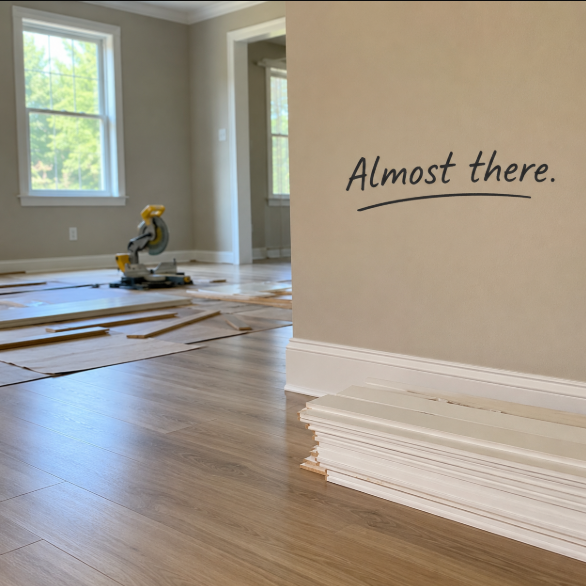
This week, the new flooring is complete and we're about 75% finished installing new baseboards throughout the home. Every improvement adds another layer of value, but it also reinforces an important lesson that applies to almost every home being prepared for sale.
The Best Projects Rarely Go Exactly According to Schedule
Television renovation shows make remodeling look predictable. In reality, every home has its own surprises, changing priorities, and decisions that happen along the way.
Sometimes homeowners choose to:
Upgrade additional finishes.
Replace trim that wasn't originally planned.
Add repairs after seeing how much cleaner and newer the home is becoming.
Those decisions can add a little time to the schedule, but they often produce a much better finished product.
Rushing Can Cost More Than Waiting
When a home is being prepared for the market, there's often pressure to finish as quickly as possible.
The problem is that rushed work usually shows.
Uneven trim, skipped repairs, mismatched flooring transitions, and unfinished details are exactly the kinds of things buyers notice during showings. They may not know why a house feels unfinished—but they know when it does.
Taking an extra week to finish the details is almost always a better investment than trying to save a few days.
Details Matter
Fresh flooring makes a huge difference, but it's the finishing touches that make a home feel complete.
Clean baseboards, consistent trim, repaired walls, fresh paint, and quality installation all work together to create the impression that the home has been well cared for.
Those details help buyers focus on the home—not on a list of repairs they'll need to make after closing.
One More Week...
We're in the home stretch now.
The flooring is finished, the trim is coming together, and we're excited to show you the completed transformation very soon.
Sometimes the best projects take a little longer than expected—and we're perfectly okay with that if it means delivering quality work our customers can be proud of.
Stay tuned next week as we share the finished results of this Turnkey Transformation!

Week 3: Where Homeowners Should (and Shouldn't) Spend Money Before Selling
Preparing a home for sale can feel overwhelming. Every room has something that could be updated, repaired, or improved — but that doesn’t mean every project is worth doing.
One of the biggest mistakes homeowners make before selling is thinking they need to completely remodel their home to compete in the market.
The reality is usually different.
The goal of pre-sale improvements is not to create someone else’s dream home. The goal is to help buyers see the home’s potential, feel confident about its condition, and avoid focusing on problems that could affect their decision.
A smart pre-sale renovation focuses on the updates that make the biggest impact.
Start With What Buyers Notice First
When buyers walk into a home, they quickly form an opinion based on condition and presentation.
Small signs of deferred maintenance can create doubt:
Worn or damaged flooring
Old, tired paint
Broken trim or baseboards
Doors that don’t close properly
Outdated fixtures
Visible repairs that were never completed
These issues may seem minor individually, but together they can make buyers wonder what other problems might be hiding.
Taking care of these details helps create a home that feels cared for.
Where It Usually Makes Sense to Spend Money
Fresh Paint
Paint remains one of the most cost-effective ways to improve the look of a home.
A fresh, neutral color palette helps buyers focus on the space itself instead of being distracted by outdated colors, scuffs, or worn finishes.
Flooring Updates
Flooring has a major impact because it covers so much of the home.
Replacing damaged or outdated flooring can completely change how a home feels when someone walks through the door.
Repairs and Finish Work
This is where many homes lose buyer confidence.
Small repairs like:
Replacing damaged trim
Fixing doors
Repairing drywall
Updating hardware
Correcting visible maintenance issues
can make a home feel much more complete.
Exterior Improvements
First impressions start before someone walks through the front door.
Projects like:
Exterior cleanup
Paint touch-ups
Siding repairs
Landscaping improvements
Addressing visible exterior issues
can help buyers feel positive from the beginning.
Where Homeowners Often Overspend
Not every improvement will provide a return before selling.
Large renovations can be tempting, but they are not always the best choice.
Projects that may require careful consideration include:
Full kitchen remodels
Luxury bathroom upgrades
High-end finishes that may not match the neighborhood
Personal design choices that appeal to one homeowner but not the next
A beautiful remodel is great when you are creating your forever home. But when preparing to sell, the question changes:
"Will this help buyers see the value of this home?"
The Best Pre-Sale Improvements Remove Doubt
The best projects before selling are often the ones that make buyers think:
"This home has been taken care of."
That confidence matters.
A good contractor should not only tell you what they can build — they should help you decide what actually makes sense for your goals and budget.
Whether you are preparing to list your home, getting ready for a move, or simply trying to make smart improvements, the right plan starts with understanding where your money will have the biggest impact.
At Mr. Clean Fix, we help homeowners evaluate repairs, updates, and remodels with the bigger picture in mind — creating spaces that work better today and make sense for tomorrow.

Week 2: When Pre-Sale Prep Turns Into the Actual Remodel
Most pre-sale projects start with a simple idea:
Clean it up. Freshen it up. Get it ready to list.
That was the original scope on this one.
Interior paint. Exterior curb appeal cleanup. Pressure washing. Dump runs. Remove baseboards so Home Depot could come in later for flooring, then reinstall them.
Straightforward prep work before the “real work” happens.
But once the timeline came into play, the project shifted.
The original plan
At the start, this was a classic lite pre-sale prep job:
Interior painting throughout
Exterior pressure wash and curb appeal cleanup
Dump runs and general haul-off
Baseboard removal to prep for flooring install (by Home Depot)
Reinstallation after flooring was complete
The goal was simple—get the home cleaned up and ready for other trades to come in and finish their pieces.
We weren’t supposed to be the flooring contractor.
We were strictly prep.
Where things changed
Once the homeowner got back into town and we started lining up the schedule, the flooring timeline became the deciding factor.
Home Depot was more than a month out on install.
And at that point, the decision was simple:
Waiting that long didn’t make sense for a pre-sale property.
So the project shifted.
Not because the plan was wrong—but because the market timeline didn’t match the construction timeline.
What we became in real time
Instead of waiting on a delayed install, the scope naturally expanded into:
Full flooring installation instead of prep for it
Expanded interior finish and repair work
Replacing baseboards instead of reinstalling old ones
Coordinating transitions as flooring went in
Evaluating exterior fence repairs and potential repaint
This is where pre-sale work stops being “prep” and becomes “finish.”
Not by design—by necessity.
Why this happens on jobs like this
Pre-sale projects are always time-sensitive.
You’re not just trying to improve a house.
You’re trying to hit a listing window.
So when one piece of the plan slows everything down—like a month-long flooring delay—you either wait…
Or you adjust the scope so the project keeps moving.
In this case, waiting wasn’t the right answer.
The part people don’t always see
Most homeowners don’t think about how tightly connected these decisions are.
But once you start a pre-sale project, everything is linked:
flooring affects baseboards
baseboards affect paint touch-ups
interior finish affects how “done” the house feels
exterior curb appeal affects first impression before they even walk in
You can’t isolate one trade without affecting the rest.
So when the flooring schedule changed, everything else naturally followed.
Where we’re at now
We’re currently:
installing flooring in-house
completing interior finish updates tied to that work
replacing baseboards as part of the full system
continuing exterior cleanup and evaluating fence repair/repaint
What started as prep work is now a full pre-sale renovation path.
Not heavy remodel—but definitely not just “clean and list” anymore.
Final thought
Most pre-sale projects don’t expand because someone overcomplicates them.
They expand because the timeline and reality of the house don’t line up with the original plan.
And when that happens, the goal shifts from:
“get it ready”
to
“make sure nothing slows the sale once it hits the market”
That’s where this one landed.

Turnkey Isn’t Always Turnkey: What “Ready to Sell” Actually Means
Most people hear “turnkey” and think: quick clean-up, maybe a little paint, list it, done.
In reality… that’s rarely how it goes once we actually walk the property.
Turnkey sounds simple until you’re standing in the house looking at it through a buyer’s eyes.
That’s usually where it shifts into what we call a lite reno for resale—small, targeted fixes that don’t sound like much on paper, but change everything about how the home feels when you walk through it.
Because in real estate, “feeling ready” is what sells the house.
What homeowners think “turnkey” means
Most sellers picture something like:
Fresh paint
Clean floors
Quick touch-ups
Deep clean
List it and move on
And sometimes that’s true.
But most of the time, once you actually start walking the property, there’s more sitting there than people realize.
Not major remodel problems—just a lot of small things that stack up fast.
What we actually see when we walk a home
This is where things shift.
When we do a walkthrough, we’re not looking at it like homeowners do. We’re looking at it like buyers will.
And buyers don’t overlook much.
We’ve walked properties where the homeowner was focused on paint and cleaning, and the first thing a buyer notices is the fence line from the street.
Common things that show up:
Baseboards that are chipped, missing, or mismatched
Flooring transitions that feel unfinished or dated
Fence or exterior issues that hurt curb appeal immediately
Doors, trim, and finishes that don’t match the rest of the house
Small repairs that don’t seem like a big deal—but add up visually
None of this is dramatic on its own.
But together, it changes the story of the house.
And that story matters more than most people think.
The truth about buyer psychology
Buyers don’t walk into a home doing math on upgrades.
They’re asking one thing the whole time:
“Does this feel move-in ready… or am I inheriting projects?”
That one question drives almost everything else.
Because if it feels like a project, it doesn’t matter how minor the issues are—they start discounting the home mentally right away.
We see it all the time:
not big problems killing deals…
small ones stacking up and slowing everything down.
When “turnkey” becomes “lite reno”
This is the shift most homeowners don’t expect.
We’re not talking about gutting a house.
We’re talking about the stuff that quietly affects perception:
Baseboards that need replacing or finishing
Flooring install or correction where transitions feel rough
Fence or exterior fixes that hit curb appeal instantly
Cleanup work that makes the house feel consistent again
We don’t tell people to overbuild their home for resale.
We tell them what’s actually going to cost them money in negotiations.
In this current project
This job started as a “turnkey prep.”
After walking it more closely, it shifted into:
New baseboards
Flooring install
Fence repair
Nothing extreme. Nothing flashy.
Just the kind of work that takes a house from:
“almost ready” → “this feels solid walking through it.”
That gap is where buyers decide how they feel about your price.
The goal isn’t perfection—it’s confidence
We’re not trying to make homes feel brand new.
We’re trying to remove hesitation.
Because hesitation is what leads to:
lower offers
longer time on market
negotiation pressure after inspection
A clean, simple walkthrough changes that conversation fast.
Final thought
If you’re thinking about listing your home and it feels like it’s “close enough,” that’s usually the moment to get a second set of eyes on it.
Not to blow it up into a full remodel.
Just to figure out what a buyer is actually going to notice—and fix the things that matter before they get a chance to use them against you.
Because they will see it differently than you do.
Every time.